What does 1 Kings 16:22 mean?
“But the people that followed Omri prevailed against the people that followed Tibni the son of Ginath: so Tibni died, and Omri reigned.” — 1 Kings 16:22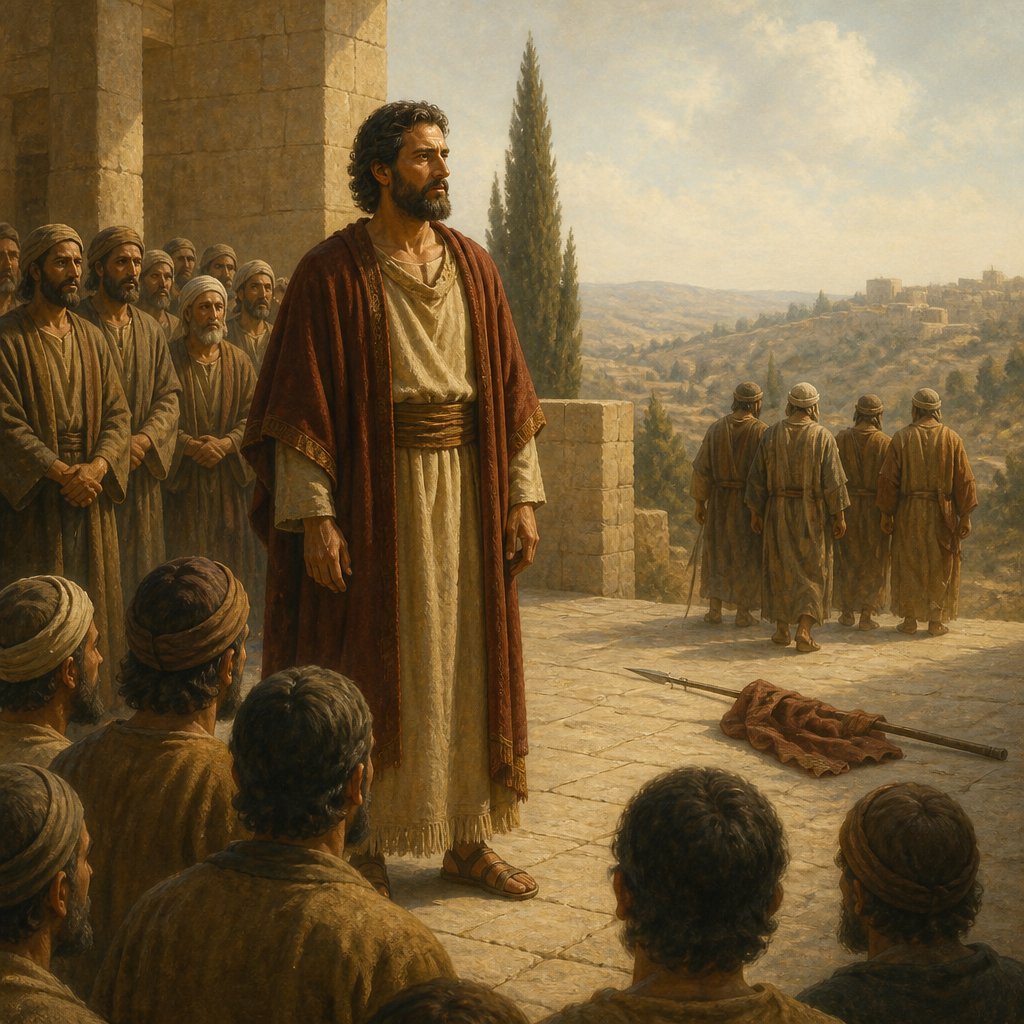
1 Kings 16:22 (KJV) reads, "But the people that followed Omri prevailed against the people that followed Tibni the son of Ginath: so Tibni died, and Omri reigned."
This verse is part of the larger narrative of the Old Testament, specifically in the book of 1 Kings, which chronicles the history of the kings of Israel. This particular verse is situated within a time of great political and social upheaval in the kingdom of Israel. It comes in the context of a power struggle for the throne between two contenders: Omri and Tibni.
To fully understand the significance of this verse, it is important to consider the broader context. In the preceding verses, we learn that Zimri, the previous king of Israel, had usurped the throne through treachery and deceit. However, his reign was short-lived as the people rose up against him, leading to his demise. This left a power vacuum, which gave rise to a fierce competition for the throne between Omri and Tibni, both claiming to be the rightful heir.
The verse reflects the outcome of this power struggle, with Omri emerging as the victor and Tibni meeting his demise. This event holds several layers of symbolism and significance within the biblical narrative.
On a historical level, this verse marks a turning point in the political landscape of Israel. Omri's victory solidifies his reign as king and establishes a new dynasty, eventually leading to the establishment of Samaria as the capital of Israel. This shift in power shapes the course of Israel's history and has lasting implications for the nation.
At a deeper level, this verse illustrates the timeless themes of power, ambition, and the struggle for control. Throughout the Bible, there are numerous examples of individuals vying for power and position, often leading to conflict and bloodshed. The story of Omri and Tibni serves as a cautionary tale about the dangers of placing one's desires for power above the well-being of others and the will of God.
Symbolically, this verse can also be interpreted as a representation of the ongoing spiritual battle between good and evil. Omri, in his ascent to the throne, represents the forces of worldly power and ambition, while Tibni's defeat signifies the struggle of righteousness against the temptations of the flesh. This theme is echoed throughout the Bible, as individuals and nations grapple with the choice between following God's will or succumbing to the allure of power and earthly desires.
Ultimately, 1 Kings 16:22 serves as a reminder of the transient nature of worldly power and the importance of aligning one's ambitions with divine will. It is a sobering reflection on the consequences of pursuing power at any cost and the ultimate futility of such pursuits in the grander scheme of God's plan.
In conclusion, 1 Kings 16:22 is a pivotal verse in the book of 1 Kings, encapsulating the themes of power, ambition, and the enduring struggle between righteousness and worldly temptations. Its historical context, symbolism, and wider implications make it a rich and thought-provoking passage within the biblical narrative.
Get our apps


Artwork for 1 Kings 16:22
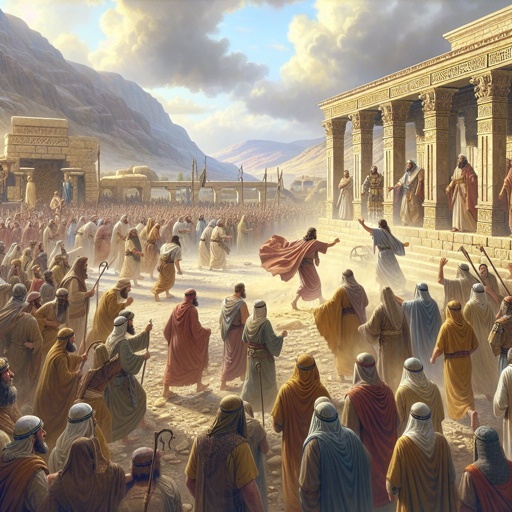
1 Kings 16:22 - "But the people that followed Omri prevailed against the people that followed Tibni the son of Ginath: so Tibni died, and Omri reigned."
"But the people that followed Omri prevailed against the people that followed Tibni the son of Ginath: so Tibni died, and Omri reigned." - 1 Kings 16:22
1 Kings 22:16 - "And the king said unto him, How many times shall I adjure thee that thou tell me nothing but that which is true in the name of the LORD?"

1 Kings 8:22

1 Kings 22:47 - "There was then no king in Edom: a deputy was king."

1 kings 22:19

1 Kings 22:44 - "And Jehoshaphat made peace with the king of Israel."

1 Kings 22:1 - "And they continued three years without war between Syria and Israel."

1 Kings 1:22 - "¶ And, lo, while she yet talked with the king, Nathan the prophet also came in."

1 Kings 22:37 - "¶ So the king died, and was brought to Samaria; and they buried the king in Samaria."

1 Kings 20:16 - "And they went out at noon. But Ben-hadad was drinking himself drunk in the pavilions, he and the kings, the thirty and two kings that helped him."

1 Kings 16:14 - "Now the rest of the acts of Elah, and all that he did, are they not written in the book of the chronicles of the kings of Israel?"

2 Kings 22:16 - "Thus saith the LORD, Behold, I will bring evil upon this place, and upon the inhabitants thereof, even all the words of the book which the king of Judah hath read:"

1 Kings 1:16 - "And Bath-sheba bowed, and did obeisance unto the king. And the king said, What wouldest thou?"

1 Kings 4:16 - "Baanah the son of Hushai was in Asher and in Aloth:"

1 Kings 16:1 - "Then the word of the LORD came to Jehu the son of Hanani against Baasha, saying,"

1 Kings 22:29 - "So the king of Israel and Jehoshaphat the king of Judah went up to Ramoth-gilead."

1 Kings 22:45 - "Now the rest of the acts of Jehoshaphat, and his might that he shewed, and how he warred, are they not written in the book of the chronicles of the kings of Judah?"

1 Kings 16:20 - "Now the rest of the acts of Zimri, and his treason that he wrought, are they not written in the book of the chronicles of the kings of Israel?"

1 Kings 16:5 - "Now the rest of the acts of Baasha, and what he did, and his might, are they not written in the book of the chronicles of the kings of Israel?"

1 Kings 12:22 - "But the word of God came unto Shemaiah the man of God, saying,"

1 Timothy 6:15-16 – "God, the blessed and only Ruler, the King of kings and Lord of lords."

1 Timothy 6:15-16 – "God, the blessed and only Ruler, the King of kings and Lord of lords."
1 Timothy 6:15-16 – "God, the blessed and only Ruler, the King of kings and Lord of lords."

"There was then no king in Edom: a deputy was king." - 1 Kings 22:47

1 Kings 22:9 - "Then the king of Israel called an officer, and said, Hasten hither Micaiah the son of Imlah."

1 Kings 22:2 - "And it came to pass in the third year, that Jehoshaphat the king of Judah came down to the king of Israel."

1 Timothy 6:15-16 – "God, the blessed and only Ruler, the King of kings and Lord of lords."

1 Kings 15:16 - "¶ And there was war between Asa and Baasha king of Israel all their days."

1 Chronicles 16:22 - "Saying, Touch not mine anointed, and do my prophets no harm."