What does 1 Kings 16:4 mean?
“Him that dieth of Baasha in the city shall the dogs eat; and him that dieth of his in the fields shall the fowls of the air eat.” — 1 Kings 16:4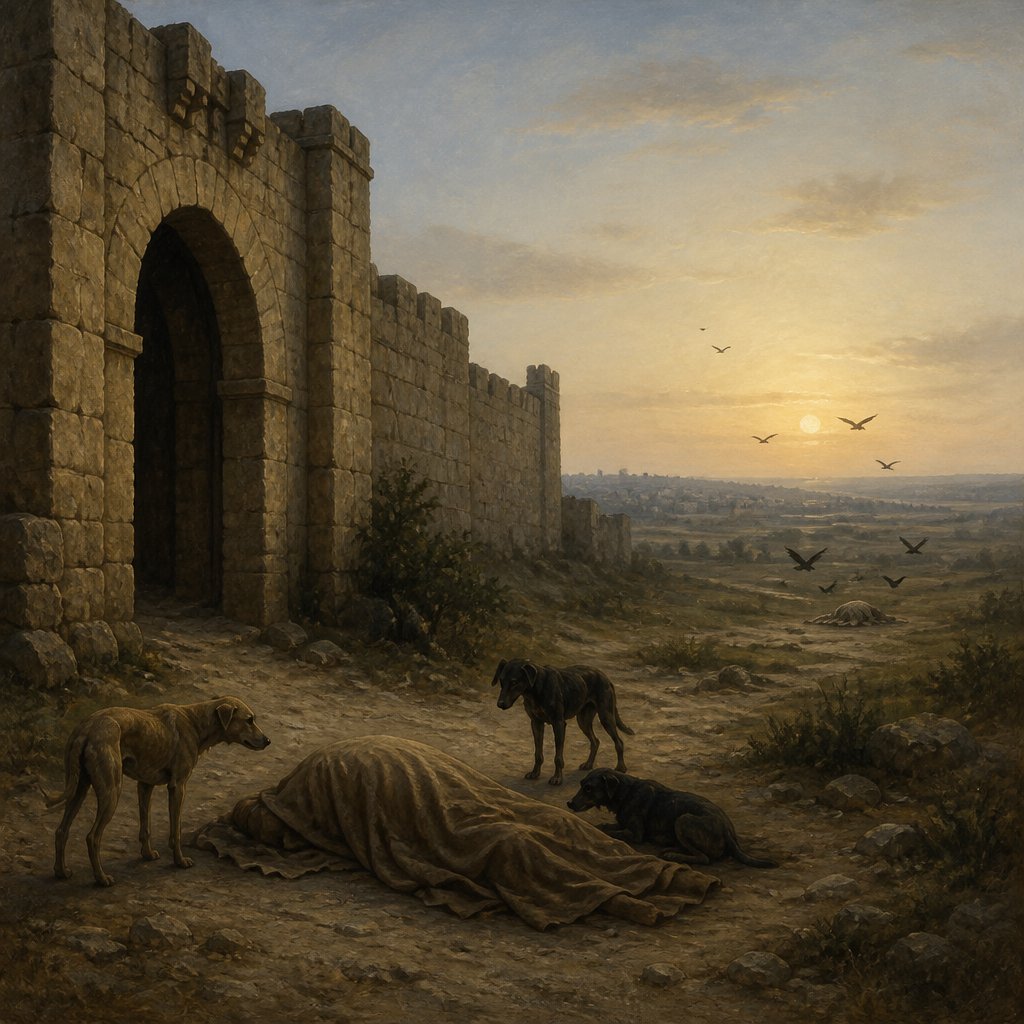
1 Kings 16:4 (KJV) states, "Him that dieth of Baasha in the city shall the dogs eat; and him that dieth of his in the fields shall the fowls of the air eat." This verse is set in the context of political upheaval and divine judgment in the Northern Kingdom of Israel. It is a significant passage in understanding the consequences of sinful leadership and the divine justice that ensues.
The verse comes from the book of 1 Kings, which chronicles the history of the Israelite monarchy, specifically focusing on the reign of King Baasha. The verse is part of a prophecy given by the prophet Jehu to Baasha, condemning him for his wickedness and the idolatry he promoted in Israel. Baasha had seized the throne through a coup, and he continued the pattern of corruption and disobedience to God that had plagued the nation.
The verse serves as a warning and a pronouncement of judgment upon Baasha and his house. It depicts the graphic and ignoble fate that awaits those who succumb to the enticements of power and pursue unrighteousness. The imagery of dogs and birds consuming the corpses of the deceased signifies the complete desecration and dishonor that will befall Baasha and his descendants.
The underlying theme of 1 Kings 16:4 is the principle of divine retribution. Throughout the Bible, there is a consistent message that God will hold individuals and nations accountable for their actions. The verse reinforces the belief that disobedience and unrepentant sin will inevitably lead to destruction and punishment. It serves as a reminder that God’s justice is impartial and inevitable, and no one is exempt from its consequences.
The context of 1 Kings 16:4 is also significant in understanding the broader themes of the book of Kings. The passage takes place during a period of political instability and moral decay in Israel. The nation was experiencing a succession of kings who were characterized by their wickedness and lack of fidelity to God. The verse reflects the overarching narrative of the decline of the Northern Kingdom and the resultant devastation that befell it.
Moreover, the symbolism in 1 Kings 16:4 conveys a powerful message about the transience of human glory and the ultimate futility of worldly pursuits. The imagery of animals devouring the remains of the dead underscores the fleeting nature of human power and the ignominious end of those who seek to elevate themselves above God. It also symbolizes the degradation and decay that inevitably follows the pursuit of sinful desires.
Overall, the verse 1 Kings 16:4 serves as a poignant reminder of God’s holiness and justice. It reinforces the biblical teachings about the consequences of disobedience and the necessity of repentance. It also emphasizes the importance of ethical leadership and the devastating impact of unrighteous rulers. The verse stands as a sobering warning to all who would seek to defy God and pursue their own selfish ambitions. It is a testament to the enduring relevance of biblical truths and the enduring message of divine justice and mercy.
Get our apps


Artwork for 1 Kings 16:4

1 Kings 16:4 - "Him that dieth of Baasha in the city shall the dogs eat; and him that dieth of his in the fields shall the fowls of the air eat."
"Him that dieth of Baasha in the city shall the dogs eat; and him that dieth of his in the fields shall the fowls of the air eat." - 1 Kings 16:4

1 Kings 4:16 - "Baanah the son of Hushai was in Asher and in Aloth:"

"Baanah the son of Hushai was in Asher and in Aloth:" - 1 Kings 4:16

2 Kings 16:4 - "And he sacrificed and burnt incense in the high places, and on the hills, and under every green tree."

1 Kings 20:16 - "And they went out at noon. But Ben-hadad was drinking himself drunk in the pavilions, he and the kings, the thirty and two kings that helped him."

1 Kings 16:14 - "Now the rest of the acts of Elah, and all that he did, are they not written in the book of the chronicles of the kings of Israel?"

1 Kings 1:16 - "And Bath-sheba bowed, and did obeisance unto the king. And the king said, What wouldest thou?"

1 Kings 4:1 - "So king Solomon was king over all Israel."

1 Kings 16:1 - "Then the word of the LORD came to Jehu the son of Hanani against Baasha, saying,"

1 Kings 16:20 - "Now the rest of the acts of Zimri, and his treason that he wrought, are they not written in the book of the chronicles of the kings of Israel?"

1 Kings 16:5 - "Now the rest of the acts of Baasha, and what he did, and his might, are they not written in the book of the chronicles of the kings of Israel?"

1 Timothy 6:15-16 – "God, the blessed and only Ruler, the King of kings and Lord of lords."

1 Timothy 6:15-16 – "God, the blessed and only Ruler, the King of kings and Lord of lords."
1 Timothy 6:15-16 – "God, the blessed and only Ruler, the King of kings and Lord of lords."

Ephesians 4:16

1 Timothy 6:15-16 – "God, the blessed and only Ruler, the King of kings and Lord of lords."

1 Kings 15:16 - "¶ And there was war between Asa and Baasha king of Israel all their days."

1 Timothy 6:15-16 – "God, the blessed and only Ruler, the King of kings and Lord of lords."

1 Kings 4:4 - "And Benaiah the son of Jehoiada was over the host: and Zadok and Abiathar were the priests:"

1 Kings 1:4 - "And the damsel was very fair, and cherished the king, and ministered to him: but the king knew her not."

1 Kings 3:16 - "¶ Then came there two women, that were harlots, unto the king, and stood before him."

1 Kings 16:27 - "Now the rest of the acts of Omri which he did, and his might that he shewed, are they not written in the book of the chronicles of the kings of Israel?"

1 Kings 4:18 - "Shimei the son of Elah, in Benjamin:"

1 Kings 4:17 - "Jehoshaphat the son of Paruah, in Issachar:"

1 Kings 16:33 - "And Ahab made a grove; and Ahab did more to provoke the LORD God of Israel to anger than all the kings of Israel that were before him."

4:16–17 in 1 Thessalonians

1 Kings 4:8 - "And these are their names: The son of Hur, in mount Ephraim:"

1 Kings 4:14 - "Ahinadab the son of Iddo had Mahanaim:"

2 Kings 16:1 - "In the seventeenth year of Pekah the son of Remaliah Ahaz the son of Jotham king of Judah began to reign."