What does 1 Kings 1:12 mean?
“Now therefore come, let me, I pray thee, give thee counsel, that thou mayest save thine own life, and the life of thy son Solomon.” — 1 Kings 1:12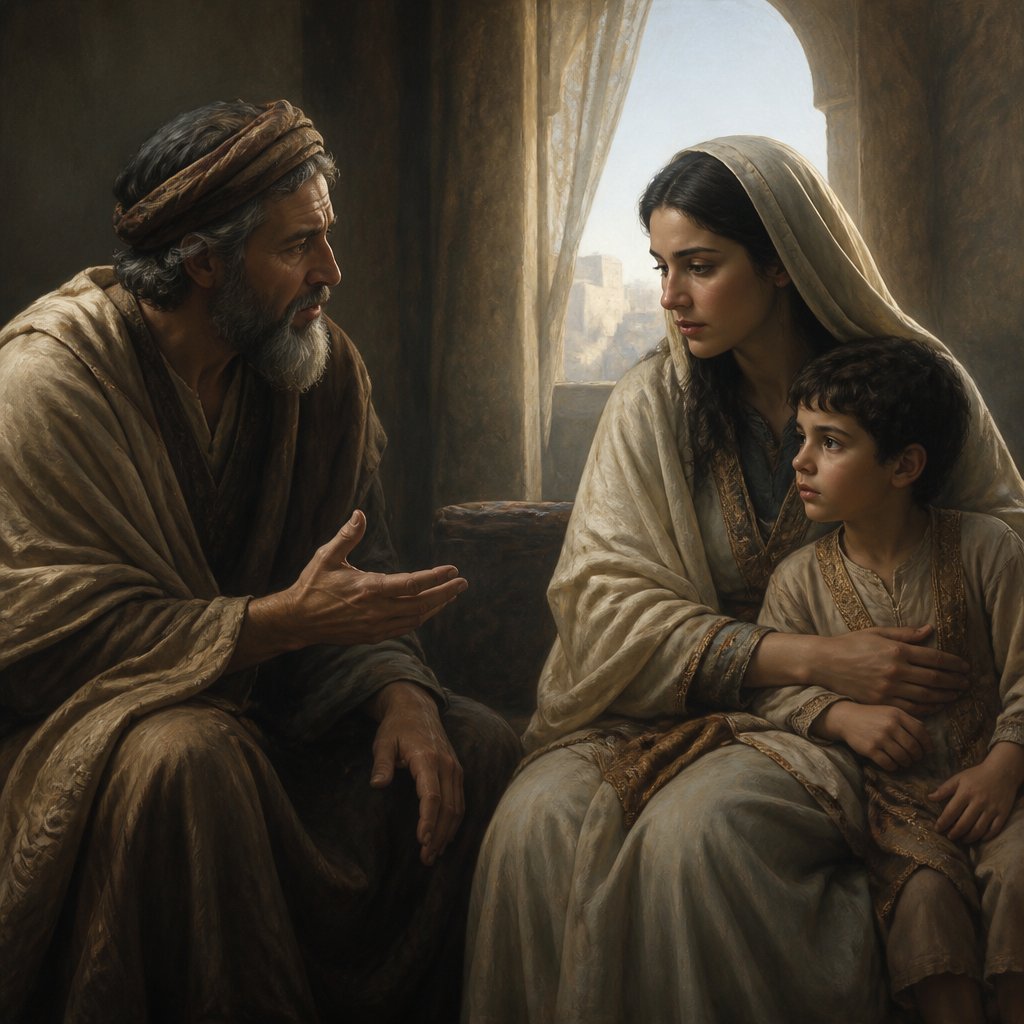
Sure! In 1 Kings 1:12 of the King James Version (KJV) of the Bible, the verse states, "Now therefore come, let me, I pray thee, give thee counsel, that thou mayest save thine own life, and the life of thy son Solomon." This verse is part of the narrative in the Old Testament where Adonijah, the son of King David, seeks to seize the throne from his younger brother Solomon.
To provide a detailed and in-depth commentary of this verse, we must first understand the context and background of the passage. King David was nearing the end of his life, and as was common in ancient monarchies, there was a struggle for succession among his sons. Adonijah, the eldest living son, began to make preparations to declare himself king. However, the prophet Nathan and Bathsheba, the mother of Solomon, sought to prevent this from happening. They approached King David and reminded him of his promise to make Solomon his successor to the throne. This confrontation ultimately led to Solomon being anointed as the next king of Israel.
In 1 Kings 1:12, we witness the plea of Bathsheba to King David. She implores David to take action to ensure the safety of both himself and Solomon, as Adonijah's actions posed a threat to their lives. Bathsheba's words carry a sense of urgency and a plea for swift and decisive action to protect the legitimate heir to the throne. This verse serves as a pivotal moment in the narrative, as it demonstrates the tension and power struggle within the royal family, as well as the significance of familial loyalty and the divine right of kings.
The theme of succession and the rightful heir to the throne is central to this verse. In ancient Israel, the passing of the crown from one king to the next was a complex and often perilous process, as it often led to power struggles and conflicts within the royal family. The concept of legitimacy and the rightful heir was of utmost importance, as it was believed that the chosen ruler was anointed and appointed by God. Bathsheba's plea for David to take counsel and make a decision to secure the throne for Solomon reflects the high stakes and political intrigue of royal succession.
Furthermore, the symbolism in 1 Kings 1:12 can be interpreted in multiple ways. Bathsheba's plea can be seen as a representation of the internal and external threats to the stability and unity of the kingdom. Her words also symbolize the inherent struggle for power and the desperate need for divine intervention and guidance in ensuring righteousness and justice in the succession process. Additionally, the verse can be viewed as a testament to the importance of seeking wise counsel and making decisions that uphold the will of God.
Overall, 1 Kings 1:12 is a crucial moment in the larger narrative of King David's succession and the establishment of Solomon as the rightful king of Israel. The verse showcases the themes of familial loyalty, divine appointment, and the pursuit of justice in the face of political intrigue. It also highlights the significance of seeking counsel and making decisions in accordance with the will of God. This passage serves as a reminder of the complexity and challenges inherent in the exercise of power and the importance of upholding righteousness and legitimacy in matters of leadership.
Get our apps


Artwork for 1 Kings 1:12

1 Kings 1:12 - "Now therefore come, let me, I pray thee, give thee counsel, that thou mayest save thine own life, and the life of thy son Solomon."
"Now therefore come, let me, I pray thee, give thee counsel, that thou mayest save thine own life, and the life of thy son Solomon." - 1 Kings 1:12

1 Kings 12:11

1 Kings 12:11

1 Kings 12:10

1 Kings 12:10

1 kings 3:12

1 Kings 12:10

1 Kings 12:11

1 Kings 12:10
1 Kings 12:11

1 Kings 12:14

1 Kings 12:14

1 Kings 12:11

1 Kings 12:1 - "And Rehoboam went to Shechem: for all Israel were come to Shechem to make him king."

1 Kings 21:12 - "They proclaimed a fast, and set Naboth on high among the people."

1 Kings 12:19 - "So Israel rebelled against the house of David unto this day."

1 Kings 12:22 - "But the word of God came unto Shemaiah the man of God, saying,"

1 Kings 12:13 - "And the king answered the people roughly, and forsook the old men's counsel that they gave him;"

1 Kings 12:12 - "¶ So Jeroboam and all the people came to Rehoboam the third day, as the king had appointed, saying, Come to me again the third day."

1 Kings 12:29 - "And he set the one in Beth-el, and the other put he in Dan."

1 Kings 8:12 - "¶ Then spake Solomon, The LORD said that he would dwell in the thick darkness."

1 Kings 19:12 - "And after the earthquake a fire; but the LORD was not in the fire: and after the fire a still small voice."

1 Kings 12:17 - "But as for the children of Israel which dwelt in the cities of Judah, Rehoboam reigned over them."

1 Kings 12:26 - "And Jeroboam said in his heart, Now shall the kingdom return to the house of David:"

1 Kings 12:30 - "And this thing became a sin: for the people went to worship before the one, even unto Dan."

1 Kings 2:12 - "¶ Then sat Solomon upon the throne of David his father; and his kingdom was established greatly."

1 Kings 12:3 - "That they sent and called him. And Jeroboam and all the congregation of Israel came, and spake unto Rehoboam, saying,"

1 Kings 12:31 - "And he made an house of high places, and made priests of the lowest of the people, which were not of the sons of Levi."

1 Kings 12:25 - "¶ Then Jeroboam built Shechem in mount Ephraim, and dwelt therein; and went out from thence, and built Penuel."