What does 1 Kings 20:35 mean?
“And a certain man of the sons of the prophets said unto his neighbour in the word of the LORD, Smite me, I pray thee. And the man refused to smite him.” — 1 Kings 20:35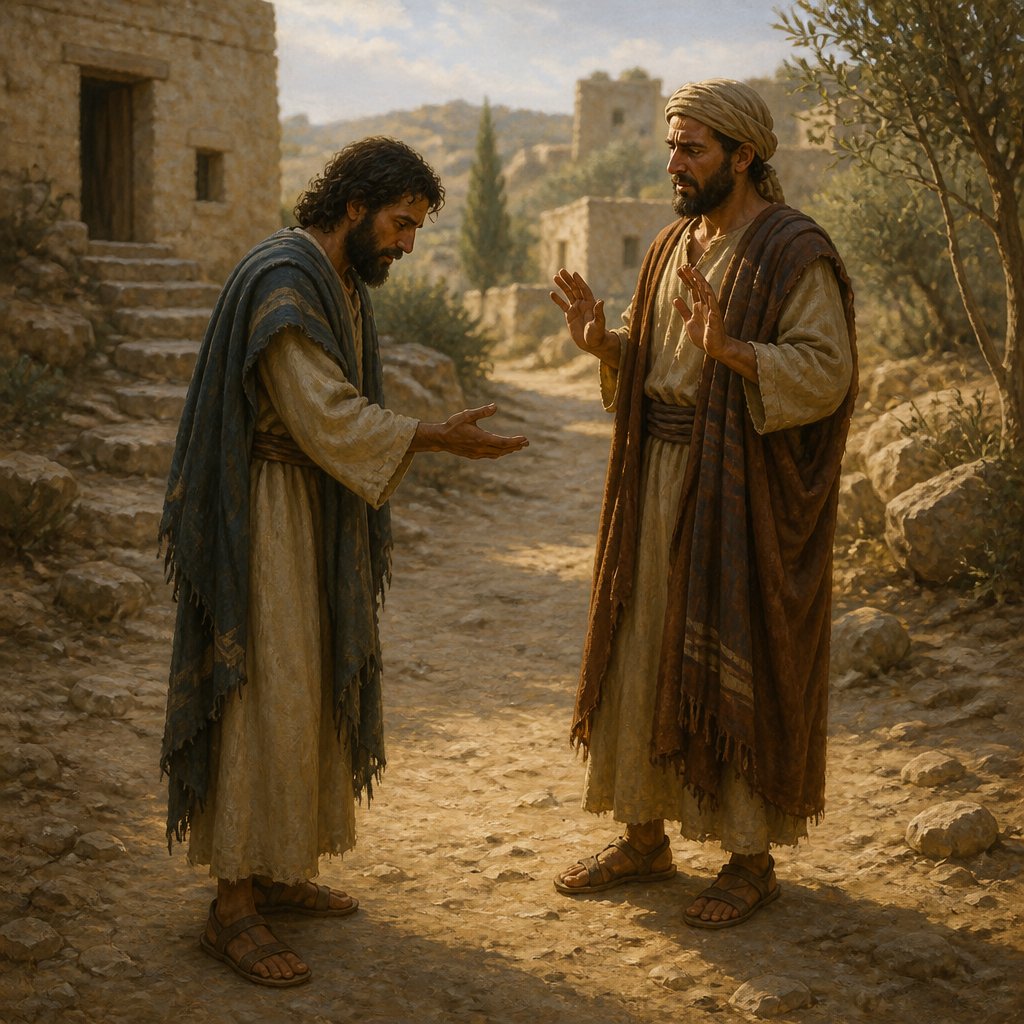
1 Kings 20:35 (KJV) reads, "And a certain man of the sons of the prophets said unto his neighbor in the word of the Lord, Smite me, I pray thee. And the man refused to smite him."
This verse is part of the historical and prophetic book of 1 Kings, which is found in the Old Testament of the Bible. It comes at a time when Israel is under the rule of King Ahab and is facing numerous challenges from external forces, particularly the Arameans. The context of this verse is a continuation of the story of Ahab's struggles with the Arameans, particularly with the prophet Elijah's prophecy of a great victory over them.
The verse introduces us to a certain man of the sons of the prophets, who is not named, but is likely a follower of the prophet Elijah or Elisha. The sons of the prophets were a group of men who were set apart for prophetic ministry and were known for their devotion to the Lord.
In this passage, the prophet asks his neighbor to strike him. The neighbor, however, refused to obey the prophet's request. At first glance, this verse may appear puzzling or even contradictory to the teachings of Christ about turning the other cheek. However, when examined closely, it reveals important spiritual and moral principles.
The act of asking to be struck by the neighbor serves as a symbolic action, revealing a truth and prophesying events that are to come. Prophets in the Old Testament often utilized symbolic actions to convey messages from God. Here, the action of asking to be struck could represent the humility and submission to God's will that believers are called to exhibit. In a broader sense, it may also signify the suffering and sacrifice that the prophets were called to endure for the sake of their message.
The refusal of the neighbor to strike the prophet may signify disobedience or a lack of understanding of the prophetic message. It speaks to the resistance and reluctance of individuals to heed or understand the word of God. The neighbor's refusal might represent the people's rejection of God's message and their unwillingness to submit to His will.
Furthermore, this verse can also be seen as a foreshadowing of the rejection and suffering of the ultimate Prophet, Jesus Christ. While the unnamed prophet represents the obedient servant willingly accepting the suffering, the neighbor's refusal symbolizes the rejection and rebellion of the people towards the Messiah, who was despised and rejected by men.
This verse also conveys the theme of obedience and submission to God's will. The prophet's request for a strike and the neighbor's refusal provide a powerful lesson in following God's commands, even when they may seem unusual or contrary to human reasoning. It emphasizes the importance of aligning oneself with God's will and trusting in His plans, even if they appear strange or challenging.
Additionally, the passage offers a profound insight into the nature of prophecy and the human response to it. It highlights the skepticism and disbelief that often greets the prophetic message, as well as the difficulty in discerning and accepting God's revelations.
In conclusion, 1 Kings 20:35 is a rich and multifaceted verse that holds deep spiritual and prophetic significance. It portrays the themes of obedience, submission, suffering, and rejection, and offers valuable insights into the nature of prophecy and the human response to God's word. It serves as a reminder of the importance of humility, obedience, and trust in God's plans, even when they may seem perplexing or challenging.
Get our apps


Artwork for 1 Kings 20:35

1 Kings 20:35 - "¶ And a certain man of the sons of the prophets said unto his neighbour in the word of the LORD, Smite me, I pray thee. And the man refused to smite him."
"¶ And a certain man of the sons of the prophets said unto his neighbour in the word of the LORD, Smite me, I pray thee. And the man refused to smite him." - 1 Kings 20:35

Genesis 35:16-20

Lucas 20:34-35

1 Kings 18:35 - "And the water ran round about the altar; and he filled the trench also with water."

1 Kings 14:1-20

1 Samuel 20:35 - "¶ And it came to pass in the morning, that Jonathan went out into the field at the time appointed with David, and a little lad with him."

1 Kings 11:35 - "But I will take the kingdom out of his son's hand, and will give it unto thee, even ten tribes."

1 Kings 2:35 - "And the king put Benaiah the son of Jehoiada in his room over the host: and Zadok the priest did the king put in the room of Abiathar."

1 Kings 6:35 - "And he carved thereon cherubims and palm trees and open flowers: and covered them with gold fitted upon the carved work."

1 Kings 20:16 - "And they went out at noon. But Ben-hadad was drinking himself drunk in the pavilions, he and the kings, the thirty and two kings that helped him."

1 Kings 7:35 - "And in the top of the base was there a round compass of half a cubit high: and on the top of the base the ledges thereof and the borders thereof were of the same."

1 Kings 20:24 - "And do this thing, Take the kings away, every man out of his place, and put captains in their rooms:"

1 Kings 16:20 - "Now the rest of the acts of Zimri, and his treason that he wrought, are they not written in the book of the chronicles of the kings of Israel?"

1 Kings 22:35 - "And the battle increased that day: and the king was stayed up in his chariot against the Syrians, and died at even: and the blood ran out of the wound into the midst of the chariot."

1 Kings 20:20 - "And they slew every one his man: and the Syrians fled; and Israel pursued them: and Ben-hadad the king of Syria escaped on an horse with the horsemen."

1 Kings 20:1 - "And Ben-hadad the king of Syria gathered all his host together: and there were thirty and two kings with him, and horses, and chariots: and he went up and besieged Samaria, and warred against it."

1 Kings 20:43 - "And the king of Israel went to his house heavy and displeased, and came to Samaria."

1 Kings 1:35 - "Then ye shall come up after him, that he may come and sit upon my throne; for he shall be king in my stead: and I have appointed him to be ruler over Israel and over Judah."

1 Kings 20:21 - "And the king of Israel went out, and smote the horses and chariots, and slew the Syrians with a great slaughter."

II Kings 15:35 the high places were not removed: the people sacrificed and burned incense still in the high places.

1 Kings 20:38 - "So the prophet departed, and waited for the king by the way, and disguised himself with ashes upon his face."

1 Kings 8:35 - "¶ When heaven is shut up, and there is no rain, because they have sinned against thee; if they pray toward this place, and confess thy name, and turn from their sin, when thou afflictest them:"

Exodus 35:20 - "¶ And all the congregation of the children of Israel departed from the presence of Moses."

"And the water ran round about the altar; and he filled the trench also with water." - 1 Kings 18:35

1 Kings 20:19 - "So these young men of the princes of the provinces came out of the city, and the army which followed them."

1 Kings 20:8 - "And all the elders and all the people said unto him, Hearken not unto him, nor consent."

1 Kings 4:20 - "¶ Judah and Israel were many, as the sand which is by the sea in multitude, eating and drinking, and making merry."

1 Kings 13:20 - "¶ And it came to pass, as they sat at the table, that the word of the LORD came unto the prophet that brought him back:"

1 Kings 20:2 - "And he sent messengers to Ahab king of Israel into the city, and said unto him, Thus saith Ben-hadad,"