What does 1 Kings 22:36 mean?
“And there went a proclamation throughout the host about the going down of the sun, saying, Every man to his city, and every man to his own country.” — 1 Kings 22:36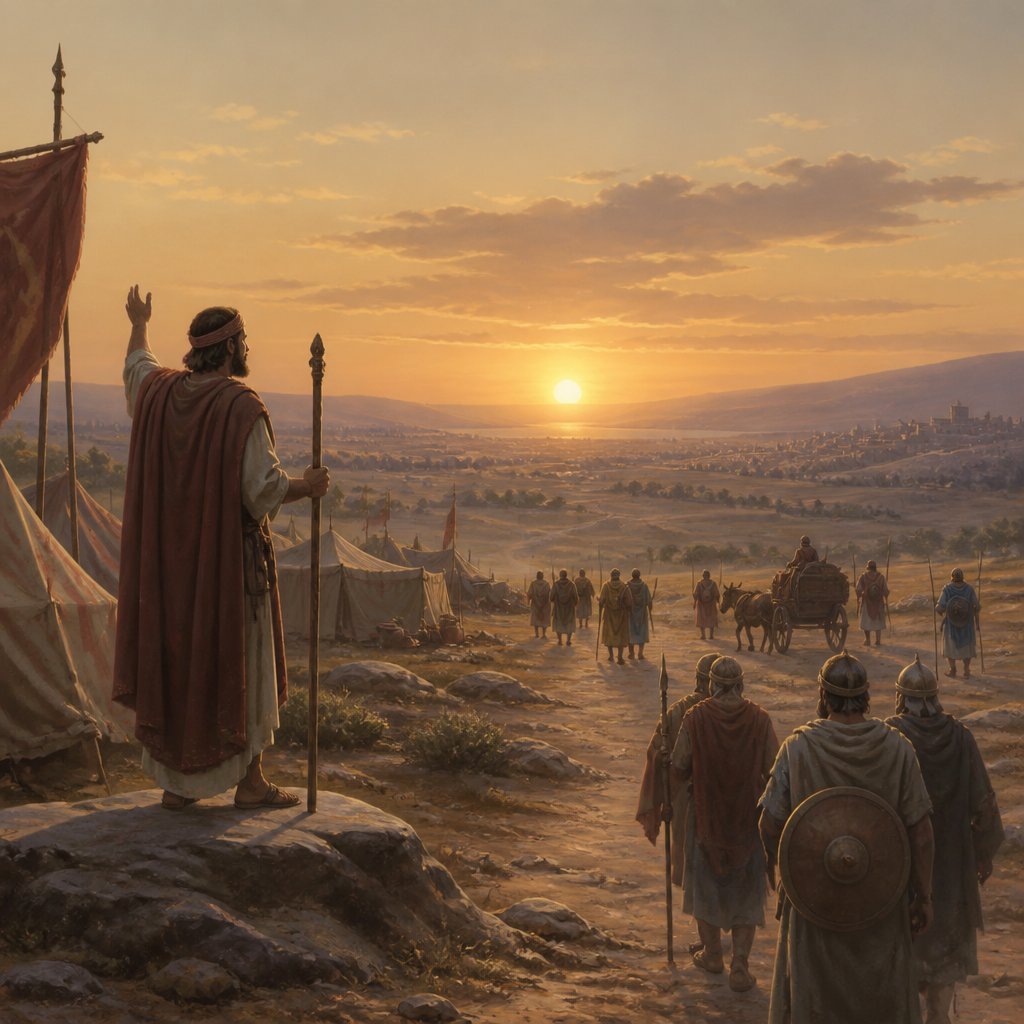
1 Kings 22:36 (KJV): “And there went a proclamation throughout the host about the going down of the sun, saying, Every man to his city, and every man to his own country.”
In order to fully grasp the meaning and significance of 1 Kings 22:36, it is important to understand the context in which it is situated. The verse is part of a larger narrative that recounts the reign of King Ahab of Israel and his interactions with the prophet Micaiah. At the time, Ahab was allied with King Jehoshaphat of Judah and they were preparing for battle against the Syrians at Ramoth-gilead.
The verse describes the aftermath of the fateful battle where King Ahab was mortally wounded by an arrow and ultimately died. The proclamation throughout the host signifies the end of the battle and the dispersal of the armies as they return to their respective cities and countries.
One of the key themes in this verse is the consequences of sin and disobedience. Throughout the narrative of King Ahab, there is a recurring theme of his wickedness and disregard for the commandments of God. This ultimately leads to his downfall and demise in the battle at Ramoth-gilead. The verse serves as a reminder of the temporal nature of human power and the inevitability of facing the consequences of one's actions.
Furthermore, the proclamation can also be seen as a symbol of the fleeting nature of earthly victories and achievements. Despite the preparations and alliances made by King Ahab and King Jehoshaphat, their military campaign ultimately ended in defeat and death. This serves as a cautionary tale about the vanity of human endeavors and the importance of seeking divine guidance and righteousness.
Another important theme in this verse is the sovereignty of God. The events leading up to the battle at Ramoth-gilead, as well as its outcome, all unfold according to God's will and providence. The proclamation throughout the host signals the end of the battle and the fulfillment of God's plan. It serves as a poignant reminder that God is ultimately in control of all things, and that His purposes will come to pass despite the schemes and intentions of men.
In conclusion, 1 Kings 22:36 holds significant meaning within the larger narrative of King Ahab and the battle at Ramoth-gilead. It serves as a sobering reminder of the consequences of sin and disobedience, the fleeting nature of earthly achievements, and the sovereignty of God. As with many passages in the Bible, it provides valuable insights and lessons that are applicable to our own lives and circumstances. The verse prompts us to reflect on our own actions and choices, and to seek guidance and righteousness in accordance with God's will.
Get our apps


Artwork for 1 Kings 22:36

1 Kings 22:36 - "And there went a proclamation throughout the host about the going down of the sun, saying, Every man to his city, and every man to his own country."
"And there went a proclamation throughout the host about the going down of the sun, saying, Every man to his city, and every man to his own country." - 1 Kings 22:36

Elijah in the scene 1 Kings 18:36–38

1 Kings 1:36 - "And Benaiah the son of Jehoiada answered the king, and said, Amen: the LORD God of my lord the king say so too."

1 kings 22:19

1 Kings 6:36 - "¶ And he built the inner court with three rows of hewed stone, and a row of cedar beams."

1 Kings 8:22

1 Kings 22:47 - "There was then no king in Edom: a deputy was king."

1 Kings 22:44 - "And Jehoshaphat made peace with the king of Israel."

1 Kings 22:1 - "And they continued three years without war between Syria and Israel."

1 Kings 1:22 - "¶ And, lo, while she yet talked with the king, Nathan the prophet also came in."

1 Kings 2:36 - "¶ And the king sent and called for Shimei, and said unto him, Build thee an house in Jerusalem, and dwell there, and go not forth thence any whither."

1 Kings 22:37 - "¶ So the king died, and was brought to Samaria; and they buried the king in Samaria."

2 Chronicles 36:22

Proverbs 8:22-36

1 Kings 7:36 - "For on the plates of the ledges thereof, and on the borders thereof, he graved cherubims, lions, and palm trees, according to the proportion of every one, and additions round about."

1 Kings 22:29 - "So the king of Israel and Jehoshaphat the king of Judah went up to Ramoth-gilead."

1 Kings 22:45 - "Now the rest of the acts of Jehoshaphat, and his might that he shewed, and how he warred, are they not written in the book of the chronicles of the kings of Judah?"

1 Kings 12:22 - "But the word of God came unto Shemaiah the man of God, saying,"

"There was then no king in Edom: a deputy was king." - 1 Kings 22:47

Matthew 22:36 - "Master, which is the great commandment in the law?"

1 Kings 22:9 - "Then the king of Israel called an officer, and said, Hasten hither Micaiah the son of Imlah."

1 Kings 22:2 - "And it came to pass in the third year, that Jehoshaphat the king of Judah came down to the king of Israel."

1 Kings 7:22 - "And upon the top of the pillars was lily work: so was the work of the pillars finished."

2 kings 9:34-36

1 Kings 22:39 - "Now the rest of the acts of Ahab, and all that he did, and the ivory house which he made, and all the cities that he built, are they not written in the book of the chronicles of the kings of Israel?"

1 Kings 22:21 - "And there came forth a spirit, and stood before the LORD, and said, I will persuade him."

1 Kings 22:7 - "And Jehoshaphat said, Is there not here a prophet of the LORD besides, that we might enquire of him?"

2 Kings 15:36 - "¶ Now the rest of the acts of Jotham, and all that he did, are they not written in the book of the chronicles of the kings of Judah?"

1 Kings 22:41 - "¶ And Jehoshaphat the son of Asa began to reign over Judah in the fourth year of Ahab king of Israel."