What does 1 Kings 2:21 mean?
“And she said, Let Abishag the Shunammite be given to Adonijah thy brother to wife.” — 1 Kings 2:21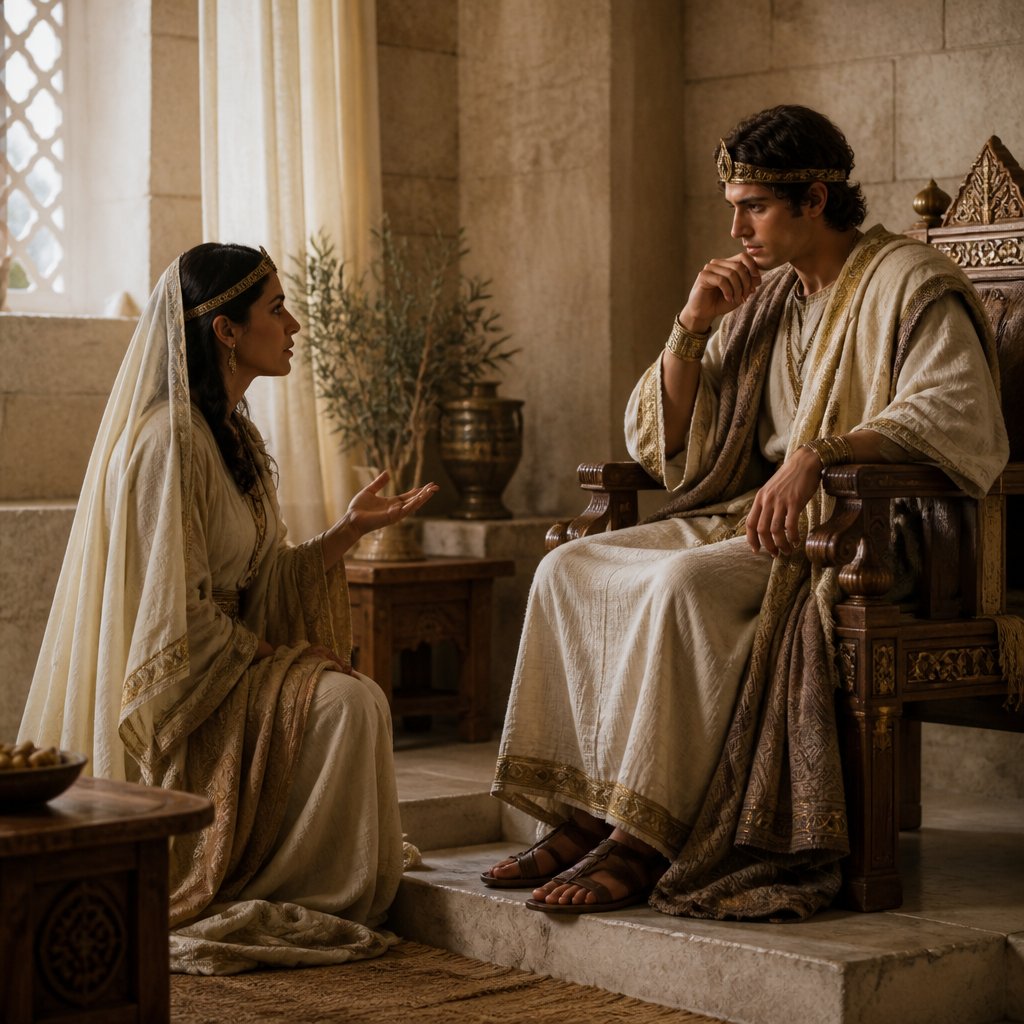
1 Kings 2:21 (KJV) says, "And she said, Let Abishag the Shunammite be given to Adonijah thy brother to wife."
In order to fully understand the significance of this verse, it is important to consider the context in which it is found. This verse is part of the larger narrative of King Solomon's ascent to the throne following the death of his father, King David. In this particular verse, Bathsheba, Solomon's mother, is speaking to him about a request made by his older half-brother, Adonijah.
Upon first reading, this verse might seem rather straightforward, but upon closer examination, it becomes clear that it contains significant themes related to power, succession, and the roles of women in ancient society. To truly unpack the meaning of this verse, it is necessary to explore these themes in depth.
One of the key themes in this verse is the transfer of power. Throughout the biblical narrative, power and authority are central elements, and the transfer of power from one ruler to another often serves as a crucial turning point in the story. In this case, the request for Abishag the Shunammite to be given to Adonijah as a wife is loaded with political implications. Abishag was a young woman who had been chosen to care for the aging King David in his final days. By requesting her as a wife, Adonijah was making a bid for power and laying claim to the throne.
The relationship between Adonijah and Solomon also introduces the theme of sibling rivalry and succession. Throughout the Old Testament, sibling rivalries and disputes over inheritance are common, and this verse is a prime example of this pattern. Adonijah's request can be seen as an attempt to undermine Solomon's position as king and assert his own claim to the throne. The dynamics of power struggles and family conflict are clearly at play in this verse.
Furthermore, the role of women in ancient society is also a significant aspect of this verse. In requesting Abishag as a wife, Adonijah is not just seeking a partner, but also asserting his authority and control over her. In ancient Israel, women were often treated as property, and marriages were frequently arranged for political or strategic purposes. Here, Abishag becomes a pawn in the struggle for power between Adonijah and Solomon, highlighting the vulnerability and lack of agency that women often experienced in patriarchal societies.
Symbolism also plays a role in this verse, as the request for Abishag as a wife represents more than just a marriage proposal. It symbolizes the wider power struggle and the complex relationships between the main characters. The implications of this request extend far beyond the individual characters involved, and serve as a microcosm of the larger political and social dynamics at play in ancient Israel.
In conclusion, 1 Kings 2:21 is a deceptively simple verse that, upon closer examination, reveals deep themes related to power, succession, gender dynamics, and symbolism. The complexities of the relationships between the characters and the broader political context in which the verse is situated provide rich material for interpretation and reflection. By exploring these themes, readers can gain a deeper understanding of the biblical narrative and the complex dynamics of power and authority in ancient Israel.
Get our apps


Artwork for 1 Kings 2:21

1 Kings 2:21 - "And she said, Let Abishag the Shunammite be given to Adonijah thy brother to wife."
"And she said, Let Abishag the Shunammite be given to Adonijah thy brother to wife." - 1 Kings 2:21

1 Kings 2:1 - "Now the days of David drew nigh that he should die; and he charged Solomon his son, saying,"

2 Kings 2:21
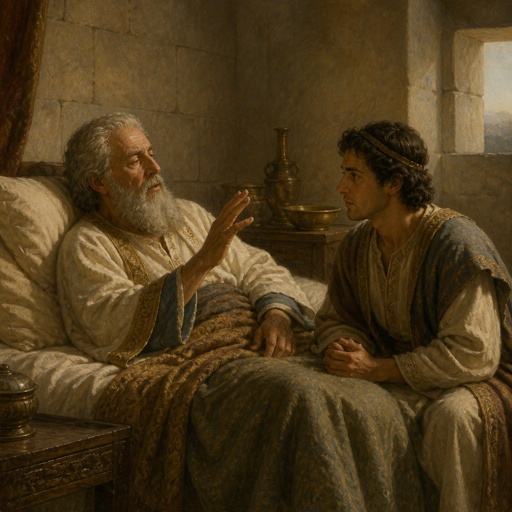
"Now the days of David drew nigh that he should die; and he charged Solomon his son, saying," - 1 Kings 2:1
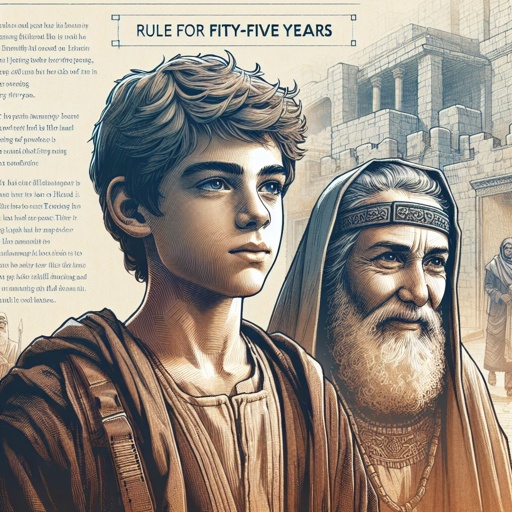
2 Kings 21:1 - "Manasseh was twelve years old when he began to reign, and reigned fifty and five years in Jerusalem. And his mother's name was Hephzi-bah."

1 Kings 8:21

2 Kings 15:21 - "¶ And the rest of the acts of Menahem, and all that he did, are they not written in the book of the chronicles of the kings of Israel?"

1 Kings 8:21

1 Kings 8:21

1 Kings 8:21

2 Kings 21:25 - "Now the rest of the acts of Amon which he did, are they not written in the book of the chronicles of the kings of Judah?"

2 Kings 21:10 - "¶ And the LORD spake by his servants the prophets, saying,"

2 Kings 21:21 - "And he walked in all the way that his father walked in, and served the idols that his father served, and worshipped them:"

1 Kings 21:14 - "Then they sent to Jezebel, saying, Naboth is stoned, and is dead."

2 Kings 11:21 - "Seven years old was Jehoash when he began to reign."

2 Kings 21:17 - "¶ Now the rest of the acts of Manasseh, and all that he did, and his sin that he sinned, are they not written in the book of the chronicles of the kings of Judah?"

2 Kings 21:23 - "¶ And the servants of Amon conspired against him, and slew the king in his own house."

1 Kings 21:28 - "And the word of the LORD came to Elijah the Tishbite, saying,"

1 Kings 21:17 - "¶ And the word of the LORD came to Elijah the Tishbite, saying,"

1 Kings 21:12 - "They proclaimed a fast, and set Naboth on high among the people."

2 Kings 21:22 - "And he forsook the LORD God of his fathers, and walked not in the way of the LORD."

2 Kings 21:5 - "And he built altars for all the host of heaven in the two courts of the house of the LORD."

2 Kings 20:21 - "And Hezekiah slept with his fathers: and Manasseh his son reigned in his stead."

2 Kings 21:20 - "And he did that which was evil in the sight of the LORD, as his father Manasseh did."

2 Kings 21:2 - "And he did that which was evil in the sight of the LORD, after the abominations of the heathen, whom the LORD cast out before the children of Israel."

2 Kings 3:21 - "¶ And when all the Moabites heard that the kings were come up to fight against them, they gathered all that were able to put on armour, and upward, and stood in the border."

1 Kings 21:1 - "And it came to pass after these things, that Naboth the Jezreelite had a vineyard, which was in Jezreel, hard by the palace of Ahab king of Samaria."

1 Kings 20:21 - "And the king of Israel went out, and smote the horses and chariots, and slew the Syrians with a great slaughter."

2 Kings 2:1 - "And it came to pass, when the LORD would take up Elijah into heaven by a whirlwind, that Elijah went with Elisha from Gilgal."