What does 1 Kings 2:43 mean?
“Why then hast thou not kept the oath of the LORD, and the commandment that I have charged thee with?” — 1 Kings 2:43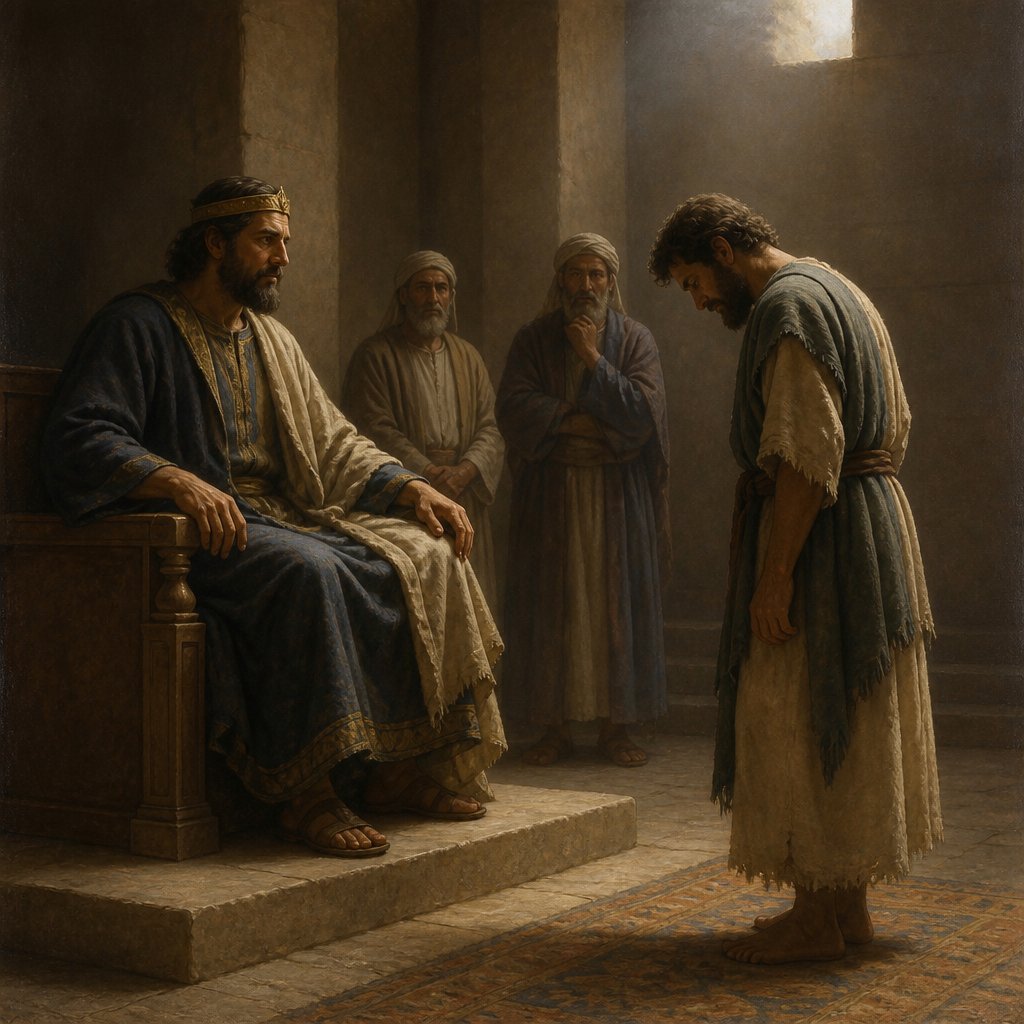
1 Kings 2:43 (KJV) states, "Why then hast thou not kept the oath of the Lord, and the commandment that I have charged thee with?"
This verse comes from the book of 1 Kings, which recounts the history of the Israelite monarchy. The context of this particular verse is the reign of King Solomon, the son of David, and his efforts to establish his rule and ensure the stability of his kingdom.
The verse is part of a larger narrative in which Solomon confronts one of his father's enemies, a man named Shimei. In the preceding verses, it is revealed that Shimei had broken a promise he made to King David by leaving Jerusalem without permission. Now, Solomon is holding Shimei accountable for his actions.
The verse reflects the severity with which Solomon views the breaking of an oath and a commandment. He questions Shimei about why he failed to keep his word and obey the commandment that was given to him. In doing so, Solomon highlights the importance of keeping one's word and honoring one's commitments, especially those made before the Lord.
The verse also serves as a reminder of the significance of oaths and commandments in the Judeo-Christian tradition. In the Bible, oaths are taken very seriously, and breaking them is considered dishonorable and sinful. This verse underscores the gravity of breaking an oath before the Lord, suggesting that it is a direct violation of God's will.
Moreover, this passage reflects the theme of justice and accountability. Solomon's question to Shimei demonstrates his commitment to upholding the principles of justice and ensuring that individuals are held responsible for their actions. By confronting Shimei about his broken oath, Solomon is establishing himself as a ruler who demands integrity and adherence to moral and ethical standards.
Symbolically, the verse can be seen as a representation of the importance of truth and faithfulness. It underscores the idea that words have power and that keeping one's word is crucial for maintaining trust and integrity. In a broader sense, it echoes the biblical teachings on honesty, integrity, and the importance of honoring one's commitments.
In a more theological interpretation, the verse can be seen as reflecting the covenantal relationship between God and his people. Throughout the Bible, God establishes covenants with his people, and these agreements are considered sacred and binding. The breaking of an oath or commandment, therefore, can be seen as a metaphor for breaching the covenantal relationship with God, highlighting the significance of faithfulness and obedience in the Judeo-Christian faith.
In conclusion, 1 Kings 2:43 (KJV) is a verse that delves into the themes of justice, accountability, and the importance of keeping one's word. It serves as a reminder of the significance of oaths and commandments in the biblical tradition, highlighting the gravity of breaking such commitments. Symbolically, it underscores the importance of truth and faithfulness, as well as the broader theological concept of the covenantal relationship between God and his people. Ultimately, the verse resonates with the timeless principles of honesty, integrity, and the fulfillment of one's obligations in both the biblical narrative and the broader Judeo-Christian tradition.
Get our apps


Artwork for 1 Kings 2:43

1 Kings 2:43 - "Why then hast thou not kept the oath of the LORD, and the commandment that I have charged thee with?"

"Why then hast thou not kept the oath of the LORD, and the commandment that I have charged thee with?" - 1 Kings 2:43

1 Kings 7:43 - "And the ten bases, and ten lavers on the bases;"

1 Kings 20:43 - "And the king of Israel went to his house heavy and displeased, and came to Samaria."

1 Kings 1:43 - "And Jonathan answered and said to Adonijah, Verily our lord king David hath made Solomon king."

Isaiah 43:2

"And the ten bases, and ten lavers on the bases;" - 1 Kings 7:43

1 Chronicles 1:43 - "¶ Now these are the kings that reigned in the land of Edom before any king reigned over the children of Israel; Bela the son of Beor: and the name of his city was Dinhabah."

1 Kings 11:43 - "And Solomon slept with his fathers, and was buried in the city of David his father: and Rehoboam his son reigned in his stead."

1 Chronicles 2:43 - "And the sons of Hebron; Korah, and Tappuah, and Rekem, and Shema."

"And the king of Israel went to his house heavy and displeased, and came to Samaria." - 1 Kings 20:43

1 Kings 18:43 - "And said to his servant, Go up now, look toward the sea. And he went up, and looked, and said, There is nothing. And he said, Go again seven times."

"And Jonathan answered and said to Adonijah, Verily our lord king David hath made Solomon king." - 1 Kings 1:43

2 Kings 4:43 - "And his servitor said, What, should I set this before an hundred men? He said again, Give the people, that they may eat: for thus saith the LORD, They shall eat, and shall leave thereof."

"And the sons of Hebron; Korah, and Tappuah, and Rekem, and Shema." - 1 Chronicles 2:43

2 Kings 19:2

2 Kings 19:2

2 Kings 19:2

1 Kings 22:43 - "And he walked in all the ways of Asa his father; he turned not aside from it, doing that which was right in the eyes of the LORD: nevertheless the high places were not taken away; for the people offered and burnt incense yet in the high places."

Deuteronomy 32:43

isaiah 43:1

1 Kings 2:18 - "And Bath-sheba said, Well; I will speak for thee unto the king."
"¶ Now these are the kings that reigned in the land of Edom before any king reigned over the children of Israel; Bela the son of Beor: and the name of his city was Dinhabah." - 1 Chronicles 1:43

Exodus 28:31-43

Ezekiel 43:9 - "Now let them put away their whoredom, and the carcases of their kings, far from me, and I will dwell in the midst of them for ever."
"And Solomon slept with his fathers, and was buried in the city of David his father: and Rehoboam his son reigned in his stead." - 1 Kings 11:43

Genesis 43:1 - "And the famine was sore in the land."

2 Kings 1:1 - "Then Moab rebelled against Israel after the death of Ahab."

1 Kings 4:3 - "Elihoreph and Ahiah, the sons of Shisha, scribes; Jehoshaphat the son of Ahilud, the recorder."

Exodus 28:30-43