What does 1 Kings 7:10 mean?
“And the foundation was of costly stones, even great stones, stones of ten cubits, and stones of eight cubits.” — 1 Kings 7:10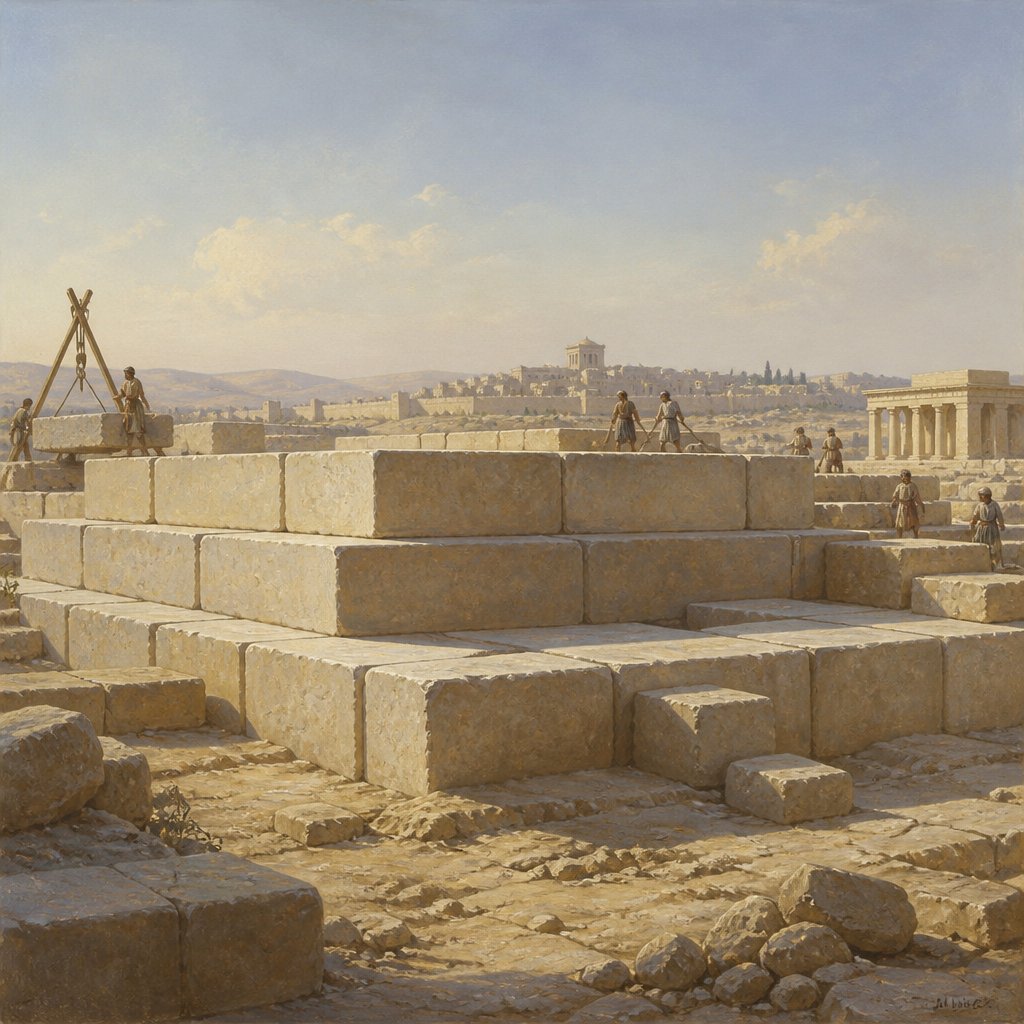
1 Kings 7:10 (KJV) states, "And the foundation was of costly stones, even great stones, stones of ten cubits, and stones of eight cubits." This verse comes from the Old Testament book of 1 Kings, which chronicles the reign of King Solomon and the construction of the temple in Jerusalem. To understand the meaning and commentary of this verse, it is important to explore the themes, context, and symbolism within the broader biblical narrative.
The construction of the temple in Jerusalem is a central focus in the book of 1 Kings. King Solomon, the son of David, was given the task of building the temple, which would serve as a place of worship for the Israelites and a dwelling place for the Lord. The temple was to be a magnificent structure, reflecting the glory and sovereignty of God. As a result, great care and attention to detail were given to its construction, including the use of costly and large stones for its foundation.
The use of costly stones in the temple's foundation carries several layers of symbolism and significance. Firstly, the use of expensive and high-quality materials reflects the Israelites' desire to offer their best to God. The temple was not just another building; it was a sacred space where the people could encounter the presence of the Almighty. Therefore, the use of precious stones signifies the Israelites' reverence and devotion to God.
Secondly, the mention of "stones of ten cubits, and stones of eight cubits" emphasizes the grandeur and scale of the temple's construction. The large size of these stones demonstrates the magnitude of the endeavor and the level of craftsmanship required to build such a monumental structure. It also speaks to the Israelites' commitment to creating a space worthy of the Lord's honor and glory.
Furthermore, the choice of stone as the foundation material holds spiritual significance. Throughout the Bible, stones are often used as symbols of strength, permanence, and reliability. In this context, the use of great and costly stones underscores the enduring nature of God's presence and the enduring nature of the temple as a place of worship. Just as the foundation provides stability and support for the entire structure, so too does the Lord provide a firm foundation for His people.
In a broader sense, the construction of the temple and the use of precious stones harken back to the themes of God's faithfulness and the establishment of His kingdom. The temple was not only a physical structure but also a representation of God's reign and authority. By dedicating the temple to the Lord, the Israelites were acknowledging His sovereignty and their dependence on Him.
From a historical and cultural context, the use of costly stones in the temple's foundation also reflects the wealth and prosperity of King Solomon's kingdom. The abundance of resources and skilled labor available for the temple's construction highlights the opulence and power of Israel during this period.
In conclusion, 1 Kings 7:10 serves as a testament to the Israelites' commitment to honoring God through the construction of the temple. The use of costly stones symbolizes their reverence, devotion, and the enduring nature of God's presence. It also underscores the grandeur and significance of the temple as a place of worship and the establishment of God's kingdom on earth. As readers, we are reminded of the importance of offering our best to the Lord and acknowledging His faithfulness and sovereignty in all aspects of our lives.
Get our apps


Artwork for 1 Kings 7:10

1 Kings 7:10 - "And the foundation was of costly stones, even great stones, stones of ten cubits, and stones of eight cubits."
"And the foundation was of costly stones, even great stones, stones of ten cubits, and stones of eight cubits." - 1 Kings 7:10
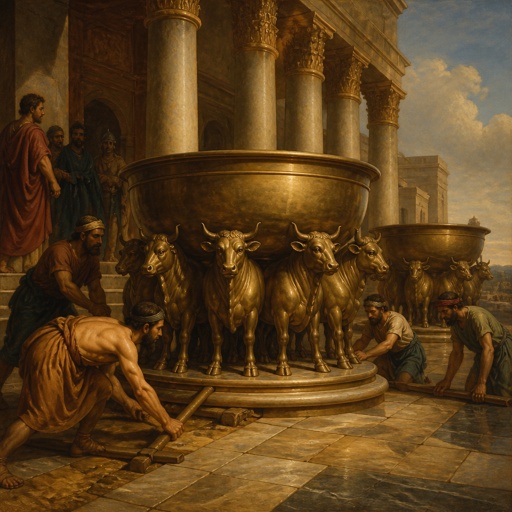
1 kings 7:8

1 Kings 7:27-38

1 Kings 10:1

1 Kings 10:1

1 Kings 10:7 - "Howbeit I believed not the words, until I came, and mine eyes had seen it: and, behold, the half was not told me: thy wisdom and prosperity exceedeth the fame which I heard."

1 kings 10:1

1 Kings 7:27-38

1 Kings 10:23 - "So king Solomon exceeded all the kings of the earth for riches and for wisdom."

1 Kings 8:10

1 Kings 12:10

1 Kings 12:10

1 Kings 8:10

1 Kings 8:10

1 Kings 8:10

1 Kings 8:10

1 Kings 12:10

1 Kings 12:10

1 Kings 8:10

1 Kings 8:10

1 kings 8:7

1 kings 8:7

1 Kings 8:7

1 Kings 10:15 - "Beside that he had of the merchantmen, and of the traffick of the spice merchants, and of all the kings of Arabia, and of the governors of the country."

Exodus 7:10

1 Kings 7:43 - "And the ten bases, and ten lavers on the bases;"

1 Kings 7:13 - "¶ And king Solomon sent and fetched Hiram out of Tyre."

1 Kings 1:10 - "But Nathan the prophet, and Benaiah, and the mighty men, and Solomon his brother, he called not."

Daniel 7: 9-10