What does 1 Kings 7:3 mean?
“And it was covered with cedar above upon the beams, that lay on forty five pillars, fifteen in a row.” — 1 Kings 7:3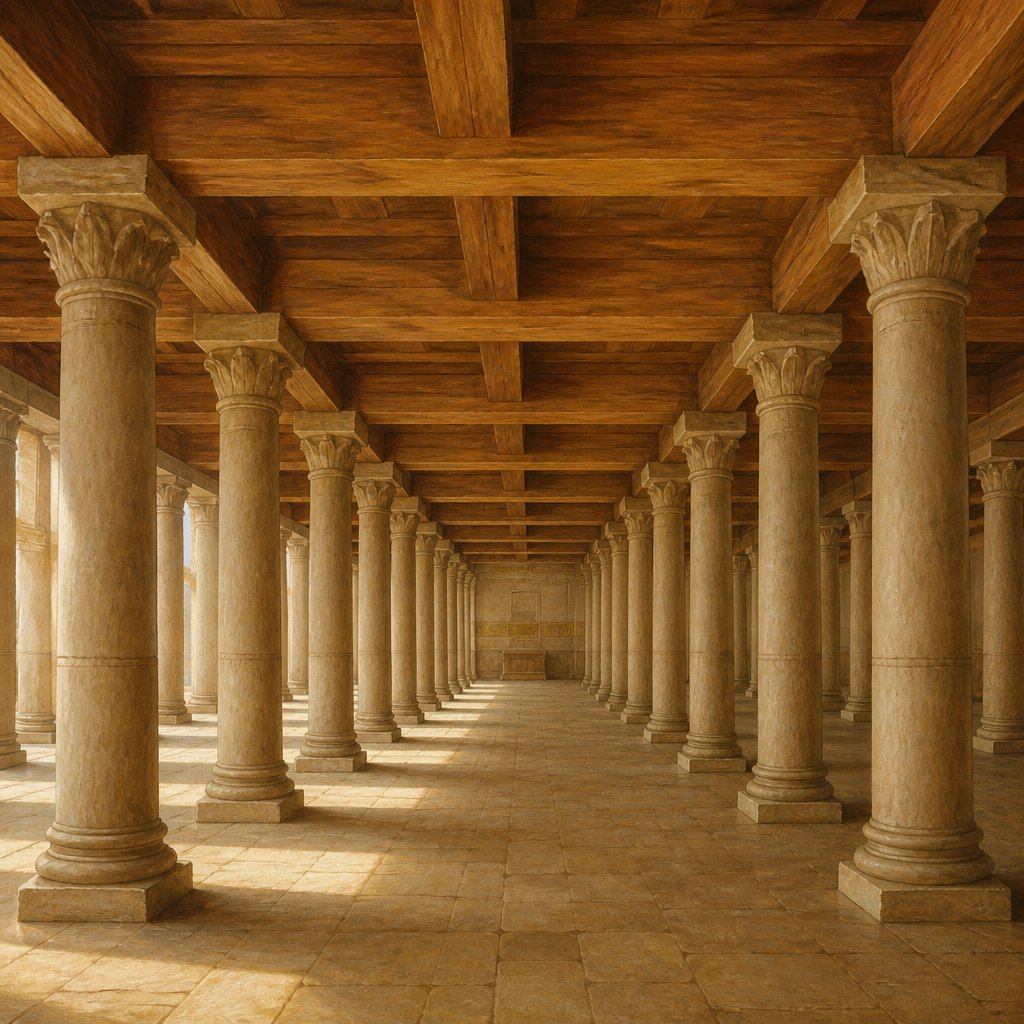
The Bible verse 1 Kings 7:3 in the King James Version reads, "And it was covered with cedar above upon the beams, that lay on forty-five pillars, fifteen in a row."
This verse is part of the larger narrative describing the construction of the temple of Solomon, a significant event in the history of ancient Israel. The temple was built to house the Ark of the Covenant and serve as a place of worship for the Israelites. This verse specifically details the architecture and construction of the temple, highlighting the use of cedar and the precise arrangement of the pillars.
One of the key themes in this verse is the significance of the temple as a place of divine worship and spiritual significance. The use of cedar wood, which was highly valued for its durability and aromatic fragrance, signifies the importance of the temple as a place of beauty and reverence. Additionally, the careful arrangement of the pillars reflects the meticulous attention to detail and the grandeur of the temple, emphasizing its sacred nature.
Furthermore, the construction of the temple is symbolic of the Israelites' relationship with God. By building a magnificent and ornate structure for worship, they were demonstrating their devotion and commitment to God. The temple was meant to be a physical representation of God's presence among His people, and the elaborate construction reflects the Israelites' desire to honor and glorify Him.
The number forty-five is also significant in biblical numerology. In the Bible, the number forty often represents a period of testing, trial, or probation. For example, Jesus fasted for forty days and forty nights in the wilderness, and the Israelites wandered in the desert for forty years. The use of forty-five pillars may symbolize the completion of a period of trial or testing, signifying the establishment of the temple as a place of permanence and stability in the lives of the Israelites.
Additionally, the arrangement of the fifteen pillars in a row may have symbolic significance. The number fifteen is associated with rest and deliverance in biblical numerology. For example, the Israelites celebrated the Feast of Tabernacles for fifteen days, a time of joy and thanksgiving for God's provision and deliverance. The precise arrangement of the pillars in fifteen rows may symbolize the rest and peace that God provides for His people in His temple.
In a broader context, this verse serves as a reminder of the importance of reverence and worship in the Christian faith. The construction of the temple underscores the need for God's people to set aside dedicated and sacred spaces for worship and spiritual reflection. It also emphasizes the value of offering our best and most beautiful efforts in honor of God, as demonstrated through the use of precious materials and careful craftsmanship in the temple's construction.
In conclusion, 1 Kings 7:3 offers a glimpse into the elaborate construction of the temple of Solomon and the reverence and devotion of the Israelites to God. Through its rich symbolism and themes of worship, divine presence, and spiritual significance, this verse serves as a powerful reminder of the importance of honoring and glorifying God in both our physical spaces of worship and in our hearts and lives.
Get our apps


Artwork for 1 Kings 7:3

1 Kings 7:3 - "And it was covered with cedar above upon the beams, that lay on forty five pillars, fifteen in a row."
"And it was covered with cedar above upon the beams, that lay on forty five pillars, fifteen in a row." - 1 Kings 7:3
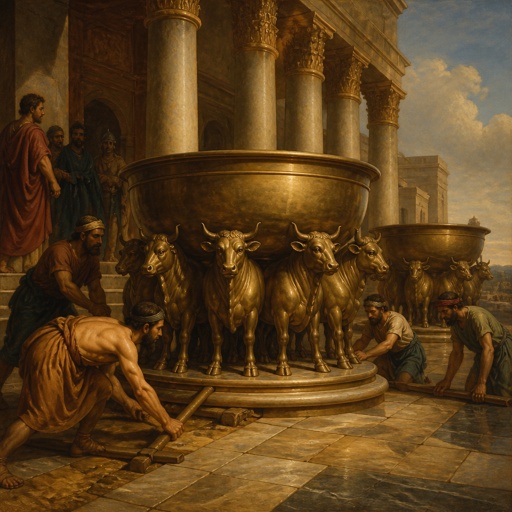
1 kings 7:8

1 Kings 7:27-38

2 Kings 7:3 - "¶ And there were four leprous men at the entering in of the gate: and they said one to another, Why sit we here until we die?"

1 Kings 7:27-38

1 Kings 3:7 - "And now, O LORD my God, thou hast made thy servant king instead of David my father: and I am but a little child: I know not how to go out or come in."

1 kings 8:7

1 kings 8:7

1 Kings 8:7

1 kings 3:15

1 Kings 3:9

1 kings 3:15

1 kings 3:12

1 Kings 7:43 - "And the ten bases, and ten lavers on the bases;"

1 Kings 7:13 - "¶ And king Solomon sent and fetched Hiram out of Tyre."

1 Kings 7:44 - "And one sea, and twelve oxen under the sea;"
1 Kings 1:7 - "And he conferred with Joab the son of Zeruiah, and with Abiathar the priest: and they following Adonijah helped him."

1 Kings 7:1 - "But Solomon was building his own house thirteen years, and he finished all his house."

1 Kings 15:7 - "Now the rest of the acts of Abijam, and all that he did, are they not written in the book of the chronicles of the kings of Judah? And there was war between Abijam and Jeroboam."

1 Chronicles 3:7 - "And Nogah, and Nepheg, and Japhia,"

1 Kings 3:24 - "And the king said, Bring me a sword. And they brought a sword before the king."

1 Kings 3:19 - "And this woman's child died in the night; because she overlaid it."

1 Kings 3:10 - "And the speech pleased the Lord, that Solomon had asked this thing."

1 Kings 1:3 - "So they sought for a fair damsel throughout all the coasts of Israel, and found Abishag a Shunammite, and brought her to the king."

1 Kings 7:22 - "And upon the top of the pillars was lily work: so was the work of the pillars finished."

1 Kings 7:11 - "And above were costly stones, after the measures of hewed stones, and cedars."

1 Kings 7:28 - "And the work of the bases was on this manner: they had borders, and the borders were between the ledges:"

1 Kings 7:4 - "And there were windows in three rows, and light was against light in three ranks."

1 Kings 7:46 - "In the plain of Jordan did the king cast them, in the clay ground between Succoth and Zarthan."