What does 1 Samuel 16:13 mean?
“Then Samuel took the horn of oil, and anointed him in the midst of his brethren: and the Spirit of the LORD came upon David from that day forward. So Samuel rose up, and went to Ramah.” — 1 Samuel 16:13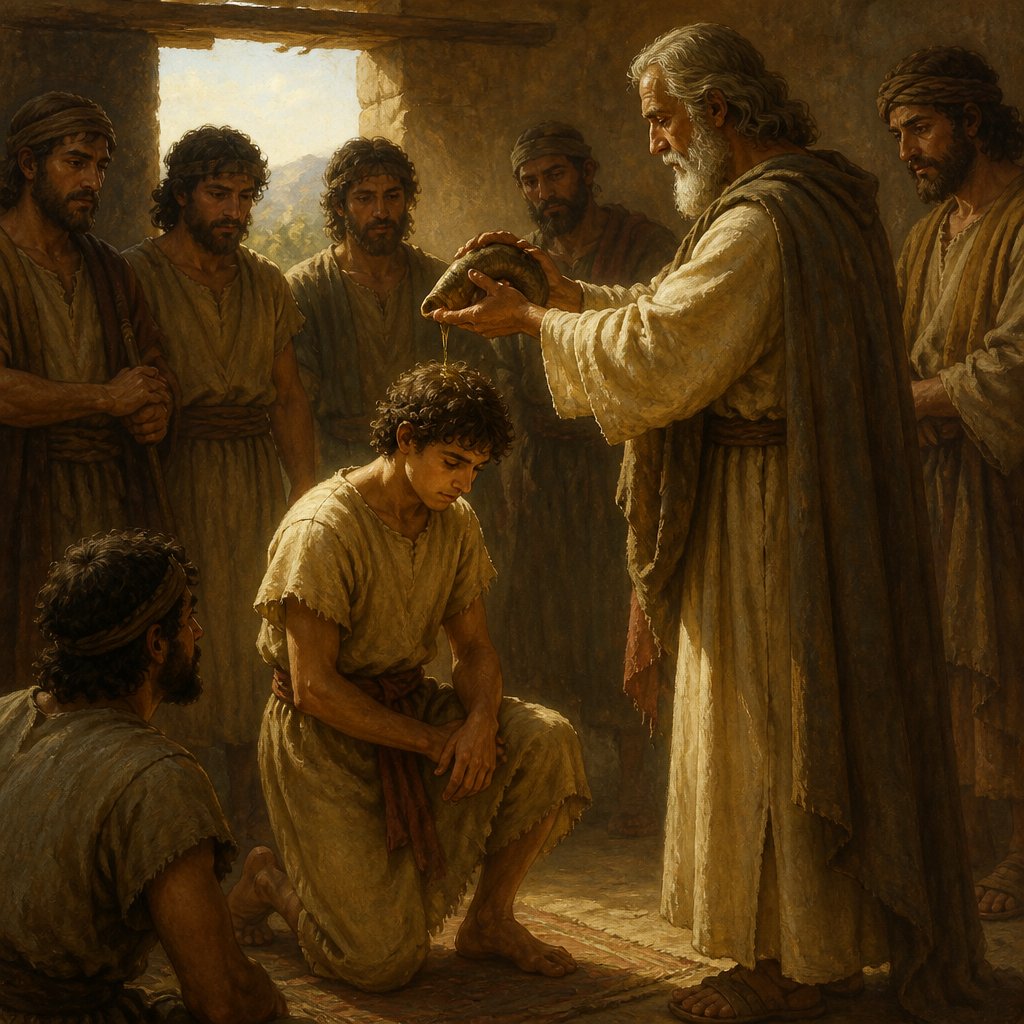
The verse 1 Samuel 16:13 from the King James Version (KJV) of the Bible reads, "Then Samuel took the horn of oil, and anointed him in the midst of his brethren: and the Spirit of the Lord came upon David from that day forward. So Samuel rose up, and went to Ramah."
This verse is part of the larger narrative of the anointing of David as king of Israel by the prophet Samuel. The context of this verse is crucial to understanding its full significance. Prior to this verse, Samuel was instructed by God to go to the house of Jesse in Bethlehem to anoint one of his sons as the future king of Israel, as God had rejected King Saul due to his disobedience. When Samuel arrived, he initially thought that Jesse's eldest son, Eliab, would be the chosen one due to his outward appearance, but God revealed to Samuel that He looks at the heart and not the outward appearance. Finally, David, the youngest son of Jesse, was brought before Samuel and God confirmed that he was the one to be anointed.
The verse emphasizes the act of anointing. In ancient Israel, anointing with oil was a significant ritual that symbolized a special commissioning or consecration by God for a particular task or office. In this case, the anointing of David by Samuel marks the beginning of his journey to becoming the king of Israel. This act not only sets David apart for his future role but also signals the divine choice and approval of him as the future leader of God's people.
The anointing with oil is also symbolic of the empowerment of the Holy Spirit. The verse explicitly states that "the Spirit of the Lord came upon David from that day forward." This indicates that David was endowed with the presence and power of the Spirit, equipping him for the responsibilities and challenges that would come with his kingship. The empowering of David by the Spirit signifies God's guidance, strength, and wisdom which would be vital for his rule over Israel.
Furthermore, this verse also reflects the theme of God's sovereignty and His selection of unlikely candidates. David, being the youngest son and a mere shepherd, was an unexpected choice for kingship. This emphasizes God's preference for the humble and those who are faithful to Him. It also serves as a reminder that God's ways are not the ways of man, and His choices often defy human expectations.
The anointing of David serves as a pivotal moment in the history of Israel and the fulfillment of God's plan. It also sets the stage for the subsequent events in David's life, including his victory over Goliath, his reign as king, and the establishment of the Davidic dynasty.
In addition to the immediate historical context, this verse also holds significance in a broader theological sense. It foreshadows the coming of Jesus Christ, who is often referred to as the "Anointed One" or the "Messiah." The anointing of David, in a way, points forward to the ultimate anointing of Jesus Christ, who would be the perfect and eternal King of God's people.
In conclusion, 1 Samuel 16:13 from the KJV of the Bible holds great theological and historical significance. It portrays the divine election and empowerment of David as the future king of Israel, while also pointing to the greater redemptive plan of God through Jesus Christ. The anointing with oil and the empowering of the Spirit symbolize God's sovereignty, His guidance, and His fulfillment of His promises. This verse ultimately serves as a reminder of God's faithfulness and His ability to work through unexpected individuals to accomplish His purposes.
Get our apps


Artwork for 1 Samuel 16:13

1 Samuel 16:13 - "Then Samuel took the horn of oil, and anointed him in the midst of his brethren: and the Spirit of the LORD came upon David from that day forward. So Samuel rose up, and went to Ramah."
"Then Samuel took the horn of oil, and anointed him in the midst of his brethren: and the Spirit of the LORD came upon David from that day forward. So Samuel rose up, and went to Ramah." - 1 Samuel 16:13

1 Samuel 16:1–13

1 Samuel 13:16 - "And Saul, and Jonathan his son, and the people that were present with them, abode in Gibeah of Benjamin: but the Philistines encamped in Michmash."
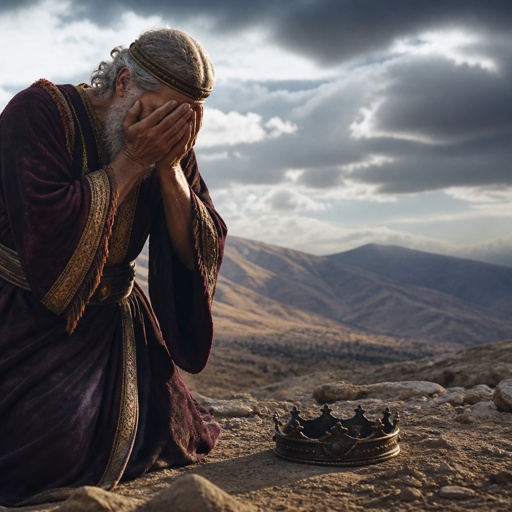
1 Samuel 13:13-14
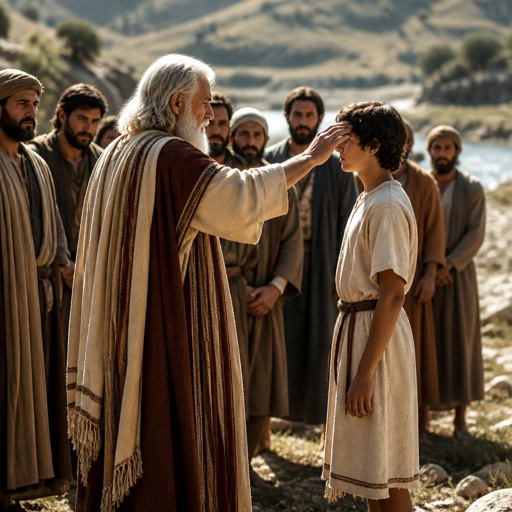
1 Samuel 16:6-7

1 Samuel 3:16 - "Then Eli called Samuel, and said, Samuel, my son. And he answered, Here am I."
1 Samuel 13:11

1 Samuel 12:13
1 Samuel 13:3
1 Samuel 13:14

1 Samuel 12:13

1 Samuel 16:10 - "Again, Jesse made seven of his sons to pass before Samuel. And Samuel said unto Jesse, The LORD hath not chosen these."

revelation 1:13-16
1 Samuel 4:14-16
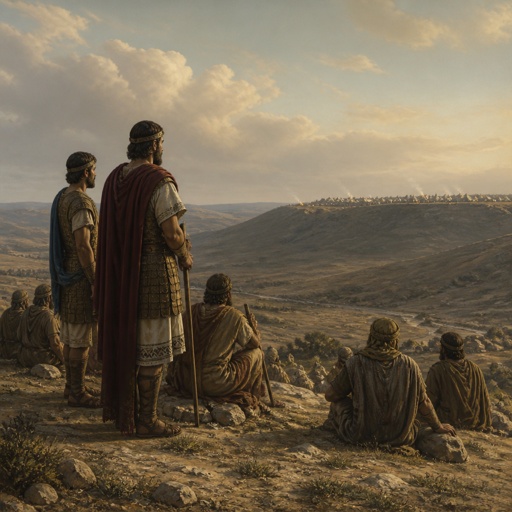
"And Saul, and Jonathan his son, and the people that were present with them, abode in Gibeah of Benjamin: but the Philistines encamped in Michmash." - 1 Samuel 13:16

1 Samuel 22:11-13

1 Samuel 16:8 - "Then Jesse called Abinadab, and made him pass before Samuel. And he said, Neither hath the LORD chosen this."

Luke 16:1-13

Revelations 1:13-16

1 Samuel 15:13 - "And Samuel came to Saul: and Saul said unto him, Blessed be thou of the LORD: I have performed the commandment of the LORD."

1 Samuel 13:8 - "¶ And he tarried seven days, according to the set time that Samuel had appointed: but Samuel came not to Gilgal; and the people were scattered from him."

Luke 16:1-13

Luke 16:1-13

1 Samuel 28:16 - "Then said Samuel, Wherefore then dost thou ask of me, seeing the LORD is departed from thee, and is become thine enemy?"

Mark 10:13–16

1 Samuel 13:23 - "And the garrison of the Philistines went out to the passage of Michmash."

1 Samuel 13:1 - "Saul reigned one year; and when he had reigned two years over Israel,"

1 Samuel 13:13 - "And Samuel said to Saul, Thou hast done foolishly: thou hast not kept the commandment of the LORD thy God, which he commanded thee: for now would the LORD have established thy kingdom upon Israel for ever."

1 Samuel 13:12 Saul's disobedience