What does 1 Samuel 17:25 mean?
"And the men of Israel said, Have ye seen this man that is come up? surely to defy Israel is he come up: and it shall be, that the man who killeth him, the king will enrich him with great riches, and will give him his daughter, and make his father's house free in Israel." - 1 Samuel 17:25
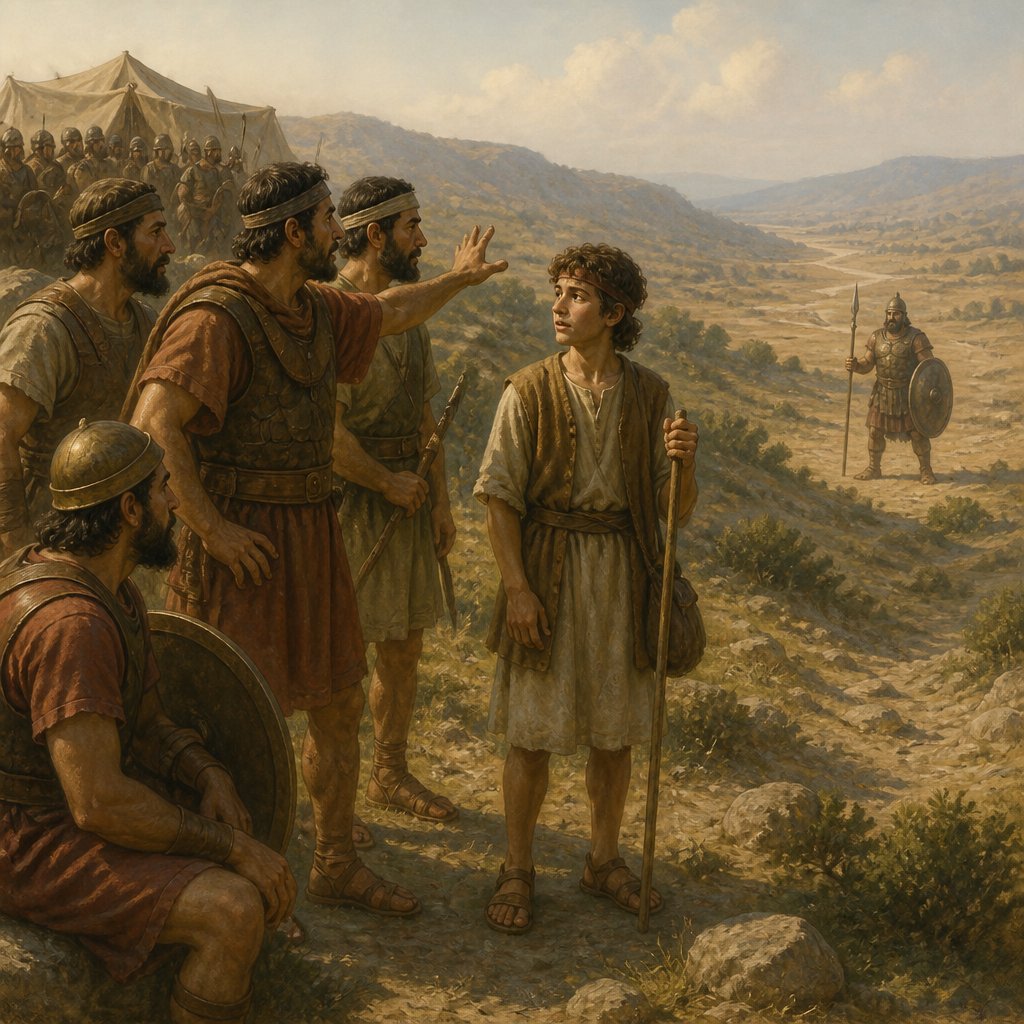
1 Samuel 17:25 (KJV) states: "And the men of Israel said, Have ye seen this man that is come up? Surely to defy Israel is he come up: and it shall be, that the man who killeth him, the king will enrich him with great riches, and will give him his daughter, and make his father's house free in Israel."
This verse is taken from the famous story of David and Goliath, which is one of the most well-known and celebrated stories in the Bible. The context of this verse is the battle between the Israelites and the Philistines, with the towering and fearsome champion Goliath demanding a one-on-one combat to decide the outcome of the entire war.
The men of Israel are discussing the arrival of Goliath and recognize the severity of the situation. They acknowledge that Goliath has come to defy Israel, and they are aware of the enormous stakes of the impending battle. The verse reflects the fear and uncertainty that the Israelite army is facing in the presence of Goliath, as they ponder the tremendous challenge that lies before them.
The verse also reveals the reward that King Saul has promised to the man who is brave enough to face Goliath and defeat him. The king offers great riches, his own daughter in marriage, and exemption from taxes for the hero's family. This offer adds a layer of tension and motivation to the story, as it underscores the enormity of the task and the potential rewards for the one who is successful.
This verse is rich in themes that are consistent throughout the Bible. One of the main themes is the concept of faith and courage in the face of seemingly insurmountable odds. The Israelite army is paralyzed with fear by the presence of Goliath, but the story ultimately centers on the courage and faith of a young shepherd boy, David, who is willing to stand up to the enemy and trust in God's strength to deliver him.
Another prominent theme in this verse is the idea of divine intervention and the sovereignty of God. The Israelites understand that their success in battle ultimately depends on God's favor and that victory against Goliath is only possible with God's help. This theme is further highlighted by the fact that David's victory over Goliath is ultimately attributed to God's power working through him, rather than to David's own strength or skill.
The verse also touches on the theme of leadership and the responsibilities of kingship. King Saul's offer of great rewards for the one who defeats Goliath reveals his desire to find a champion and his willingness to reward bravery and loyalty. It also showcases the importance of leadership in the face of adversity and the need for a strong and courageous leader to inspire and rally the people.
Symbolically, the figure of Goliath represents the overwhelming challenges and obstacles that people face in their lives. Goliath's imposing size and reputation convey the sense of hopelessness and powerlessness that can come with facing seemingly impossible situations. On the other hand, David represents the underdog who relies on God's strength to conquer seemingly insurmountable challenges. His victory over Goliath serves as a timeless symbol of triumph over adversity through faith and reliance on God.
In conclusion, 1 Samuel 17:25 (KJV) is a pivotal verse in the story of David and Goliath, conveying themes of faith, courage, divine intervention, leadership, and the triumph of the underdog. It serves as a powerful reminder of the timeless lessons and inspiration found in the biblical narrative, making it a source of encouragement and hope for readers throughout history.
Have questions about 1 Samuel 17:25?
Dive deeper into this scripture with Bible Chat — an AI-powered tool for exploring God's Word through conversation. Ask questions, get context, and grow in your understanding of the Bible.
Get Our Apps


1 Samuel 17:25 Artwork

1 Samuel 17:25 - "And the men of Israel said, Have ye seen this man that is come up? surely to defy Israel is he come up: and it shall be, that the man who killeth him, the king will enrich him with great riches, and will give him his daughter, and make his father's house free in Israel."
"And the men of Israel said, Have ye seen this man that is come up? surely to defy Israel is he come up: and it shall be, that the man who killeth him, the king will enrich him with great riches, and will give him his daughter, and make his father's house free in Israel." - 1 Samuel 17:25
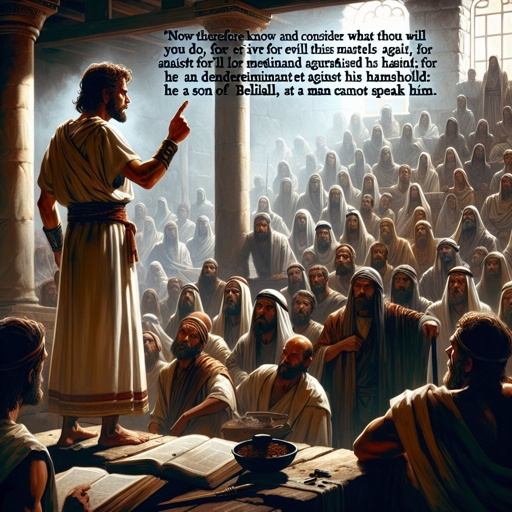
1 Samuel 25:17 - "Now therefore know and consider what thou wilt do; for evil is determined against our master, and against all his household: for he is such a son of Belial, that a man cannot speak to him."

1 Samuel 1:25 - "And they slew a bullock, and brought the child to Eli."

1 Samuel 10:17 - "¶ And Samuel called the people together unto the LORD to Mizpeh;"

1 Samuel 17:33

1 Samuel 1:15-17

1 Samuel 9:25 - "¶ And when they were come down from the high place into the city, Samuel communed with Saul upon the top of the house."

1 Samuel 17:34-35

1 Samuel 17:49

1 Samuel 17:45

1 Samuel 17:49

1 Samuel 17:45

1 samuel 17:3

1 Samuel 17:49

1 Samuel 17:45
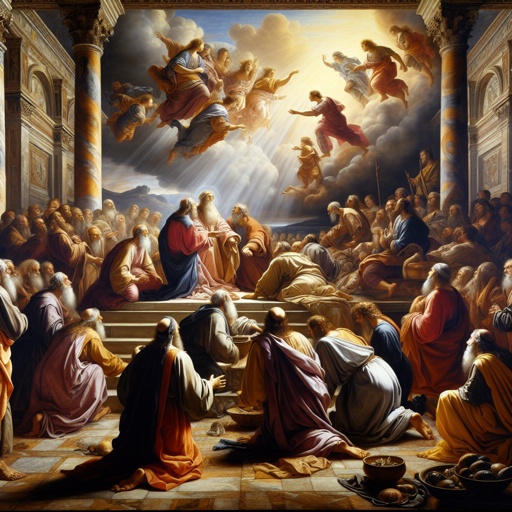
1 Samuel 17:49

1 Samuel 25:1 - "And Samuel died; and all the Israelites were gathered together, and lamented him, and buried him in his house at Ramah. And David arose, and went down to the wilderness of Paran."

1 Samuel 10:25 - "Then Samuel told the people the manner of the kingdom, and wrote it in a book, and laid it up before the LORD. And Samuel sent all the people away, every man to his house."

1 Samuel 14:25 - "And all they of the land came to a wood; and there was honey upon the ground."

2 Samuel 1. 17-27

1 Samuel 25:4 - "¶ And David heard in the wilderness that Nabal did shear his sheep."

1 Samuel 17:38-40

1 Samuel 17:14 - "And David was the youngest: and the three eldest followed Saul."

1 Samuel 17:45-49

"And they slew a bullock, and brought the child to Eli." - 1 Samuel 1:25

1 Chronicles 25:17 - "The tenth to Shimei, he, his sons, and his brethren, were twelve:"

2 Samuel 17:25 - "¶ And Absalom made Amasa captain of the host instead of Joab: which Amasa was a man's son, whose name was Ithra an Israelite, that went in to Abigail the daughter of Nahash, sister to Zeruiah Joab's mother."

1 Samuel 17:56 - "And the king said, Enquire thou whose son the stripling is."

Nabal becomes like stone in 1 Samuel 25:37