What does 1 Samuel 17:49 mean?
“And David put his hand in his bag, and took thence a stone, and slang it, and smote the Philistine in his forehead, that the stone sunk into his forehead; and he fell upon his face to the earth.” — 1 Samuel 17:49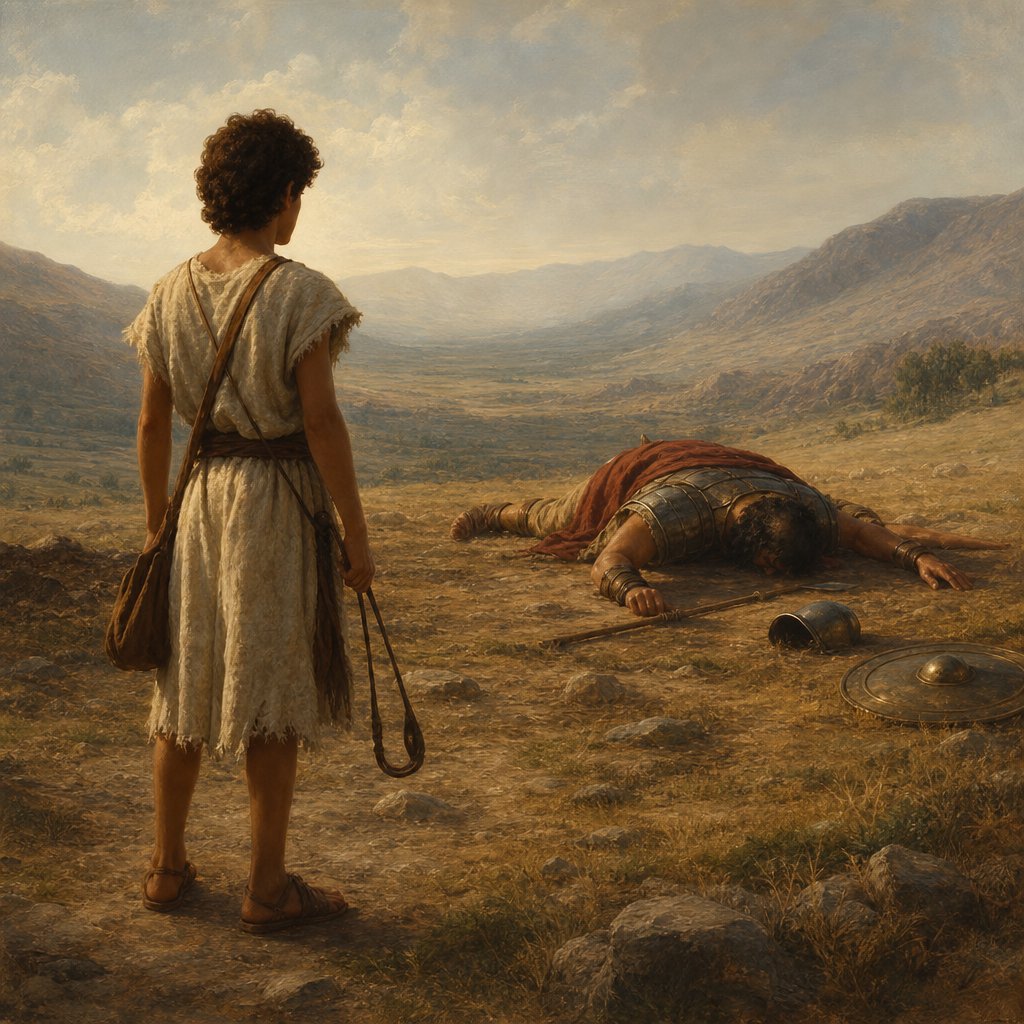
In the King James Version, 1 Samuel 17:49 reads, “And David put his hand in his bag, and took thence a stone, and slang it, and smote the Philistine in his forehead, that the stone sunk into his forehead; and he fell upon his face to the earth.” In simple narration it is the instant when the long tension of the valley of Elah resolves: the shepherd boy, armed with what looks like almost nothing, strikes down the champion of the Philistines with a single stone. Yet the verse is not merely a report of a blow landed; it is written to display how the LORD brings down the proud, how faith acts, and how God’s deliverance often arrives in forms the world considers weak.
The context is crucial. Goliath has defied “the armies of the living God” and paralyzed Israel with fear. David has already framed the conflict in spiritual terms rather than merely military ones, insisting that the LORD who delivered him from the lion and the bear will deliver him from this Philistine, and that the battle is the LORD’s. When this verse arrives, it is the visible fulfillment of what David has been confessing: the victory is not produced by conventional power but by confidence in the living God. The action is remarkably plain and unadorned—hand to bag, stone selected, sling used, forehead struck—so that the reader cannot miss the contrast between the simplicity of the means and the magnitude of the result.
The themes of faith and divine deliverance are embedded in the details. David “put his hand in his bag” and “took thence a stone,” emphasizing preparedness that had been formed long before the public crisis. The shepherd’s bag and sling were ordinary tools of his calling; what Israel viewed as insignificance was, in David’s life, the arena where God had trained him. The verse therefore speaks to the way God uses the hidden life to prepare for the day of open trial. David’s faith is not a vague optimism; it moves his hand, chooses the stone, and acts. The narrative makes room for human agency—David truly slings the stone—while the wider chapter makes clear that the effectiveness of that action is bound up with the LORD’s purpose, so that the glory of the victory cannot be finally credited to human strength.
The symbolism of the “stone” and the “forehead” intensifies the meaning. The stone is small, common, and unimpressive, yet it becomes the instrument of downfall for a giant clothed in brass and armed for war. It embodies the biblical reversal in which God resists the proud and exalts what is lowly. The forehead is the place of boldness and front-facing defiance; Goliath has presented himself as an unchallengeable face of Philistine power. To be struck in the forehead is to have that defiant front humbled publicly and decisively. The text says “the stone sunk into his forehead,” which underscores the completeness of the strike: it is not a glancing blow but a penetrating one, as though the man who appeared impenetrable is shown to be vulnerable before God. The outcome—“he fell upon his face to the earth”—carries a further resonance. In Scripture, falling on the face can be an act of worship or submission; here it becomes an unwilling prostration. The one who mocked the God of Israel is brought low, face-down, before the God he scorned.
This verse also highlights the contrast between appearance and reality. Israel’s army measures the situation by sight: height, armor, intimidation, and the probability of survival. David measures it by covenant loyalty and the honor of God’s name. The blow described in 1 Samuel 17:49 makes visible which measure is true. It is not that skill is irrelevant—David knows how to sling—but the point is that the decisive factor is not the superiority of weapons or physical stature. The verse is written to demonstrate that God can overthrow the “giant” through means that seem disproportionate, so that fear grounded in appearances is exposed as misplaced.
The significance of the verse within the larger story of David is also important. This moment is a public vindication of the one who was not considered a likely champion: the youngest, the shepherd, the one left with the sheep. It foreshadows David’s rise in Israel and reveals the kind of king he will be—one who relies on the LORD rather than on outward power. The victory described here is not simply personal heroism; it is deliverance for Israel and a turning point in the conflict with the Philistines, showing that the LORD can save His people when they cannot save themselves.
Read in its literary force, 1 Samuel 17:49 is a compact portrayal of God’s pattern: the threatening power of the enemy collapses at a single decisive moment, through an instrument that appears weak, in a way that silences boasting and turns dread into awe. The verse invites the reader to see beyond the mechanics of sling and stone to the theological claim carried by the whole chapter: “the battle is the LORD’s,” and the living God is able to bring down the proud, defend His name, and deliver His people by ways that confound human expectation.
Get our apps


Artwork for 1 Samuel 17:49

1 Samuel 17:49
1 Samuel 17:49

1 Samuel 17:49

1 Samuel 17:49

1 Samuel 17:49 – "David reached into his bag and took out a stone; he slung it and struck the Philistine on the forehead."

1 Samuel 17:49 – "David reached into his bag and took out a stone; he slung it and struck the Philistine on the forehead."

1 Samuel 17:49 – "David reached into his bag and took out a stone; he slung it and struck the Philistine on the forehead."
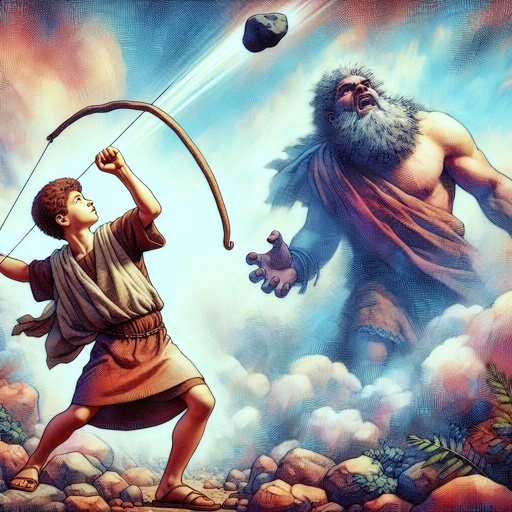
1 Samuel 17:49 – "David put his hand in his bag and took out a stone; he slung it and struck the Philistine on the forehead."

"And David put his hand in his bag, and took thence a stone, and slang it, and smote the Philistine in his forehead, that the stone sunk into his forehead; and he fell upon his face to the earth." - 1 Samuel 17:49

"And David put his hand in his bag, and took thence a stone, and slang it, and smote the Philistine in his forehead, that the stone sunk into his forehead; and he fell upon his face to the earth." - 1 Samuel 17:49

1 Samuel 17:49 – "David reached into his bag and took out a stone; he slung it and struck the Philistine on the forehead."

1 Samuel 17:49 - "And David put his hand in his bag, and took thence a stone, and slang it, and smote the Philistine in his forehead, that the stone sunk into his forehead; and he fell upon his face to the earth."
![And David put his hand in his bag, and took thence a stone, and slang [it], and smote the Philistine in his forehead, that the stone sunk into his forehead; and he fell upon his face to the earth.
1 Samuel 17:49](https://media.bible.art/0d8b48e2-4b6a-4abb-adb6-3e62bb7594c8-thumbnail.jpg)
And David put his hand in his bag, and took thence a stone, and slang [it], and smote the Philistine in his forehead, that the stone sunk into his forehead; and he fell upon his face to the earth. 1 Samuel 17:49

"And David put his hand in his bag, and took thence a stone, and slang it, and smote the Philistine in his forehead, that the stone sunk into his forehead; and he fell upon his face to the earth." - 1 Samuel 17:49
"And David put his hand in his bag, and took thence a stone, and slang it, and smote the Philistine in his forehead, that the stone sunk into his forehead; and he fell upon his face to the earth." - 1 Samuel 17:49

1 Samuel 17:45-49

1 Samuel 14:49 - "Now the sons of Saul were Jonathan, and Ishui, and Melchi-shua: and the names of his two daughters were these; the name of the firstborn Merab, and the name of the younger Michal:"

1 Samuel 10:17 - "¶ And Samuel called the people together unto the LORD to Mizpeh;"

1 Samuel 17:33

1 Samuel 1:15-17

1 Samuel 17:34-35

1 Samuel 17:45

1 Samuel 17:45
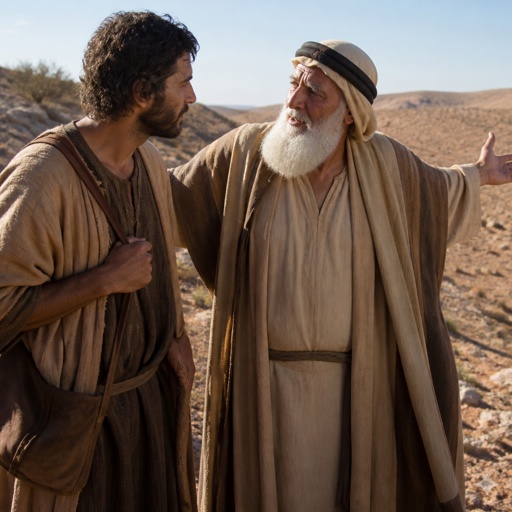
1 Samuel 9:17
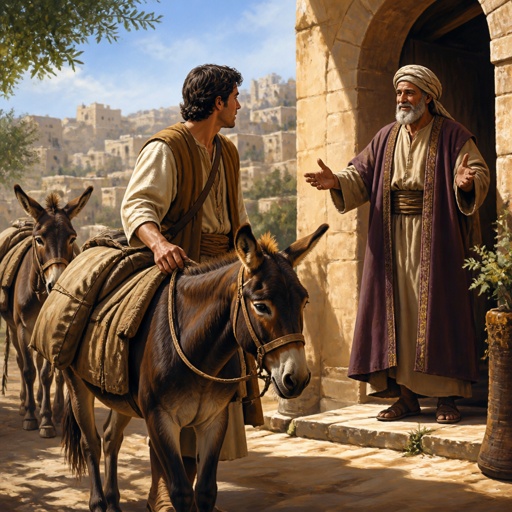
1 Samuel 9:17

1 samuel 17:3

1 Samuel 17:45
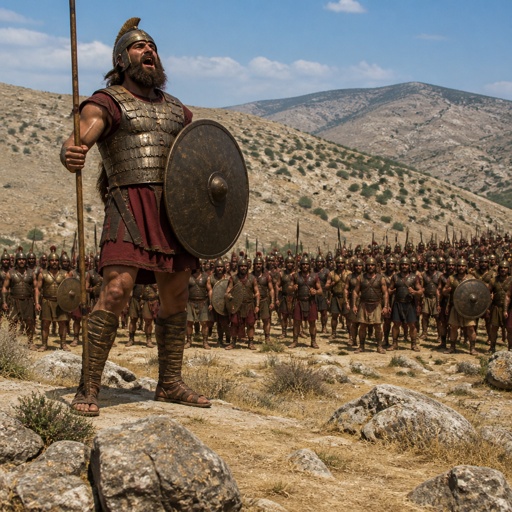
1 Samuel 17:4-8

2 Samuel 1. 17-27
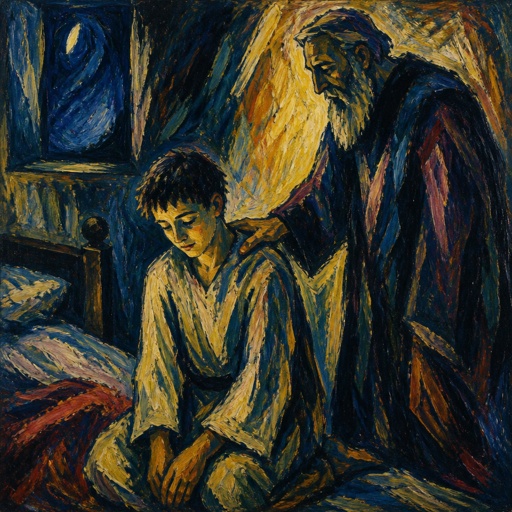
1 Samuel 3:17-18