What does 1 Samuel 18:6-7 mean?
"And it came to pass as they came, when David was returned from the slaughter of the Philistine, that the women came out of all cities of Israel, singing and dancing, to meet king Saul, with tabrets, with joy, and with instruments of musick. And the women answered one another as they played, and said, Saul hath slain his thousands, and David his ten thousands." - 1 Samuel 18:6-7
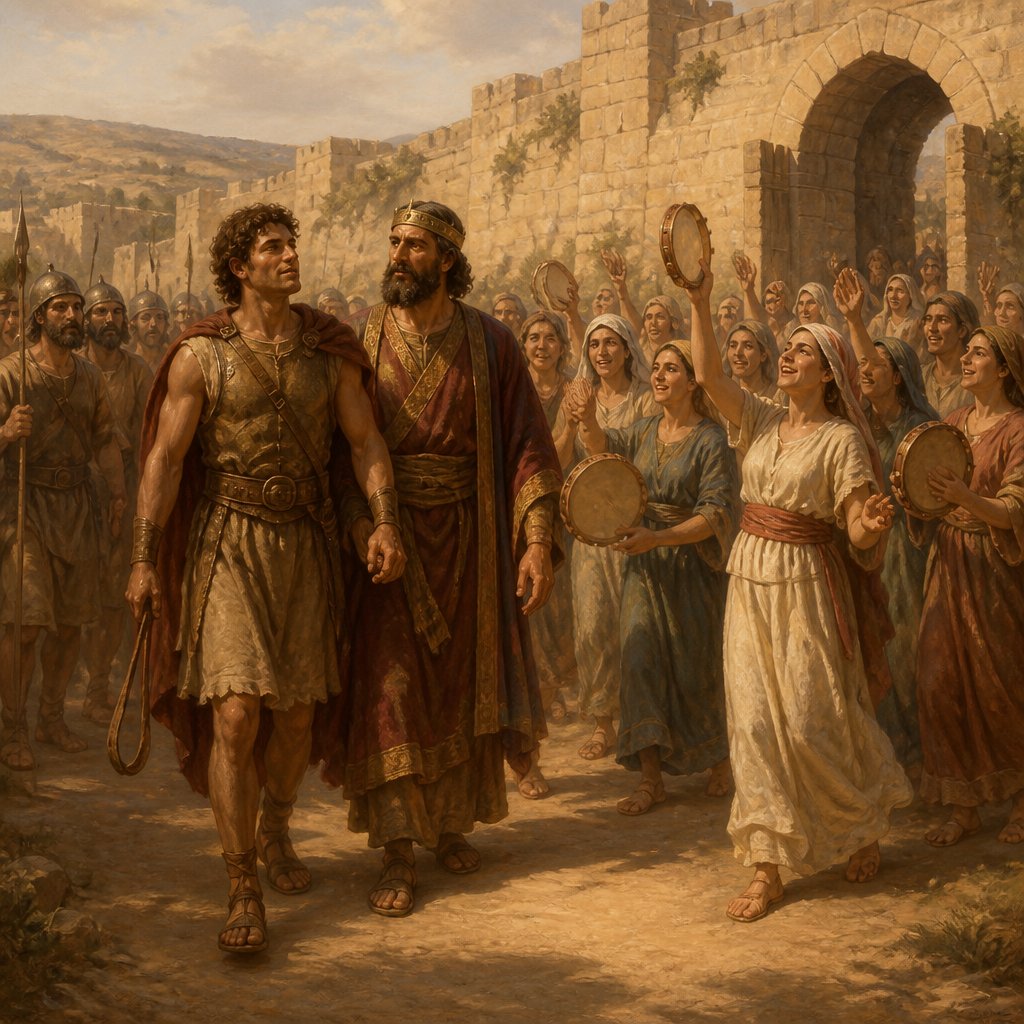
1 Samuel 18:6-7 (KJV): "And it came to pass as they came, when David was returned from the slaughter of the Philistine, that the women came out of all cities of Israel, singing and dancing, to meet king Saul, with tabrets, with joy, and with instruments of musick. And the women answered one another as they played, and said, Saul hath slain his thousands, and David his ten thousands."
Context: This verse comes from the first book of Samuel in the Old Testament. It takes place after David's victory over Goliath, the Philistine giant. David, a young shepherd, courageously steps forward to battle the giant when no one else is brave enough to face him. With just a sling and a stone, David defeats Goliath, demonstrating his faith in God's power. Following this incredible victory, David is thrust into the limelight and gains favor with the people of Israel. King Saul, who was the current ruler, becomes jealous of David's success and begins to fear that David may usurp his throne. This passage captures the celebration and the subsequent jealousy and tension between David and Saul.
Themes: Envy, Jealousy, Recognition, and Pride
Envy and jealousy are prevalent themes in this passage as the women celebrate David's victory over the Philistine by singing and dancing. Their lyrics of "Saul hath slain his thousands, and David his ten thousands" serve as a direct contrast between the accomplishments of Saul and David, which triggers Saul's envy and insecurity. This theme of envy is timeless and can be seen in many other stories throughout the Bible and in literature, as people often struggle with comparison and the feeling of inadequacy when faced with the success of others.
Recognition is another important theme in this passage. The women's celebration of David's victory serves as a public acknowledgment of his bravery and skill. This recognition intensifies Saul's jealousy and exacerbates the growing tension between him and David. The desire for recognition and validation is a universal human experience, and this passage highlights how the pursuit of recognition can complicate relationships and lead to conflict.
Pride is also a central theme in this passage, as Saul's jealousy stems from his wounded pride. As the king of Israel, Saul expects to be the primary object of praise and adoration. However, David's triumph threatens Saul's pride and position, leading to his envy and resentment.
Symbolism: The women's celebration with music and dance serves as a symbol of David's triumph. Their joyous expression of gratitude and admiration for David echoes the importance of acknowledging and honoring the achievements of others. However, this celebration also serves as a catalyst for the escalating conflict between David and Saul, highlighting the destructive power of envy and pride.
Furthermore, the contrast between "Saul hath slain his thousands, and David his ten thousands" symbolizes the shifting balance of power and favor between Saul and David. David's rising influence and popularity represent a new era in Israel's leadership, while Saul's diminishing stature symbolizes the inevitable transition of power.
In conclusion, 1 Samuel 18:6-7 captures the complex dynamics of envy, recognition, and pride within the context of David's victory over Goliath. This passage serves as a cautionary tale about the destructive consequences of envy and pride, while also highlighting the importance of acknowledging and celebrating the accomplishments of others. The timeless themes and symbolism in this passage continue to resonate with readers, offering valuable insights into the complexities of human relationships and the pursuit of recognition and validation.
Have questions about 1 Samuel 18:6-7?
Dive deeper into this scripture with Bible Chat — an AI-powered tool for exploring God's Word through conversation. Ask questions, get context, and grow in your understanding of the Bible.
Get Our Apps


1 Samuel 18:6-7 Artwork

1 Samuel 18:6-7 - "As they were coming home, when David returned from striking down the Philistine, the women came out of all the cities of Israel, singing and dancing, to meet King Saul, with tambourines, with songs of joy, and with musical instruments. And the women sang to one another as they celebrated, "Saul has struck down his thousands, and David his ten thousands.""
"As they were coming home, when David returned from striking down the Philistine, the women came out of all the cities of Israel, singing and dancing, to meet King Saul, with tambourines, with songs of joy, and with musical instruments. And the women sang to one another as they celebrated, "Saul has struck down his thousands, and David his ten thousands."" - 1 Samuel 18:6-7

1 Samuel 18:7 - "And the women answered one another as they played, and said, Saul hath slain his thousands, and David his ten thousands."

1 Samuel 7:6 - "And they gathered together to Mizpeh, and drew water, and poured it out before the LORD, and fasted on that day, and said there, We have sinned against the LORD. And Samuel judged the children of Israel in Mizpeh."

1 Samuel 18:6 - "And it came to pass as they came, when David was returned from the slaughter of the Philistine, that the women came out of all cities of Israel, singing and dancing, to meet king Saul, with tabrets, with joy, and with instruments of musick."

1 Samuel 6:7 - "Now therefore make a new cart, and take two milch kine, on which there hath come no yoke, and tie the kine to the cart, and bring their calves home from them:"

2 Samuel 18:6 - "¶ So the people went out into the field against Israel: and the battle was in the wood of Ephraim;"
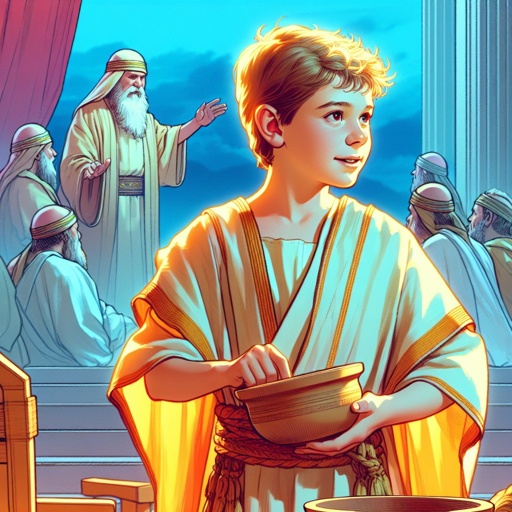
1 Samuel 2:18 - "¶ But Samuel ministered before the LORD, being a child, girded with a linen ephod."
1 Samuel 4:18
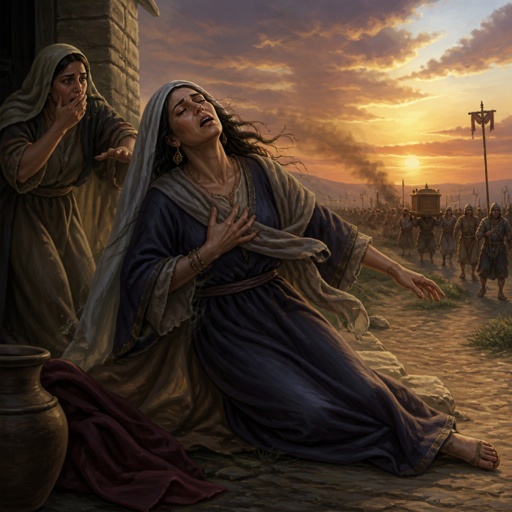
1 Samuel 4:18
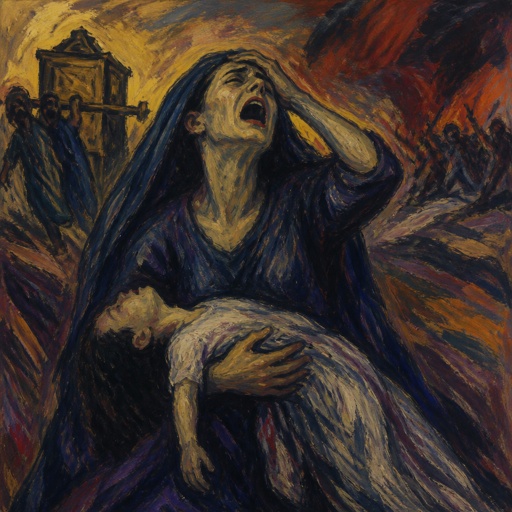
1 Samuel 4:18

1 Samuel 30:18

1 Samuel 12:18 - "So Samuel called unto the LORD; and the LORD sent thunder and rain that day: and all the people greatly feared the LORD and Samuel."

1 Samuel 14:6

1 Samuel 7:15 - "And Samuel judged Israel all the days of his life."

Matthew 21:21 Philippians 4:6-7 Ephesians 6:10-18 Put the words on the photo

1 Samuel 19:18 - "¶ So David fled, and escaped, and came to Samuel to Ramah, and told him all that Saul had done to him. And he and Samuel went and dwelt in Naioth."

1 Samuel 9:18 - "Then Saul drew near to Samuel in the gate, and said, Tell me, I pray thee, where the seer's house is."

1 Samuel 18:9 - "And Saul eyed David from that day and forward."

2 Samuel 18:7 - "Where the people of Israel were slain before the servants of David, and there was there a great slaughter that day of twenty thousand men."

1 Samuel 8:6 - "¶ But the thing displeased Samuel, when they said, Give us a king to judge us. And Samuel prayed unto the LORD."

Matthew 21:21 Philippians 4:6-7 Ephesians 6:10-18

1 Samuel 6:1 - "And the ark of the LORD was in the country of the Philistines seven months."

2 Samuel 6:14

2 Samuel 7:1–29

1 Samuel 14:7

1 Samuel 28:7

1 Samuel 8:7

1 Samuel 18:24 - "And the servants of Saul told him, saying, On this manner spake David."

1 Samuel 6:18 (KJVA) 18 And the golden mice, according to the number of all the cities of the Philistines belonging to the five lords, both of fenced cities, and of country villages, even unto the great stone of Abel, whereon they set down the ark of the LORD: which stone remaineth unto this day in the field of Joshua, the Bethshemite.