What does 1 Samuel 29:3 mean?
"Then said the princes of the Philistines, What do these Hebrews here? And Achish said unto the princes of the Philistines, Is not this David, the servant of Saul the king of Israel, which hath been with me these days, or these years, and I have found no fault in him since he fell unto me unto this day?" - 1 Samuel 29:3
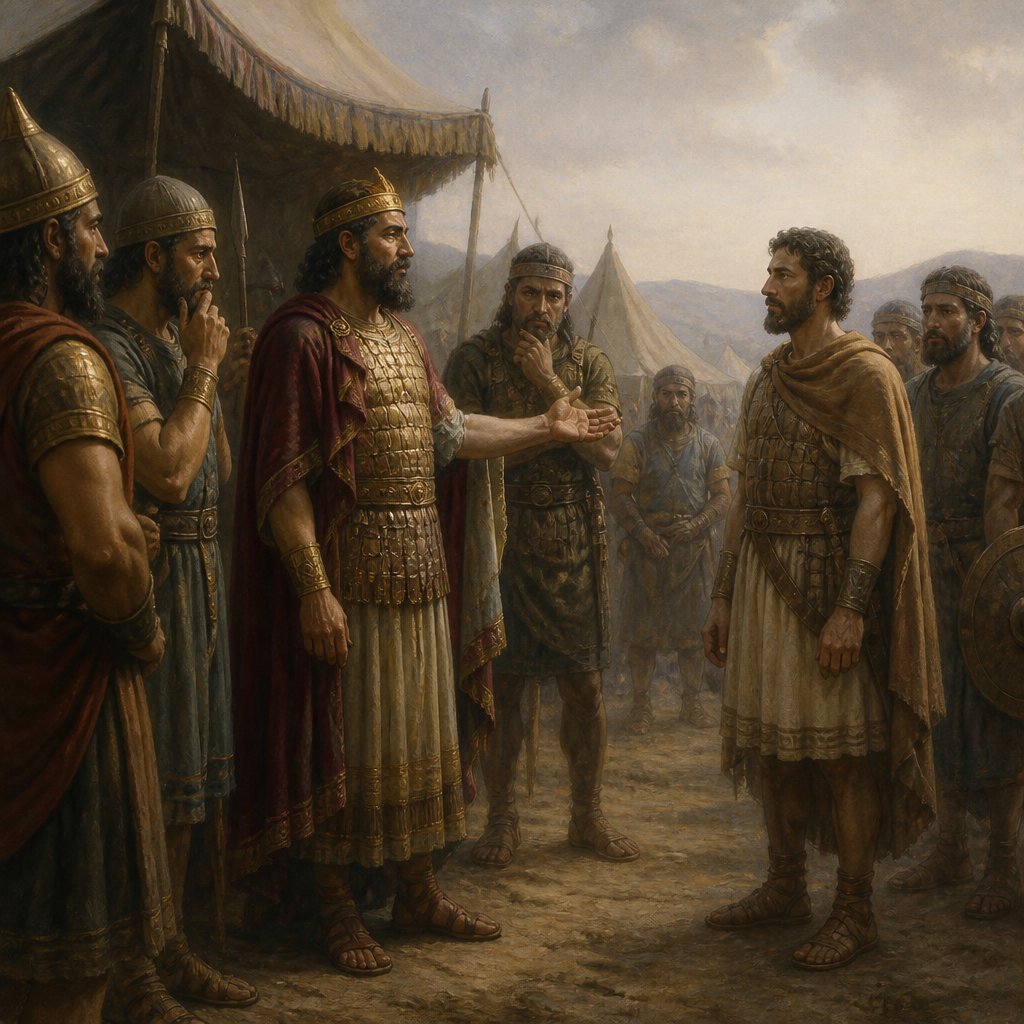
In 1 Samuel 29:3, the King James Version (KJV) of the Bible states, "Then said the princes of the Philistines, what do these Hebrews here? And Achish said unto the princes of the Philistines, is not this David, the servant of Saul the king of Israel, which hath been with me these days, or these years, and I have found no fault in him since he fell unto me unto this day?"
This verse is part of the larger narrative found in the book of 1 Samuel, which tells the story of the transition of power from the judges to the monarchy in Israel. In this particular passage, David has been living among the Philistines, led by King Achish, in order to escape from Saul, who sought to kill him. However, as the Philistines prepare for war with Israel, the princes question King Achish about the presence of the Hebrews, including David, in their camp.
The themes present in this verse include loyalty, deception, and the sovereignty of God. The complex political situation on display in this passage raises questions about David's trustworthiness and allegiances. On the one hand, David has been serving Achish and living alongside the Philistines, while on the other, he still considers himself loyal to Saul, the king of Israel. This episode also highlights the idea of God's providence and protection, as David manages to navigate the delicate balance of power between the Philistines and Israel, despite the precariousness of his situation.
In the broader context of the biblical narrative, 1 Samuel 29 is a critical moment in David's journey towards kingship. His ability to maintain appearances and conduct himself diplomatically among both the Philistines and his own people demonstrates his strategic acumen and his commitment to fulfilling God's plan for his life. Additionally, this episode serves as a reminder of the dangers of compromising one's loyalty to God, as David comes dangerously close to fighting against his own people.
This verse also contains several layers of symbolism, particularly in the character of David. He can be seen as a type of Christ, who lived among those who were not his own people, carefully maneuvering and fulfilling God's purpose. Just as David sought to navigate his precarious situation without compromising his allegiance to the Lord, Christians today are called to remain faithful to God amidst the pressures and temptations of the world.
Furthermore, the passage underscores the importance of discernment and wisdom in navigating complex and morally ambiguous situations. King Achish's inability to see through David's deception serves as a cautionary tale about the perils of misplaced trust and the dangers of basing decisions on superficial appearances rather than deeper truths.
In conclusion, 1 Samuel 29:3 offers a rich and multifaceted portrayal of the complexities of loyalty, power, and divine providence. Through the character of David, the passage reminds readers of the importance of remaining faithful to God even in the midst of difficult and morally ambiguous circumstances. It also serves as a reflection on the broader themes of God's sovereignty and the need for discernment and wisdom in navigating the complexities of human relationships and power dynamics.
Have questions about 1 Samuel 29:3?
Dive deeper into this scripture with Bible Chat — an AI-powered tool for exploring God's Word through conversation. Ask questions, get context, and grow in your understanding of the Bible.
Get Our Apps


1 Samuel 29:3 Artwork
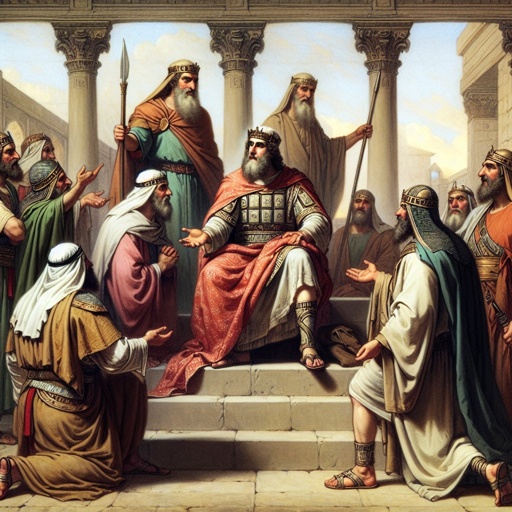
1 Samuel 29:3 - "Then said the princes of the Philistines, What do these Hebrews here? And Achish said unto the princes of the Philistines, Is not this David, the servant of Saul the king of Israel, which hath been with me these days, or these years, and I have found no fault in him since he fell unto me unto this day?"
"Then said the princes of the Philistines, What do these Hebrews here? And Achish said unto the princes of the Philistines, Is not this David, the servant of Saul the king of Israel, which hath been with me these days, or these years, and I have found no fault in him since he fell unto me unto this day?" - 1 Samuel 29:3

2 Samuel 7:1–29

1 Samuel 20:27-29

1 Chronicles 29:29 - "Now the acts of David the king, first and last, behold, they are written in the book of Samuel the seer, and in the book of Nathan the prophet, and in the book of Gad the seer,"

1 Samuel 17:29 - "And David said, What have I now done? Is there not a cause?"

1 Samuel 29:1 - "Now the Philistines gathered together all their armies to Aphek: and the Israelites pitched by a fountain which is in Jezreel."

1 Samuel 18:29 - "And Saul was yet the more afraid of David; and Saul became David's enemy continually."

1 Samuel 29:7 - "Wherefore now return, and go in peace, that thou displease not the lords of the Philistines."

1 Samuel 29:5 - "Is not this David, of whom they sang one to another in dances, saying, Saul slew his thousands, and David his ten thousands?"

1 Samuel 23:29 - "And David went up from thence, and dwelt in strong holds at En-gedi."

1 Samuel 3:3 - "And ere the lamp of God went out in the temple of the LORD, where the ark of God was, and Samuel was laid down to sleep;"

1 Samuel 29:2 - "And the lords of the Philistines passed on by hundreds, and by thousands: but David and his men passed on in the rereward with Achish."

1 Samuel 15:29 - "And also the Strength of Israel will not lie nor repent: for he is not a man, that he should repent."

1 Samuel 3:10 - "And the LORD came, and stood, and called as at other times, Samuel, Samuel. Then Samuel answered, Speak; for thy servant heareth."

1 Samuel 3:16 - "Then Eli called Samuel, and said, Samuel, my son. And he answered, Here am I."

1 Samuel 3:1-10

1 Samuel 3:4 - "That the LORD called Samuel: and he answered, Here am I."

1 Samuel 3:15 - "¶ And Samuel lay until the morning, and opened the doors of the house of the LORD. And Samuel feared to shew Eli the vision."

1 Samuel 3:1 - "And the child Samuel ministered unto the LORD before Eli. And the word of the LORD was precious in those days; there was no open vision."

2 Samuel 3:29 (KJVA) 29 Let it rest on the head of Joab, and on all his father's house; and let there not fail from the house of Joab one that hath an issue, or that is a leper, or that leaneth on a staff, or that falleth on the sword, or that lacketh bread.

1 samuel 17:3

1 Samuel 30:29 - "And to them which were in Rachal, and to them which were in the cities of the Jerahmeelites, and to them which were in the cities of the Kenites,"

1 Samuel 3:19 - "¶ And Samuel grew, and the LORD was with him, and did let none of his words fall to the ground."

1 Samuel 3:21 - "And the LORD appeared again in Shiloh: for the LORD revealed himself to Samuel in Shiloh by the word of the LORD."

1 Samuel 3:20 - "And all Israel from Dan even to Beer-sheba knew that Samuel was established to be a prophet of the LORD."
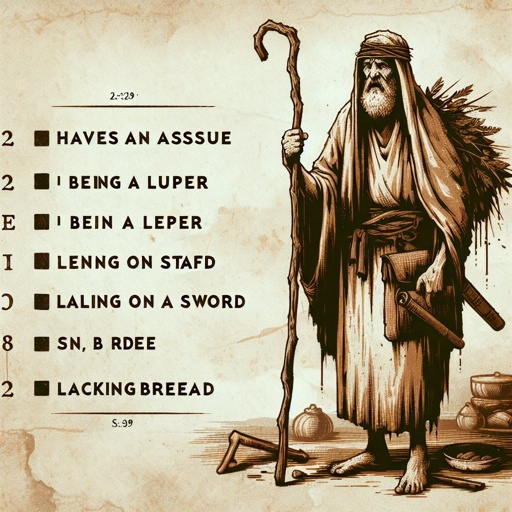
2 Samuel 3:29 - "Let it rest on the head of Joab, and on all his father's house; and let there not fail from the house of Joab one that hath an issue, or that is a leper, or that leaneth on a staff, or that falleth on the sword, or that lacketh bread."

1 Samuel 29:11 - "So David and his men rose up early to depart in the morning, to return into the land of the Philistines. And the Philistines went up to Jezreel."

1 Samuel 5: 3-4

1 Samuel 3:7 - "Now Samuel did not yet know the LORD, neither was the word of the LORD yet revealed unto him."