What does 1 Samuel 2:33 mean?
“And the man of thine, whom I shall not cut off from mine altar, shall be to consume thine eyes, and to grieve thine heart: and all the increase of thine house shall die in the flower of their age.” — 1 Samuel 2:33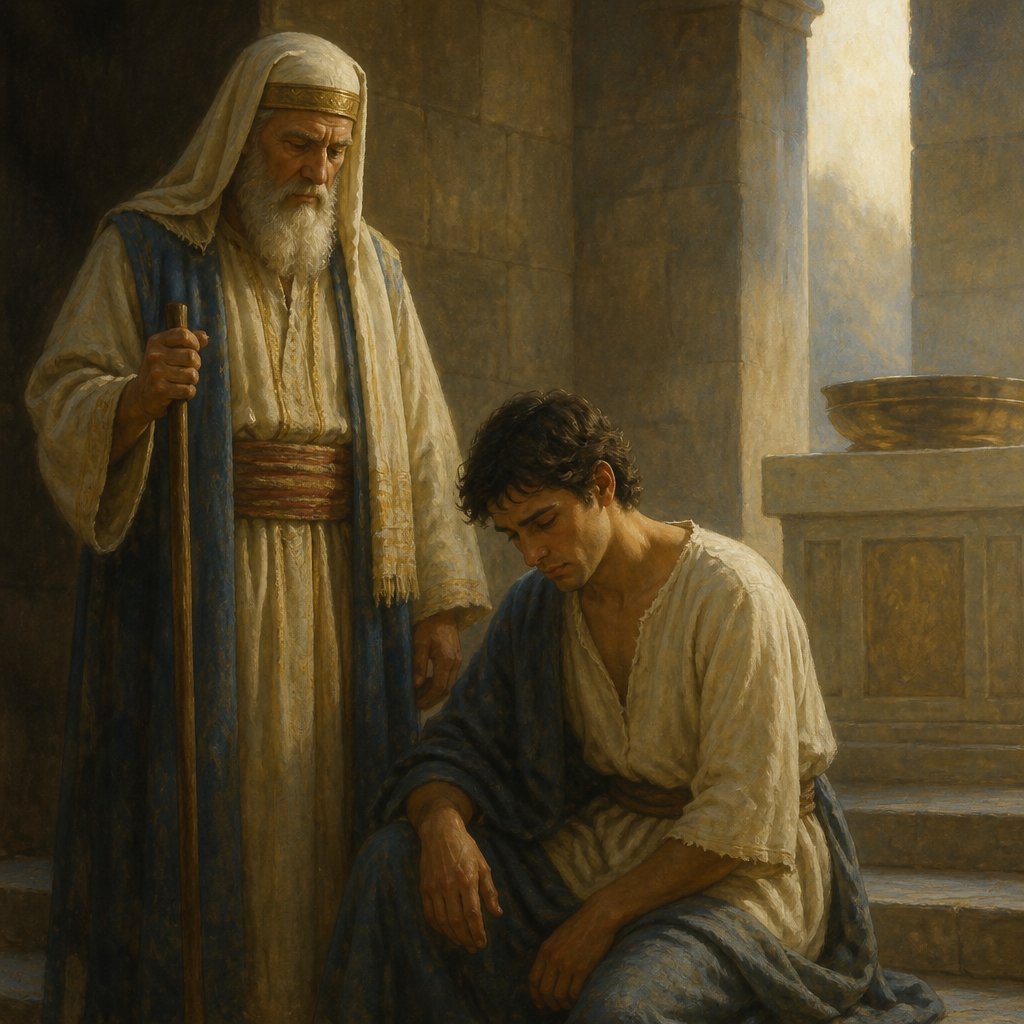
1 Samuel 2:33 (KJV) states, "And the man of thine, whom I shall not cut off from mine altar, shall be to consume thine eyes, and to grieve thine heart: and all the increase of thine house shall die in the flower of their age."
This verse is part of a prophecy given to Eli, the high priest of Israel at the time. The prophecy was delivered by a nameless man of God who came to confront Eli about the disobedience and rebellion of his sons, Hophni and Phinehas. It is important to note that the prophecy not only concerns the fate of Eli and his family, but also serves as a harbinger of the downfall of the house of Eli and the rise of a new line of priests in Israel.
The verses leading up to 1 Samuel 2:33 recount the sins of Eli's sons, who had been using their positions as priests to exploit and mistreat the people who came to the tabernacle to offer sacrifices. They were taking meat from the sacrifice before it had been properly offered to the Lord, and they were also engaging in immoral behavior with the women who served at the entrance to the tabernacle. In response to this, the man of God declares that the consequence for Eli's failure to discipline his sons will be the death of both of them on the same day. Furthermore, the priesthood, which had been promised to Eli's family forever (1 Samuel 2:30), will be taken away from them, and God will raise up a new faithful priest who will do everything according to God's will.
1 Samuel 2:33 is a continuation of the prophecy, focusing on the dire consequences for the house of Eli. The verse opens with the phrase "And the man of thine, whom I shall not cut off from mine altar…" This can be understood as a reference to the future descendants of Eli who would serve as priests. Despite the punishment that God is bringing upon Eli's family, there will still be a remnant of his line that will not be completely cut off from serving at the altar of the Lord. However, the fate of the loyal priest's descendants will be anything but desirable.
The verse then goes on to describe the suffering that will befall the descendants of Eli who are permitted to remain as priests. It states that they will "consume thine eyes" and "grieve thine heart." There is some debate among scholars about the exact meaning of this phrase, but it is generally understood to imply that the surviving descendants of Eli will experience intense suffering and anguish. Their eyes will be consumed by the troubles and afflictions that they face, and their hearts will be filled with grief and sorrow.
Finally, the verse concludes with the chilling pronouncement that all the increase of Eli's house shall die in the flower of their age. This effectively means that none of the descendants of Eli who are allowed to continue as priests will live to see old age. They will all die prematurely, bearing the weight of their family's judgment upon their shoulders.
The themes present in 1 Samuel 2:33 are obedience, discipline, and the consequences of sin. The verse serves as a powerful reminder of the importance of adhering to God's commandments and the severe repercussions that can result from disobedience. It also highlights the principle of intergenerational consequences, underscoring the impact that one person's actions can have on the lives of their descendants.
The context of 1 Samuel 2:33 is crucial for understanding its significance. The verse comes in the midst of a narrative that emphasizes the corruption and spiritual decay within the priesthood of Israel. Eli's failure to rein in the behavior of his sons, and his complacency in the face of their sinful conduct, have led to the impending downfall of his family and the priesthood that has been entrusted to them.
Symbolism can be found in the imagery of consuming eyes and grieving hearts. These phrases convey the intensity of the suffering that will plague the descendants of Eli. The image of eyes being consumed suggests a darkness and despair that will engulf them, while the notion of grieving hearts indicates the deep emotional anguish that they will endure. Additionally, the premature deaths of the offspring of Eli's house symbolize the abrupt and tragic end that awaits them.
In conclusion, 1 Samuel 2:33 is a sobering and profound verse that conveys the severe judgment and consequences that Eli and his family will face as a result of their disobedience and failure to uphold the sanctity of the priesthood. It serves as a cautionary tale about the importance of obedience and the enduring impact of our actions on future generations. This verse also heralds the transition from the corrupt line of Eli to a new faithful priest, setting the stage for the broader narrative of Israel's spiritual renewal and restoration.
Get our apps


Artwork for 1 Samuel 2:33

1 Samuel 2:33 - "And the man of thine, whom I shall not cut off from mine altar, shall be to consume thine eyes, and to grieve thine heart: and all the increase of thine house shall die in the flower of their age."
"And the man of thine, whom I shall not cut off from mine altar, shall be to consume thine eyes, and to grieve thine heart: and all the increase of thine house shall die in the flower of their age." - 1 Samuel 2:33

1 Samuel 17:33

2 Samuel 23:33 - "Shammah the Hararite, Ahiam the son of Sharar the Hararite,"

2 Samuel 3:33 - "And the king lamented over Abner, and said, Died Abner as a fool dieth?"

2 Samuel 22:33 - "God is my strength and power: and he maketh my way perfect."

1 Samuel 15:33 - "And Samuel said, As thy sword hath made women childless, so shall thy mother be childless among women. And Samuel hewed Agag in pieces before the LORD in Gilgal."

2 Samuel 15:33 - "Unto whom David said, If thou passest on with me, then thou shalt be a burden unto me:"

2 Samuel 19:33 - "And the king said unto Barzillai, Come thou over with me, and I will feed thee with me in Jerusalem."

1 Samuel 20:33 - "And Saul cast a javelin at him to smite him: whereby Jonathan knew that it was determined of his father to slay David."

1 Samuel 2:12

"Shammah the Hararite, Ahiam the son of Sharar the Hararite," - 2 Samuel 23:33

2 Samuel 13:33 - "Now therefore let not my lord the king take the thing to his heart, to think that all the king's sons are dead: for Amnon only is dead."

1 Samuel 17:33 - "And Saul said to David, Thou art not able to go against this Philistine to fight with him: for thou art but a youth, and he a man of war from his youth."

1 Chronicles 2:33 - "And the sons of Jonathan; Peleth, and Zaza. These were the sons of Jerahmeel."

1 Samuel 14:33 - "¶ Then they told Saul, saying, Behold, the people sin against the LORD, in that they eat with the blood. And he said, Ye have transgressed: roll a great stone unto me this day."

"God is my strength and power: and he maketh my way perfect." - 2 Samuel 22:33

1 Samuel 25:33 - "And blessed be thy advice, and blessed be thou, which hast kept me this day from coming to shed blood, and from avenging myself with mine own hand."

"And the king lamented over Abner, and said, Died Abner as a fool dieth?" - 2 Samuel 3:33

1 Samuel 2:26 - "And the child Samuel grew on, and was in favour both with the LORD, and also with men."

2 Samuel 14:33 - "So Joab came to the king, and told him: and when he had called for Absalom, he came to the king, and bowed himself on his face to the ground before the king: and the king kissed Absalom."

1 Samuel 2:18 - "¶ But Samuel ministered before the LORD, being a child, girded with a linen ephod."

1 Samuel 9:1-2

2 Samuel 7:1–29

2 Samuel 24:22

2 Samuel 6:14

2 Samuel 24:22

2 Samuel 24:22

1 Samuel 4:2

2 samuel 9:7 fhdhdhdhhd