What does 1 Samuel 30:17 mean?
“And David smote them from the twilight even unto the evening of the next day: and there escaped not a man of them, save four hundred young men, which rode upon camels, and fled.” — 1 Samuel 30:17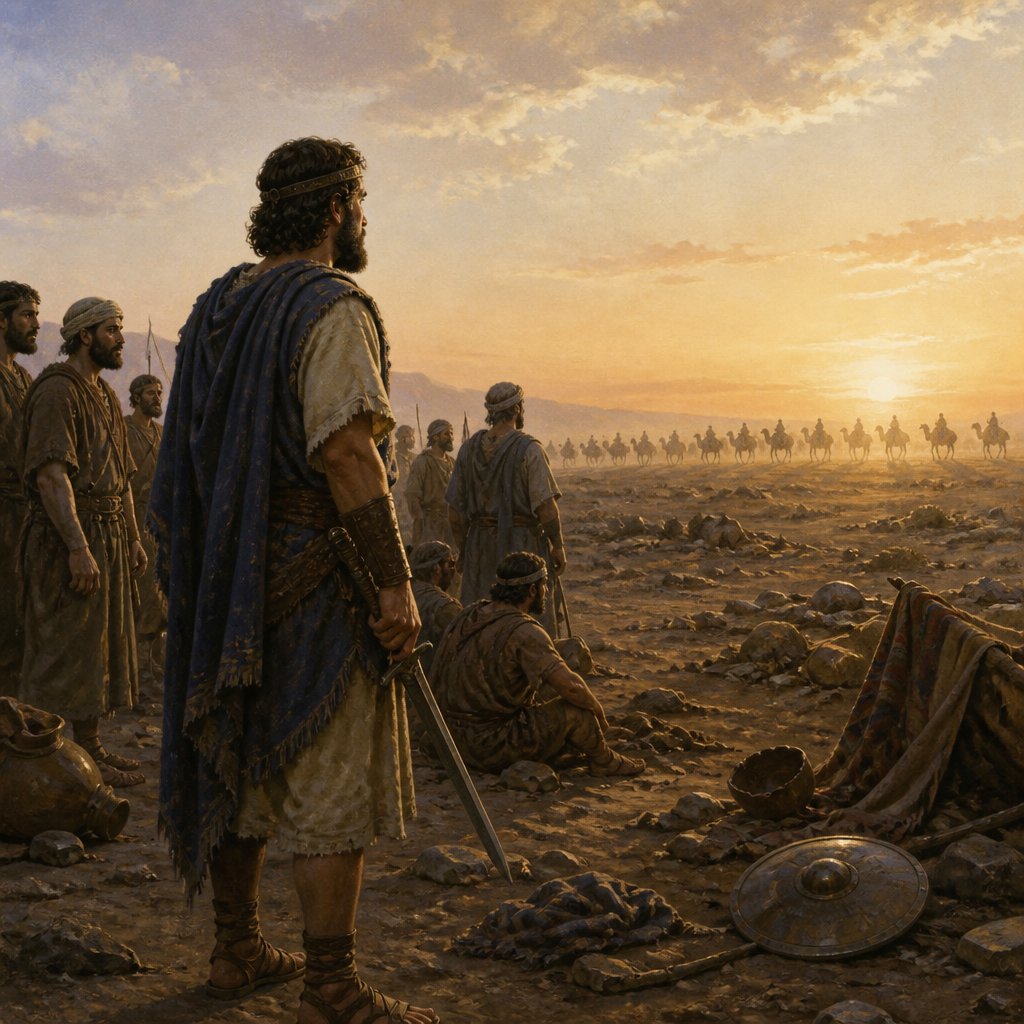
The verse 1 Samuel 30:17 from the King James Version (KJV) reads, “And David smote them from the twilight even unto the evening of the next day: and there escaped not a man of them, save four hundred young men, which rode upon camels, and fled.” This verse is part of the larger narrative of David and his men returning to their camp in Ziklag to find it raided and their wives and children taken captive by the Amalekites. In their distress, David and his men seek the Lord’s guidance and set out to pursue and defeat the Amalekites, eventually rescuing their families and seizing abundant spoils.
This verse holds significance in several ways. It speaks to David’s military prowess and leadership as he and his men undertook a successful campaign against the Amalekites. It also illustrates the theme of divine intervention and deliverance, as God empowered and guided David in the rescue of his loved ones. Additionally, this verse highlights the concept of justice and retribution, as the Amalekites who had attacked and plundered Ziklag were ultimately vanquished by David and his forces.
The context of this verse is crucial to understanding its significance. David had been living amongst the Philistines to escape from King Saul, who sought to kill him. During his time in Philistine territory, David and his men had been granted refuge by Achish, the king of Gath. However, when the Philistine lords insisted that David and his men be excluded from joining them in battle against Israel, David and his forces returned to Ziklag only to find it plundered by the Amalekites. Filled with grief and despair, David sought the Lord’s guidance and was encouraged to pursue the Amalekites, leading to the events described in this verse.
The symbolism in this verse can be interpreted in various ways. David’s victory over the Amalekites can symbolize the triumph of righteousness over evil, as David and his men were able to rescue their families and recover their possessions from the hands of the enemy. It can also symbolize the idea of perseverance and resilience, as David and his men endured great hardship and loss but ultimately emerged victorious through their faith in God.
Furthermore, the mention of the four hundred young men who escaped riding on camels holds symbolic significance. In ancient Near Eastern culture, camels were valuable assets used for long-distance travel and trade. The fact that these young men escaped on camels suggests that they were of higher status or wealth, and their survival may have signaled a message of hope or continuity for the Amalekites, despite their defeat.
In conclusion, 1 Samuel 30:17 from the King James Version offers a compelling account of David’s military conquest and the divine intervention that led to the rescue of his loved ones. It embodies themes of leadership, divine guidance, justice, and victory over adversity. The verse’s context within the larger narrative of David’s life and the symbolism of the events described enrich its meaning and significance within the biblical text.
Get our apps


Artwork for 1 Samuel 30:17

1 Samuel 30:17 - "And David smote them from the twilight even unto the evening of the next day: and there escaped not a man of them, save four hundred young men, which rode upon camels, and fled."
"And David smote them from the twilight even unto the evening of the next day: and there escaped not a man of them, save four hundred young men, which rode upon camels, and fled." - 1 Samuel 30:17

1 Samuel 17:30 - "¶ And he turned from him toward another, and spake after the same manner: and the people answered him again after the former manner."

1.samuel 15:30

1 Samuel 30:18

1.samuel 15:30

1 Samuel 30:30 - "And to them which were in Hormah, and to them which were in Chorashan, and to them which were in Athach,"
1 Samuel 20:27-30

1 Samuel 10:17 - "¶ And Samuel called the people together unto the LORD to Mizpeh;"

1 Samuel 17:33

1 Samuel 1:15-17

1 Samuel 17:34-35

1 Samuel 17:49

1 Samuel 17:45

1 Samuel 17:49

1 Samuel 17:45
1 Samuel 9:17
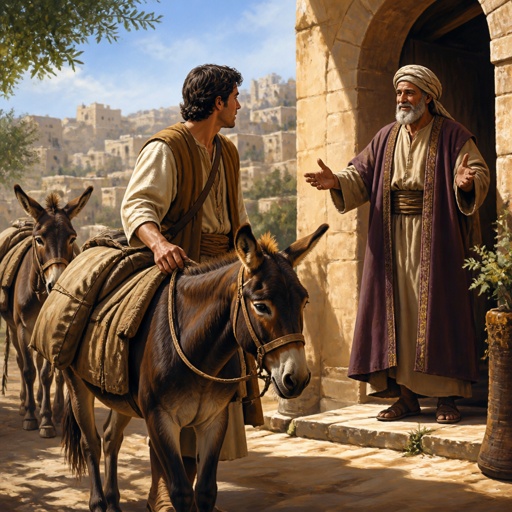
1 Samuel 9:17

1 samuel 17:3

1 Samuel 17:49

1 Samuel 17:45
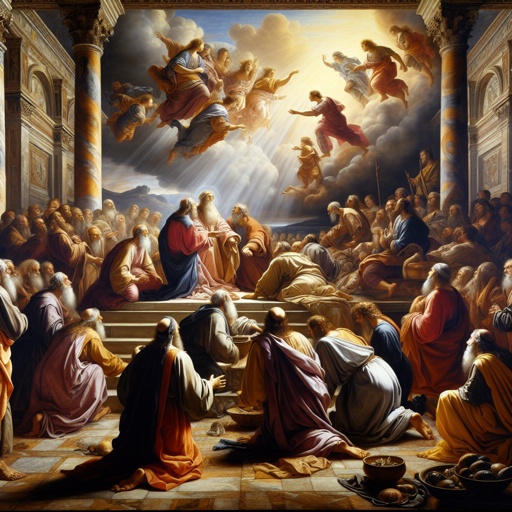
1 Samuel 17:49

"¶ And he turned from him toward another, and spake after the same manner: and the people answered him again after the former manner." - 1 Samuel 17:30
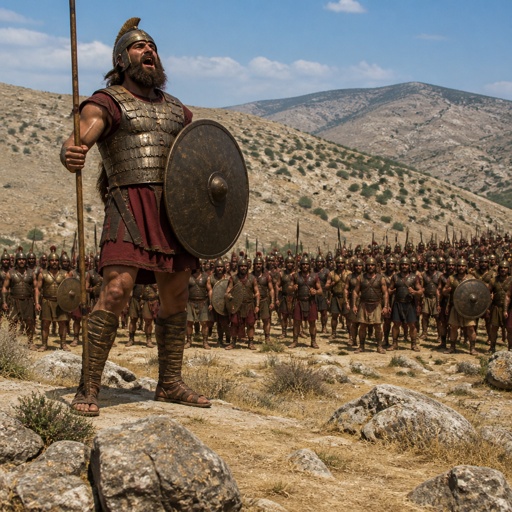
1 Samuel 17:4-8

2 Samuel 1. 17-27

1 Samuel 30:25 - "And it was so from that day forward, that he made it a statute and an ordinance for Israel unto this day."
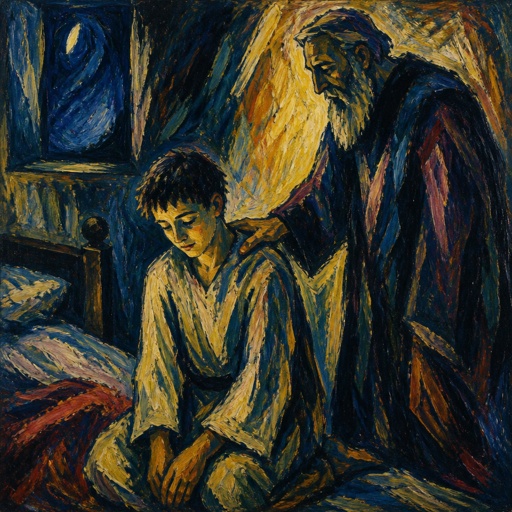
1 Samuel 3:17-18

1 Samuel 17:38-40

1 Samuel 17:14 - "And David was the youngest: and the three eldest followed Saul."

1 Samuel 17:45-49