What does 1 Samuel 4:20 mean?
“And about the time of her death the women that stood by her said unto her, Fear not; for thou hast born a son. But she answered not, neither did she regard it.” — 1 Samuel 4:20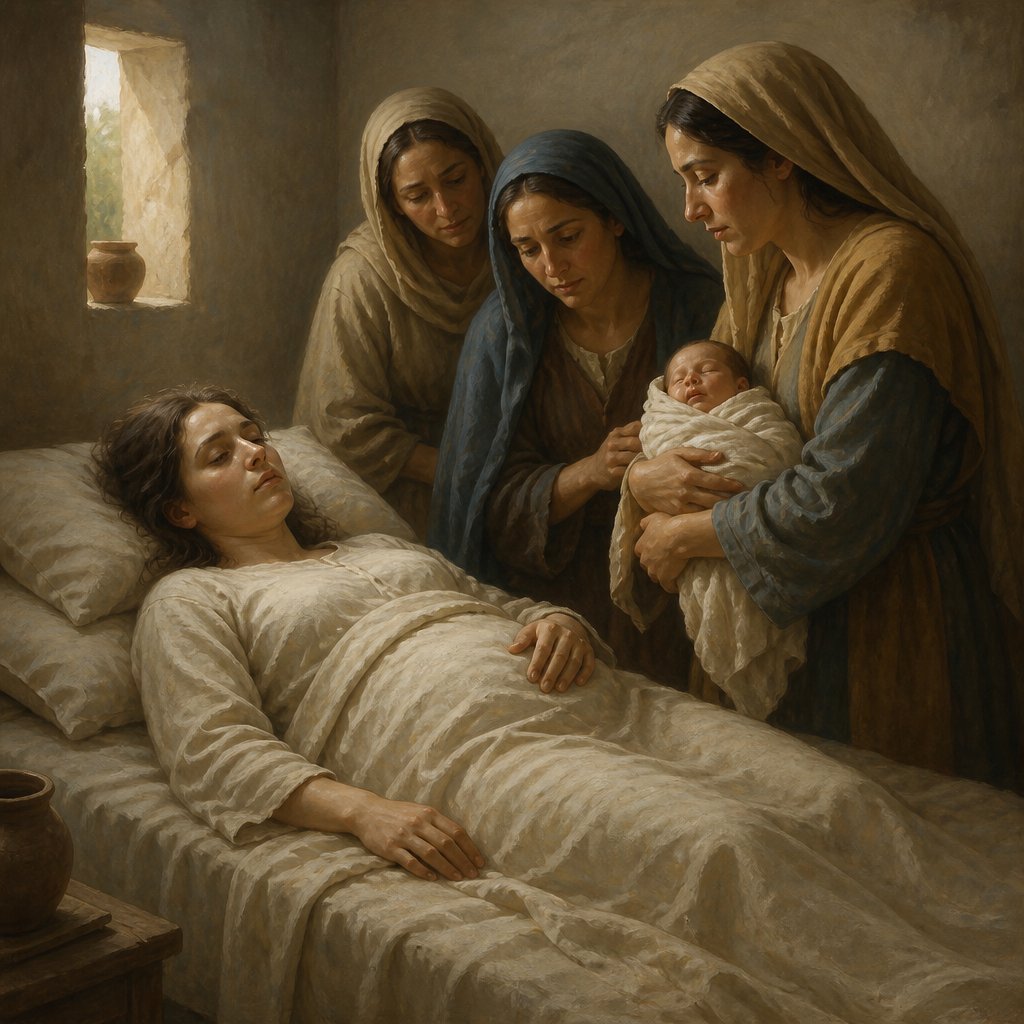
The Bible verse 1 Samuel 4:20 from the King James Version (KJV) reads, "And about the time of her death the women that stood by her said unto her, Fear not; for thou hast born a son. But she answered not, neither did she regard it."
This verse comes from the Old Testament book of 1 Samuel, which tells the story of the Israelites during the time of the judges and the prophet Samuel. In this particular verse, the focus is on the birth of a child and the response of the child's mother, who is not named in this particular verse.
The context of 1 Samuel 4:20 is crucial to understanding its significance. The chapter as a whole depicts the capture of the Ark of the Covenant by the Philistines and the death of the high priest Eli's two sons, Hophni and Phinehas. In the midst of this chaotic and turbulent period, a significant event occurs - the birth of a child to a woman who is not named. The fact that this birth takes place during such a tumultuous time adds to the importance of the child and the mother's response to his birth.
The immediate context of the verse describes the woman's imminent death, as the women standing by her attempt to comfort her by telling her she has given birth to a son. The fact that she does not respond or acknowledge their words is significant as it foreshadows the tragic events that will unfold. This lack of response communicates a sense of despair and hopelessness in the face of her impending death and the dire situation of the Israelites at that time.
The theme of the verse revolves around the complexities of human emotions and the intertwining of life and death. The birth of a child, a symbol of new life and hope, occurs simultaneously with the imminent death of the child's mother. This contrast highlights the paradox of life and death, joy and sorrow, that is often present in the human experience.
Furthermore, the nameless woman's lack of response to the news of her son's birth raises questions about her emotional state and the significance of the child. In a time where the birth of a son was highly esteemed, her lack of acknowledgment seems to indicate her deep despair and hopelessness, perhaps due to the dire circumstances of the Israelites and her own impending death.
Symbolism plays a significant role in this verse, particularly in the contrast between life and death. The birth of a son, a symbol of new life and potential, stands in stark contrast to the impending death of the child's mother. This duality reflects the complex nature of human existence, where joy and sorrow often coexist. The lack of response from the woman also serves as a symbol of despair and resignation, reflecting the turmoil and hopelessness prevalent in the Israelites' situation at that time.
In conclusion, 1 Samuel 4:20 portrays a profound and poignant moment in the midst of chaos and despair. The birth of a son and the nameless woman's lack of response serve as powerful symbols of life and death, joy and sorrow. The verse raises complex questions about human emotions and the intertwining of life and death, ultimately pointing to the profound complexities of the human experience.
Get our apps


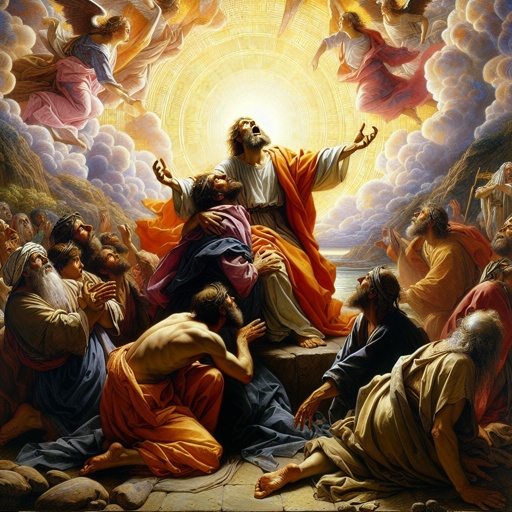
Artwork for 1 Samuel 4:20

1 Samuel 4:20 - "And about the time of her death the women that stood by her said unto her, Fear not; for thou hast born a son. But she answered not, neither did she regard it."
"And about the time of her death the women that stood by her said unto her, Fear not; for thou hast born a son. But she answered not, neither did she regard it." - 1 Samuel 4:20

1 Samuel 20:4 - "Then said Jonathan unto David, Whatsoever thy soul desireth, I will even do it for thee."
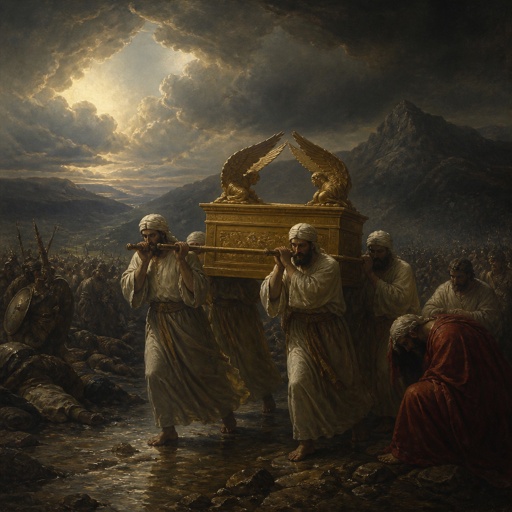
1 Samuel 4:4
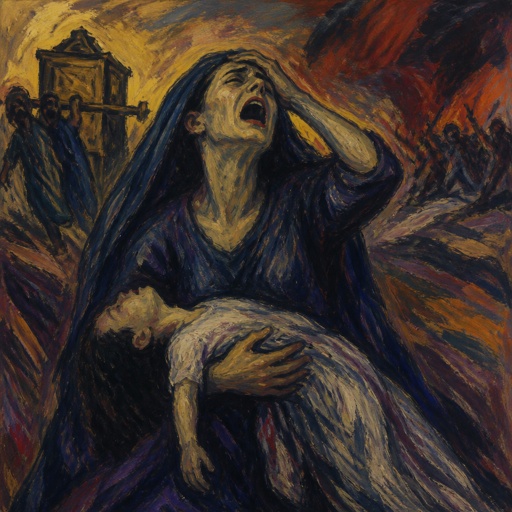
1 Samuel 4:18

1 Samuel 4:12

1 samuel 4:1
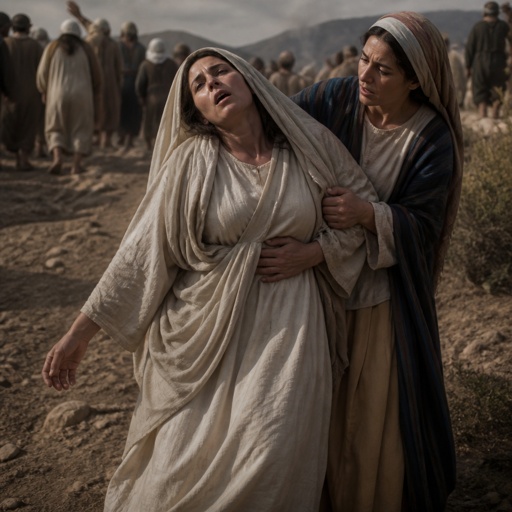
1 Samuel 4:18
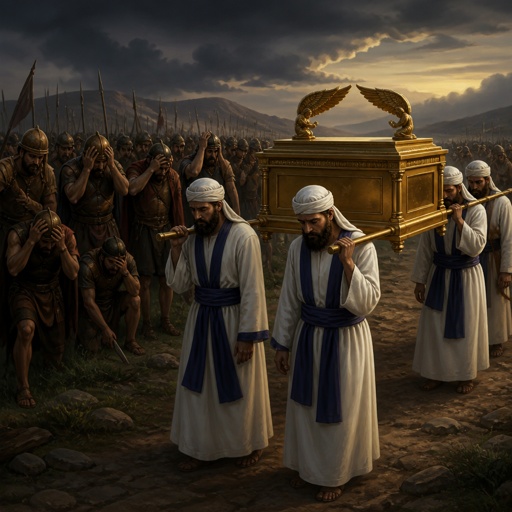
1 Samuel 4:2
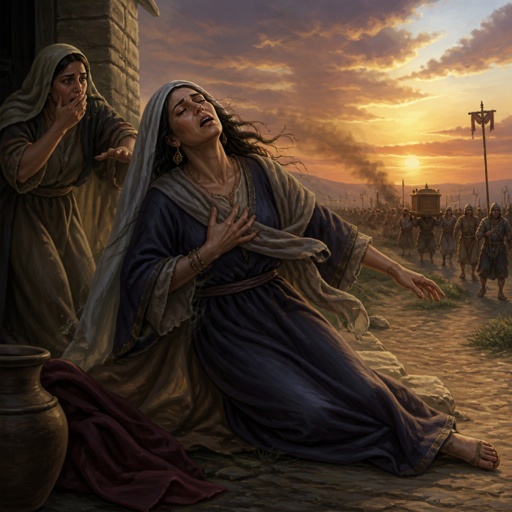
1 Samuel 4:18
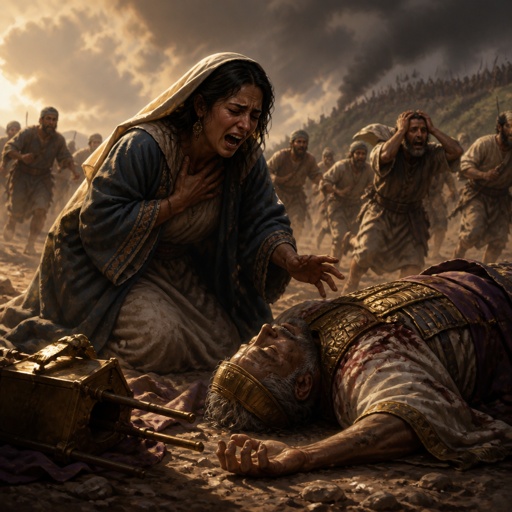
1 Samuel 4:14-16

1 Samuel 20:20 - "And I will shoot three arrows on the side thereof, as though I shot at a mark."

1 Samuel 28:15-20

1 Samuel 10:20 - "And when Samuel had caused all the tribes of Israel to come near, the tribe of Benjamin was taken."

1 Samuel 3:20 - "And all Israel from Dan even to Beer-sheba knew that Samuel was established to be a prophet of the LORD."
1 Samuel 20:27-30

1 Samuel 20:27-29

1 Corinthians 4:20

1 Corinthians 4:20

1 Corinthians 4:20

1 Corinthians 4:20

"Then said Jonathan unto David, Whatsoever thy soul desireth, I will even do it for thee." - 1 Samuel 20:4

2 Samuel 20:4 - "¶ Then said the king to Amasa, Assemble me the men of Judah within three days, and be thou here present."

1 Samuel 3:4 - "That the LORD called Samuel: and he answered, Here am I."

1 Samuel 8:4 - "Then all the elders of Israel gathered themselves together, and came to Samuel unto Ramah,"

1 Samuel 18:20 - "And Michal Saul's daughter loved David: and they told Saul, and the thing pleased him."

1 Samuel 20:39 - "But the lad knew not any thing: only Jonathan and David knew the matter."

1 Samuel 1:20 - "Wherefore it came to pass, when the time was come about after Hannah had conceived, that she bare a son, and called his name Samuel, saying, Because I have asked him of the LORD."

Philippians 4: 10-20

1 Samuel 20:28 - "And Jonathan answered Saul, David earnestly asked leave of me to go to Beth-lehem:"