What does 1 Samuel 5:2 mean?
“When the Philistines took the ark of God, they brought it into the house of Dagon, and set it by Dagon.” — 1 Samuel 5:2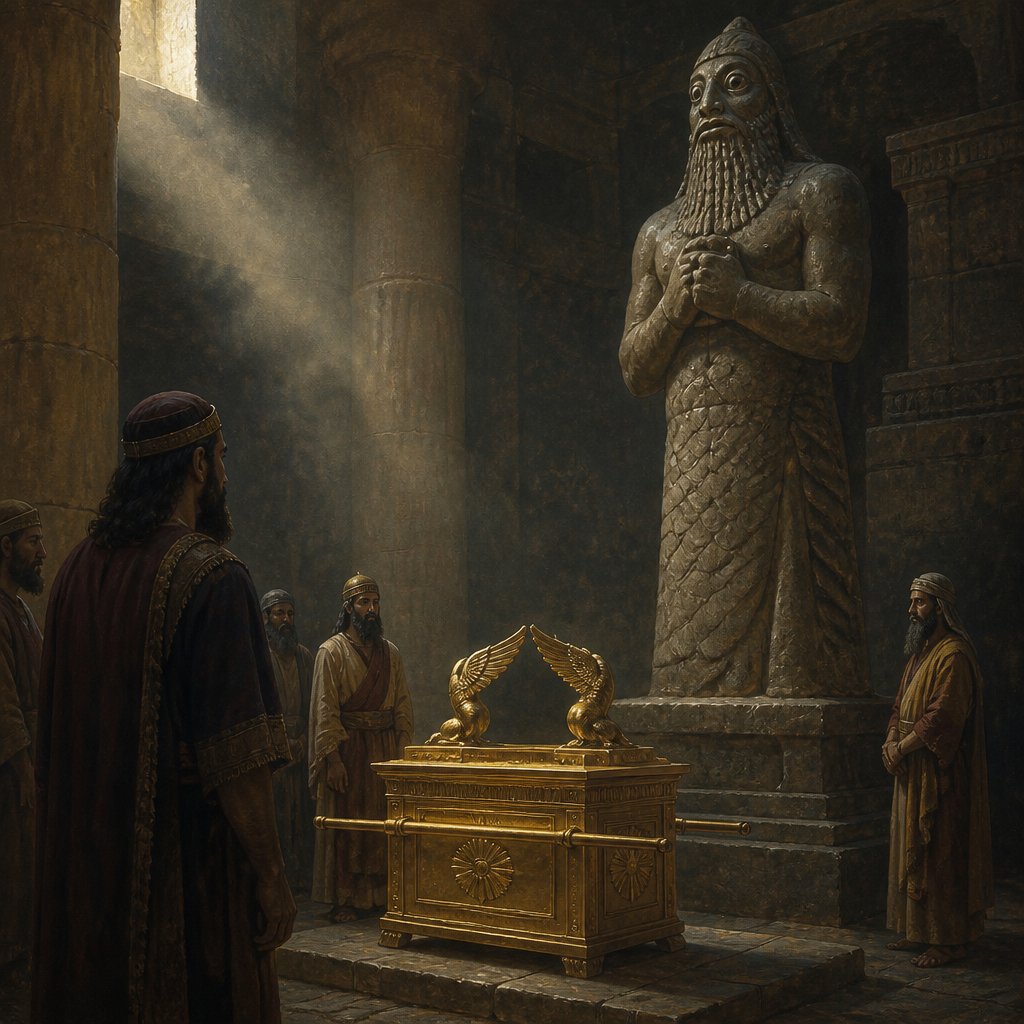
1 Samuel 5:2 (KJV) - "When the Philistines took the ark of God, they brought it into the house of Dagon, and set it by Dagon."
The book of 1 Samuel is an important historical and religious text in both the Jewish and Christian traditions. It tells the story of the rise of King David, and also of the struggle of the Israelites against their enemies, the Philistines. In this particular verse, we see the ark of God being taken by the Philistines and placed in the house of their god, Dagon. This act has a deep significance and carries several themes and symbols that are important for understanding the context and meaning of the verse.
The ark of God was a sacred object for the Israelites. It was a symbol of their covenant with God, and it was believed to contain the Ten Commandments given to Moses. It was a physical representation of the presence of God among his people. So, when the Philistines took the ark, they were not just taking a religious artifact; they were attempting to seize the power and protection of the Israelite's God for themselves. This act was a direct challenge to the authority and sovereignty of the God of Israel.
Placing the ark in the house of Dagon was a deliberate act of disrespect and defiance. Dagon was a major god of the Philistines, associated with fertility and grain. By setting the ark next to the statue of Dagon, the Philistines were essentially saying that their god was more powerful than the God of Israel. They were mocking and belittling the Israelites' faith and their God, and attempting to show that their own religion and deities were superior.
The symbolism in this verse is powerful. It sets up a direct confrontation between the gods of two rival nations, and by extension, a confrontation between the nations themselves. It speaks to the themes of power, authority, and the clash of civilizations. It shows the lengths to which people will go to assert their own beliefs and to denigrate those of others. It also reveals the deep-seated fears and insecurities that underlie religious conflicts and wars. The verse forces us to confront the fundamental question of whose God is truly in control, and what happens when different gods and their followers come into conflict.
The context of the verse is also important. The Philistines were a constant threat to the Israelites, and their military and political power posed a significant challenge to the fledgling nation. The capture of the ark was a major blow to the Israelites, and it left them feeling vulnerable and abandoned by their God. This event sets the stage for the rest of the narrative, as the Israelites seek to reclaim the ark and reaffirm their faith in God. It is a turning point in the story, and it forces the Israelites to confront their own failings and weaknesses.
Overall, 1 Samuel 5:2 is a verse that is rich in meaning and symbolism. It speaks to the core issues of faith, power, and conflict, and it sets the stage for the unfolding drama of the biblical narrative. It challenges us to consider the nature of belief and the ways in which it can shape the course of history. And it reminds us of the enduring power of religious symbols and the deeply held convictions that lie behind them.
Get our apps


Artwork for 1 Samuel 5:2

1 Samuel 5:2 - "When the Philistines took the ark of God, they brought it into the house of Dagon, and set it by Dagon."
"When the Philistines took the ark of God, they brought it into the house of Dagon, and set it by Dagon." - 1 Samuel 5:2

2 Samuel 1:5 - "And David said unto the young man that told him, How knowest thou that Saul and Jonathan his son be dead?"

1 Samuel 5: 3-4

2 Samuel 5:1 - "Then came all the tribes of Israel to David unto Hebron, and spake, saying, Behold, we are thy bone and thy flesh."

2 Samuel 5:12

2 Samuel 5:16 - "And Elishama, and Eliada, and Eliphalet."

2 Samuel 5:15 - "Ibhar also, and Elishua, and Nepheg, and Japhia,"

1 Samuel 2:5 - "They that were full have hired out themselves for bread; and they that were hungry ceased: so that the barren hath born seven; and she that hath many children is waxed feeble."

1 Samuel 7:5 - "And Samuel said, Gather all Israel to Mizpeh, and I will pray for you unto the LORD."

2 Samuel 5:21 - "And there they left their images, and David and his men burned them."

2 Samuel 5:18 - "The Philistines also came and spread themselves in the valley of Rephaim."

1 Samuel 15:5 - "And Saul came to a city of Amalek, and laid wait in the valley."

2 Samuel 5:7 - "Nevertheless David took the strong hold of Zion: the same is the city of David."

1 Samuel 5:1 - "And the Philistines took the ark of God, and brought it from Eben-ezer unto Ashdod."

2 Samuel 5:2 - "Also in time past, when Saul was king over us, thou wast he that leddest out and broughtest in Israel: and the LORD said to thee, Thou shalt feed my people Israel, and thou shalt be a captain over Israel."

2 Samuel 5:10 - "And David went on, and grew great, and the LORD God of hosts was with him."

2 Samuel 11:5 - "And the woman conceived, and sent and told David, and said, I am with child."

2 Samuel 5:22 - "¶ And the Philistines came up yet again, and spread themselves in the valley of Rephaim."

"And Elishama, and Eliada, and Eliphalet." - 2 Samuel 5:16

2 Samuel 3:5 - "And the sixth, Ithream, by Eglah David's wife. These were born to David in Hebron."

1 Samuel 5:5 - "Therefore neither the priests of Dagon, nor any that come into Dagon's house, tread on the threshold of Dagon in Ashdod unto this day."

1 Samuel 2:26 - "And the child Samuel grew on, and was in favour both with the LORD, and also with men."
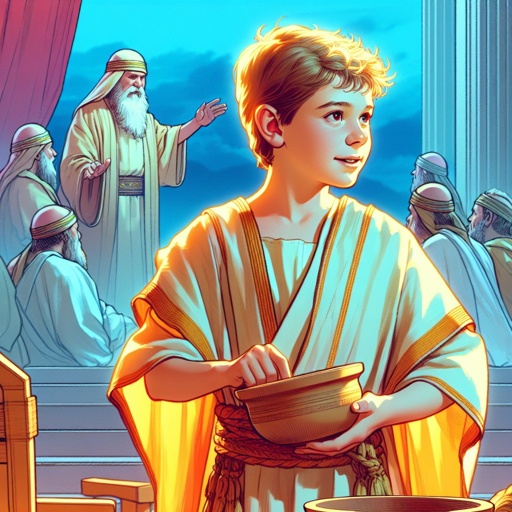
1 Samuel 2:18 - "¶ But Samuel ministered before the LORD, being a child, girded with a linen ephod."
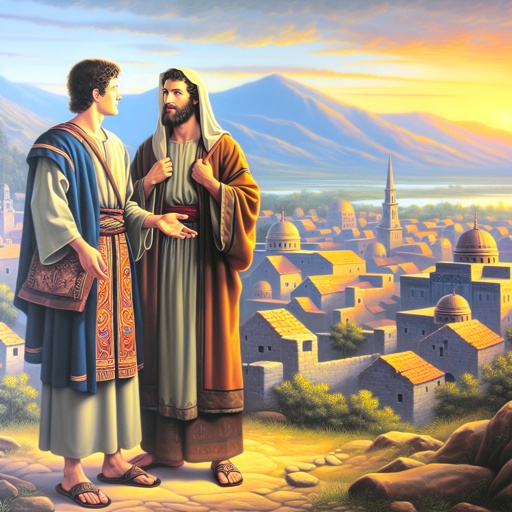
1 Samuel 9:1-2

2 Samuel 5:5 - "In Hebron he reigned over Judah seven years and six months: and in Jerusalem he reigned thirty and three years over all Israel and Judah."

2 Samuel 22:5 - "When the waves of death compassed me, the floods of ungodly men made me afraid;"

2 Samuel 5:14 - "And these be the names of those that were born unto him in Jerusalem; Shammua, and Shobab, and Nathan, and Solomon,"

1 Samuel 28:5 - "And when Saul saw the host of the Philistines, he was afraid, and his heart greatly trembled."

1 Samuel 5:12 - "And the men that died not were smitten with the emerods: and the cry of the city went up to heaven."