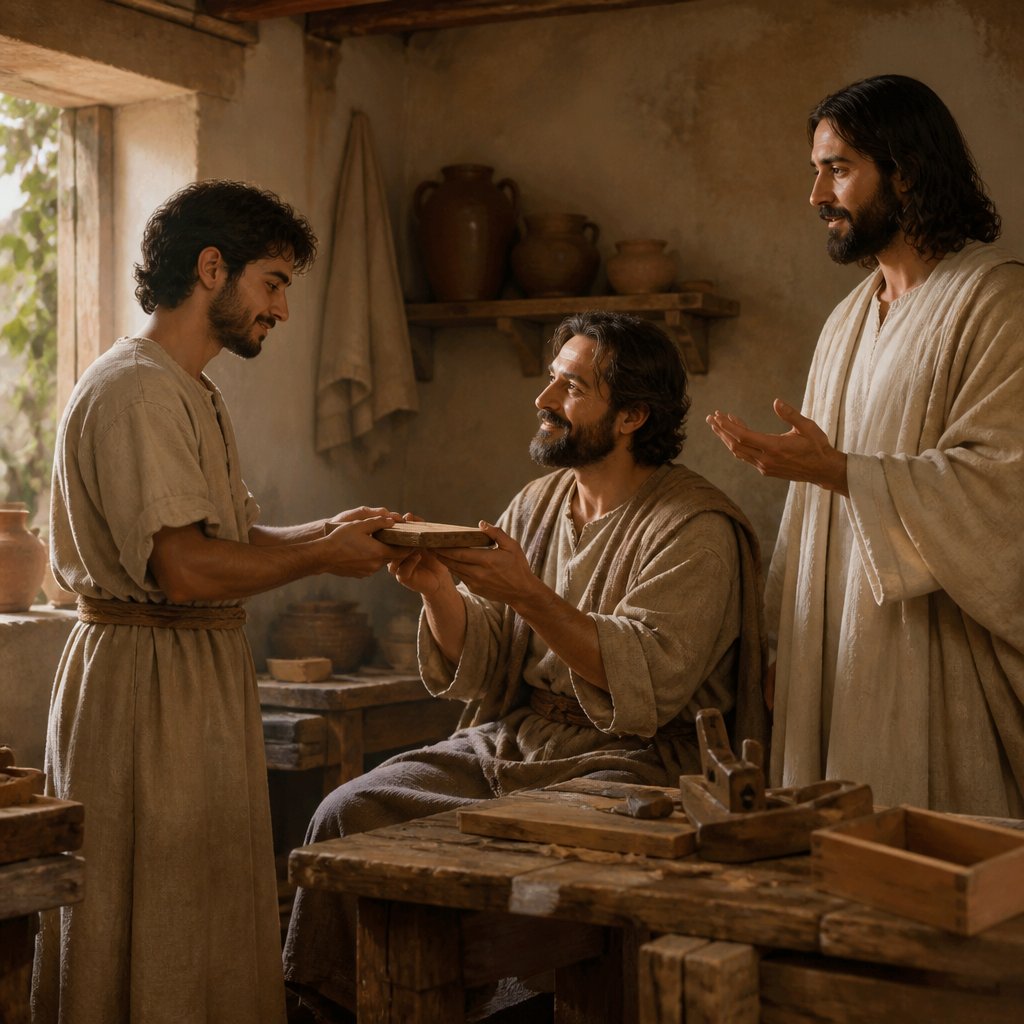
The Bible verse 1 Timothy 6:1-2 states: "Let as many servants as are under the yoke count their own masters worthy of all honour, that the name of God and his doctrine be not blasphemed. And they that have believing masters, let them not despise them, because they are brethren; but rather do them service, because they are faithful and beloved, partakers of the benefit. These things teach and exhort."
This passage from the first epistle of Paul to Timothy addresses the relationship between servants and their masters. In the context of the early Christian church, slavery was pervasive, and many members of the congregation would have been slaves or had slaves themselves. Paul's words here can be seen as attempting to provide guidance for how to navigate this difficult social dynamic in a way that reflects the teachings of Jesus Christ.
The overarching theme of these verses is the importance of maintaining honor and respect toward one's earthly masters. Paul emphasizes that servants should regard their masters as worthy of honor, which not only reflects positively on the masters themselves but also on the name of God and his teachings. By conducting themselves with grace and humility in their roles as servants, individuals can avoid bringing dishonor upon the Christian faith.
This exhortation to honor and serve masters is a reflection of the broader biblical principle of submission to authority figures. Throughout the Bible, there is an emphasis on respecting and obeying those in positions of authority, whether it be masters, employers, or government officials. This reflects the Christian belief in divine order and the importance of respecting the hierarchy that exists in society.
At the same time, Paul also addresses those who have believing masters, instructing them not to despise or look down upon their masters, but rather to serve them faithfully. This underscores the idea that regardless of one's social status or position in society, all are equal in the eyes of God. Even though a servant may have a believing master, they are still called to honor and serve them with respect and humility.
These verses also touch upon the concept of brotherhood within the Christian community. Paul suggests that even in the context of the master-servant relationship, Christians are all brothers and sisters in Christ. This implies that there should be a level of mutual respect and care within the Christian community, regardless of social status or position.
In terms of symbolism, this passage represents the broader theme of servant leadership that is central to the teachings of Jesus Christ. Jesus himself modeled a servant's heart, emphasizing the importance of humility, service, and sacrificial love. By instructing servants to honor and serve their masters, Paul is reinforcing the idea that Christian discipleship involves a willingness to serve others, even those who may hold positions of authority over us.
This passage also highlights the tension that exists between the values of the kingdom of God and the social structures of the world. While the Gospel teaches equality and mutual respect, the reality of slavery and social hierarchy in the ancient world created challenges for early Christians. Paul's words here can be seen as an attempt to navigate this tension, encouraging believers to embody the values of the kingdom of God while also respecting the social structures in which they lived.
In conclusion, 1 Timothy 6:1-2 provides practical guidance for navigating the complexities of the master-servant relationship in the context of the early Christian church. It emphasizes the importance of honor, respect, and service, while also reflecting broader biblical themes of submission to authority, brotherhood within the Christian community, and the tension between the values of the kingdom of God and the social structures of the world. Ultimately, these verses call believers to embody the servant leadership of Christ in their everyday lives, regardless of their social standing or position in society.
Get our apps


Artwork for 1 Timothy 6:1-2

1 Timothy 6:1-2 - "Let as many servants as are under the yoke count their own masters worthy of all honor, that the name of God and his doctrine be not blasphemed. And they that have believing masters, let them not despise them, because they are brethren; but rather do them service, because they are faithful and beloved, partakers of the benefit. These things teach and exhort."
"Let as many servants as are under the yoke count their own masters worthy of all honor, that the name of God and his doctrine be not blasphemed. And they that have believing masters, let them not despise them, because they are brethren; but rather do them service, because they are faithful and beloved, partakers of the benefit. These things teach and exhort." - 1 Timothy 6:1-2

1 Timothy 2:6 - "Who gave himself a ransom for all, to be testified in due time."

1 Timothy 6:6 - "But godliness with contentment is great gain."

2 Timothy 1:6 - "Wherefore I put thee in remembrance that thou stir up the gift of God, which is in thee by the putting on of my hands."

1 Timothy 6:1 - "Let as many servants as are under the yoke count their own masters worthy of all honour, that the name of God and his doctrine be not blasphemed."

2 Timothy 2:22

1 Timothy 2:1-7

1 Timothy 2:1-7

2 Timothy 2:15

1 Timothy 1:6 - "From which some having swerved have turned aside unto vain jangling;"

1 Timothy 1:2 - "Unto Timothy, my own son in the faith: Grace, mercy, and peace, from God our Father and Jesus Christ our Lord."

"But godliness with contentment is great gain." - 1 Timothy 6:6

1 Timothy 6:20 - "O Timothy, keep that which is committed to thy trust, avoiding profane and vain babblings, and oppositions of science falsely so called:"

inapproachable light 1 Timothy 6:16

"Who gave himself a ransom for all, to be testified in due time." - 1 Timothy 2:6

1 Timothy 6:8 - "And having food and raiment let us be therewith content."

1 Timothy 5:6 - "But she that liveth in pleasure is dead while she liveth."

2 Timothy 1:2 - "To Timothy, my dearly beloved son: Grace, mercy, and peace, from God the Father and Christ Jesus our Lord."

2 Timothy 4 7

2 Timothy 1:7

2 Timothy 1:7

2 Timothy 1:7

2 Timothy 1:7

2 Timothy 1:7

2 Timothy 1:7

2 Timothy 1:7

2 Timothy 1:7

2 Timothy 1:7

2 Timothy 1:7