What does 2 Chronicles 12:10 mean?
“Instead of which king Rehoboam made shields of brass, and committed them to the hands of the chief of the guard, that kept the entrance of the king’s house.” — 2 Chronicles 12:10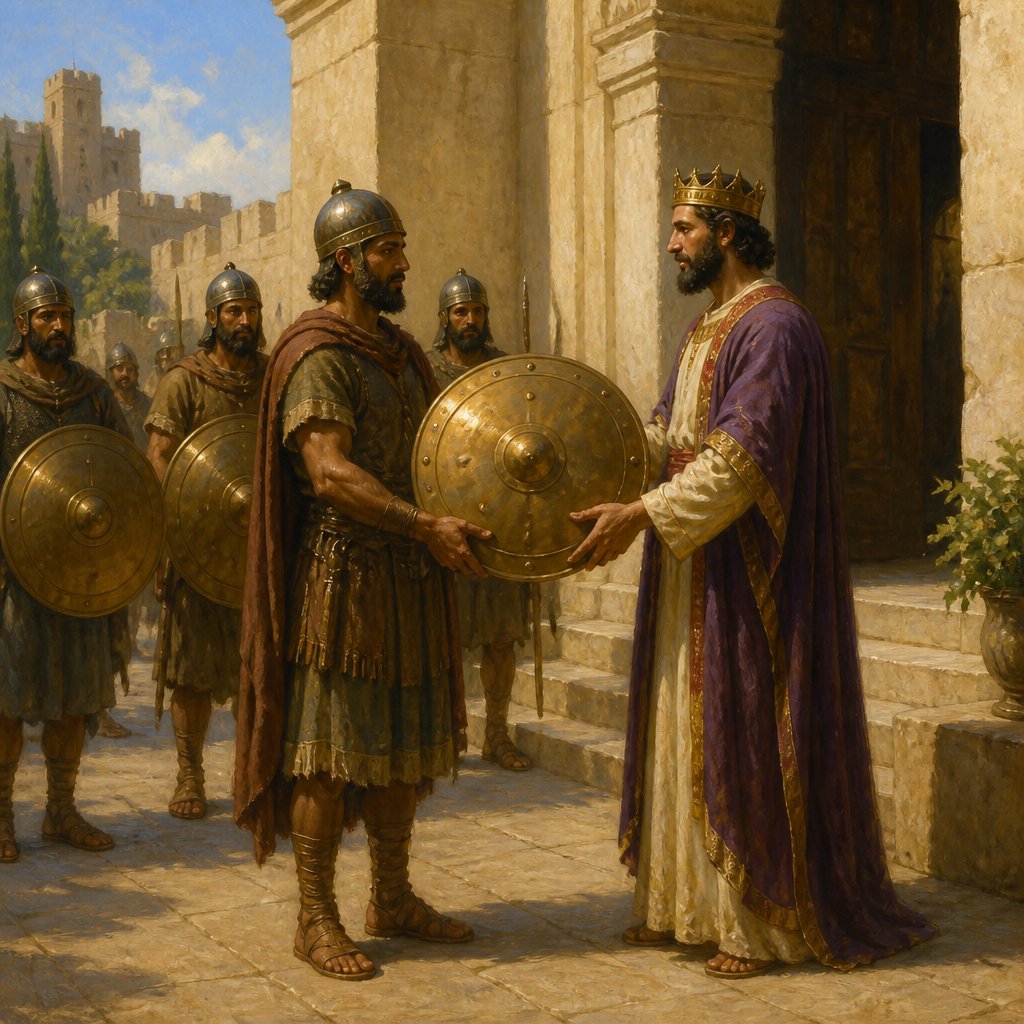
The verse 2 Chronicles 12:10 in the King James Version of the Bible reads: "Instead of which king Rehoboam made shields of brass, and committed them to the hands of the chief of the guard, that kept the entrance of the king's house."
To understand the meaning and context of this verse, it is important to look at the broader historical and biblical context. The book of 2 Chronicles is a part of the Old Testament and specifically focuses on the history of the kings of Judah, the southern kingdom of Israel. It covers the period from the reign of Solomon to the Babylonian exile.
In this particular chapter, Rehoboam, the son of King Solomon, becomes the king of Judah after Solomon's death. Rehoboam is depicted as an unfaithful and disobedient king, and the verse in question reflects how he fails to honor the traditions and customs of his predecessor. Instead of following the practice of his father and grandfather, who had used shields of gold to symbolize their wealth and power, Rehoboam opts for shields made of brass. This decision is seen as a sign of his lack of respect for the legacy of his ancestors and a departure from the glory and riches of the kingdom under Solomon.
The use of shields in this verse carries symbolic significance. In ancient times, shields were not only practical defensive weapons but also symbols of strength, protection, and power. The shields of gold used by Solomon and other kings before him likely represented the wealth and prosperity of the kingdom. By replacing them with shields of brass, Rehoboam is essentially diminishing the grandeur and magnificence of the kingdom. This action serves as a metaphor for his reign, which is marked by a decline in fortune and a departure from the values and traditions that had previously brought success to the kingdom.
Furthermore, the verse mentions that Rehoboam entrusted the brass shields to the chief of the guard, who kept the entrance of the king's house. This detail highlights the shift in focus from the spiritual and divine protection provided by God to a reliance on human strength and military power. It reflects a lack of faith in God and a misguided reliance on human strategies and defenses. This decision ultimately leads to the downfall of the kingdom, as Rehoboam's reign is characterized by internal strife, external threats, and a general decline in the power and influence of Judah.
In a broader theological sense, this verse serves as a cautionary tale about the consequences of pride, disobedience, and a departure from the ways of God. It underscores the importance of honoring and preserving the spiritual and moral foundations laid by previous generations and the dangers of succumbing to worldly temptations and abandoning divine guidance.
In conclusion, 2 Chronicles 12:10 offers a rich and nuanced commentary on the historical, symbolic, and theological aspects of the reign of King Rehoboam. It serves as a powerful reminder of the importance of faithfulness, humility, and obedience in the pursuit of righteousness and the perils of straying from the path of God's will.
Get our apps


Artwork for 2 Chronicles 12:10

2 Chronicles 12:10 - "Instead of which king Rehoboam made shields of brass, and committed them to the hands of the chief of the guard, that kept the entrance of the king's house."
"Instead of which king Rehoboam made shields of brass, and committed them to the hands of the chief of the guard, that kept the entrance of the king's house." - 2 Chronicles 12:10

2 Chronicles 10:12 - "So Jeroboam and all the people came to Rehoboam on the third day, as the king bade, saying, Come again to me on the third day."

1 Chronicles 12:10 - "Mishmannah the fourth, Jeremiah the fifth,"

"Mishmannah the fourth, Jeremiah the fifth," - 1 Chronicles 12:10

2 chronicles 13:12

2 Chronicles 23:10

2 Chronicles 23:10

2 Chronicles 30:10

2 Chronicles 35:10

1 Chronicles 2:12 - "And Boaz begat Obed, and Obed begat Jesse,"

2 Chronicles 10:19 - "And Israel rebelled against the house of David unto this day."

2 Chronicles 33:10 - "And the LORD spake to Manasseh, and to his people: but they would not hearken."
2 Corinthians 12:9-10

2 Chronicles 11:10 - "And Zorah, and Aijalon, and Hebron, which are in Judah and in Benjamin fenced cities."

2 Chronicles 12:6 - "Whereupon the princes of Israel and the king humbled themselves; and they said, The LORD is righteous."

2 Chronicles 12:4 - "And he took the fenced cities which pertained to Judah, and came to Jerusalem."

1 Chronicles 2:10 - "And Ram begat Amminadab; and Amminadab begat Nahshon, prince of the children of Judah;"

2 Chronicles 17:12 - "¶ And Jehoshaphat waxed great exceedingly; and he built in Judah castles, and cities of store."

2 Chronicles 10:17 - "But as for the children of Israel that dwelt in the cities of Judah, Rehoboam reigned over them."

2 Chronicles 14:12 - "So the LORD smote the Ethiopians before Asa, and before Judah; and the Ethiopians fled."

2 Chronicles 15:12 - "And they entered into a covenant to seek the LORD God of their fathers with all their heart and with all their soul;"

2 Chronicles 12:14 - "And he did evil, because he prepared not his heart to seek the LORD."
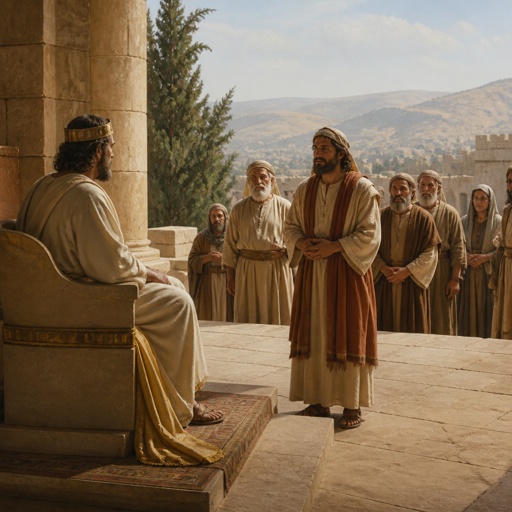
"So Jeroboam and all the people came to Rehoboam on the third day, as the king bade, saying, Come again to me on the third day." - 2 Chronicles 10:12

2 Chronicles 12:12 - "And when he humbled himself, the wrath of the LORD turned from him, that he would not destroy him altogether: and also in Judah things went well."

2 Chronicles 4:10 - "And he set the sea on the right side of the east end, over against the south."

2 Chronicles 10:13 - "And the king answered them roughly; and king Rehoboam forsook the counsel of the old men,"

2 Chronicles 12:8 - "Nevertheless they shall be his servants; that they may know my service, and the service of the kingdoms of the countries."

2 Chronicles 22:12 - "And he was with them hid in the house of God six years: and Athaliah reigned over the land."

2 Kings 12:19 - "¶ And the rest of the acts of Joash, and all that he did, are they not written in the book of the chronicles of the kings of Judah?"