What does 2 Chronicles 13:11 mean?
“And they burn unto the LORD every morning and every evening burnt sacrifices and sweet incense: the shewbread also set they in order upon the pure table; and the candlestick of gold with the lamps thereof, to burn every evening: for we keep the charge of the LORD our God; but ye have forsaken him.” — 2 Chronicles 13:11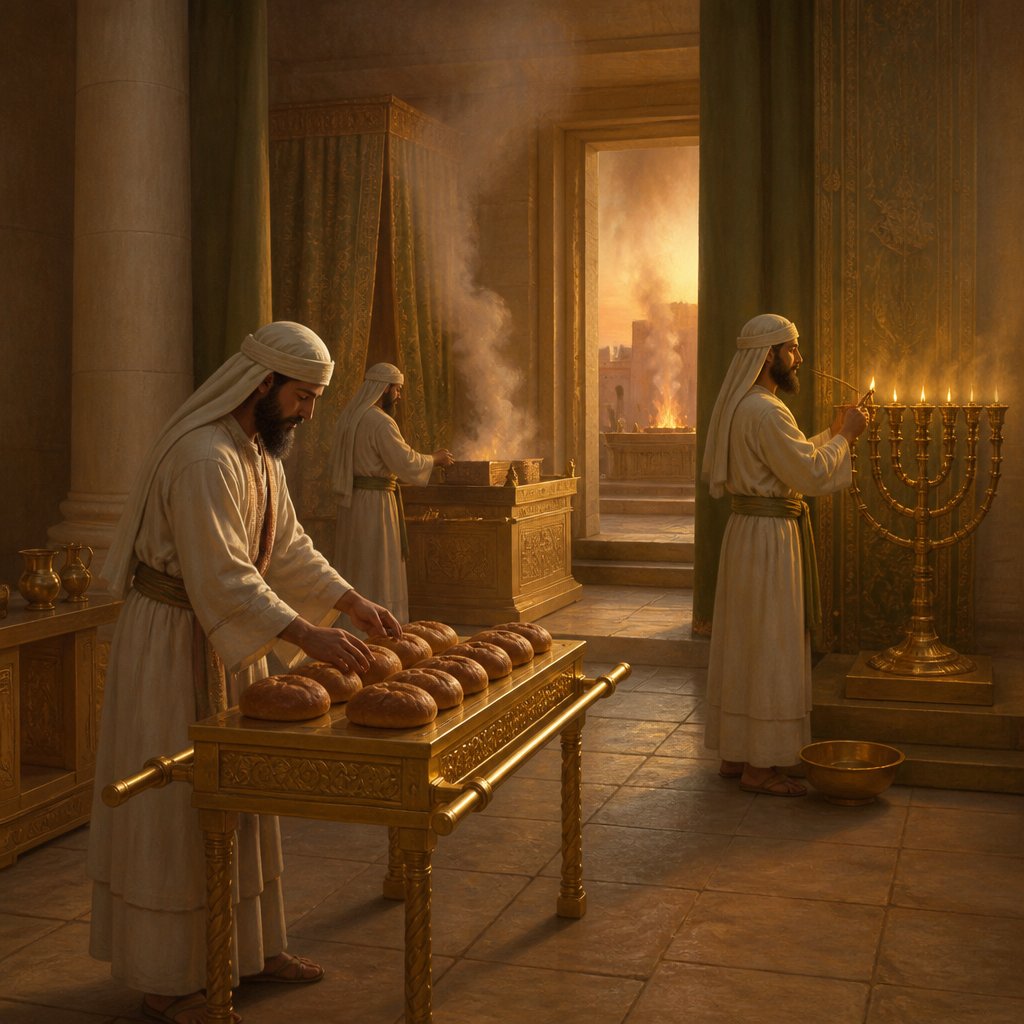
The Bible verse 2 Chronicles 13:11 in the King James Version reads: "And they burn unto the LORD every morning and every evening burnt sacrifices and sweet incense: the shewbread also set they in order upon the pure table; and the candlestick of gold with the lamps thereof, to burn every evening: for we keep the charge of the LORD our God; but ye have forsaken him."
This verse is part of a larger passage in the book of 2 Chronicles which recounts the history of the kings of Judah. In this particular verse, King Abijah of Judah is addressing Jeroboam, the king of Israel, and his army before going into battle. Abijah is reminding Jeroboam of the faithfulness of the people of Judah to the Lord, as evidenced by their faithful adherence to the sacrificial and worship practices outlined in the Law of Moses.
The themes present in this verse include faithfulness, obedience, and worship. The context of this verse is set during a time of conflict and tension between the divided kingdoms of Judah and Israel. In 2 Chronicles 13, we see King Abijah defending the faith of his people against the apostasy and idolatry of Jeroboam and the people of Israel.
The symbolism in this verse is rich and significant. The burning of morning and evening sacrifices, as well as the sweet incense, symbolizes the continual and unwavering devotion of the people of Judah to the Lord. These sacrificial practices were prescribed by God in the Law of Moses as a means of atonement and worship. The shewbread (also known as the bread of the presence) placed on the pure table and the golden candlestick with its lamps represent the provision and light of the Lord in the midst of his people.
These symbols serve as a contrast to the actions of Jeroboam and the people of Israel, who had forsaken the Lord and turned to idolatry. By reminding them of these practices, King Abijah is highlighting the faithfulness and obedience of his people in contrast to the apostasy of their enemies.
The verse also speaks to the idea of "keeping the charge of the Lord," which signifies the responsibility and commitment of the people of Judah to uphold the commandments and ordinances of God. This notion of faithfully keeping the charge of the Lord is a recurring theme throughout the Old Testament, emphasizing the covenant relationship between God and his people.
In a broader sense, this verse serves as a reminder of the importance of faithfulness and obedience in the worship of God. It highlights the contrast between true worship and idolatry, emphasizing the need for sincere devotion and adherence to God's commands.
In conclusion, 2 Chronicles 13:11 in the King James Version offers a poignant depiction of the faithful worship and devotion of the people of Judah in contrast to the apostasy of their enemies. The verse is rich in symbolism and carries themes of faithfulness, obedience, and the importance of true worship. It serves as a powerful reminder of the need for unwavering devotion and commitment to the Lord in the face of adversity and challenges.
Get our apps


Artwork for 2 Chronicles 13:11
2 Chronicles 13:11 - "And they burn unto the LORD every morning and every evening burnt sacrifices and sweet incense: the shewbread also set they in order upon the pure table; and the candlestick of gold with the lamps thereof, to burn every evening: for we keep the charge of the LORD our God; but ye have forsaken him."
"And they burn unto the LORD every morning and every evening burnt sacrifices and sweet incense: the shewbread also set they in order upon the pure table; and the candlestick of gold with the lamps thereof, to burn every evening: for we keep the charge of the LORD our God; but ye have forsaken him." - 2 Chronicles 13:11

2 Chronicles 11:13 - "¶ And the priests and the Levites that were in all Israel resorted to him out of all their coasts."

2 chronicles 13:12
"¶ And the priests and the Levites that were in all Israel resorted to him out of all their coasts." - 2 Chronicles 11:13

2 Chronicles 6:13

2 Chronicles 11:20

2 Chronicles 35:11

2 Chronicles 11:2 - "But the word of the LORD came to Shemaiah the man of God, saying,"

2 Chronicles 11:9 - "And Adoraim, and Lachish, and Azekah,"

2 Chronicles 11:8 - "And Gath, and Mareshah, and Ziph,"

2 Chronicles 11:7 - "And Beth-zur, and Shoco, and Adullam,"

1 Chronicles 13:11 - "And David was displeased, because the LORD had made a breach upon Uzza: wherefore that place is called Perez-uzza to this day."

2 Chronicles 11:11 - "And he fortified the strong holds, and put captains in them, and store of victual, and of oil and wine."

Job 2:11-13

Job 2:11-13

Job 2:11-13

1 Chronicles 2:11 - "And Nahshon begat Salma, and Salma begat Boaz,"

2 Chronicles 2:13 - "And now I have sent a cunning man, endued with understanding, of Huram my father's,"

2 Chronicles 13:13 - "¶ But Jeroboam caused an ambushment to come about behind them: so they were before Judah, and the ambushment was behind them."

2 Chronicles 11:19 - "Which bare him children; Jeush, and Shamariah, and Zaham."

2 Chronicles 11:5 - "¶ And Rehoboam dwelt in Jerusalem, and built cities for defence in Judah."

2 Chronicles 11:6 - "He built even Beth-lehem, and Etam, and Tekoa,"

2 Chronicles 29:13 - "And of the sons of Elizaphan; Shimri, and Jeiel: and of the sons of Asaph; Zechariah, and Mattaniah:"

2 Chronicles 13:1 - "Now in the eighteenth year of king Jeroboam began Abijah to reign over Judah."

2 Chronicles 31:11 - "¶ Then Hezekiah commanded to prepare chambers in the house of the LORD; and they prepared them,"

2 Chronicles 11:10 - "And Zorah, and Aijalon, and Hebron, which are in Judah and in Benjamin fenced cities."

2 Chronicles 20:13 - "And all Judah stood before the LORD, with their little ones, their wives, and their children."

2 Chronicles 13:16 - "And the children of Israel fled before Judah: and God delivered them into their hand."

1 Chronicles 2:13 - "¶ And Jesse begat his firstborn Eliab, and Abinadab the second, and Shimma the third,"