What does 2 Chronicles 13:4 mean?
“And Abijah stood up upon mount Zemaraim, which is in mount Ephraim, and said, Hear me, thou Jeroboam, and all Israel;” — 2 Chronicles 13:4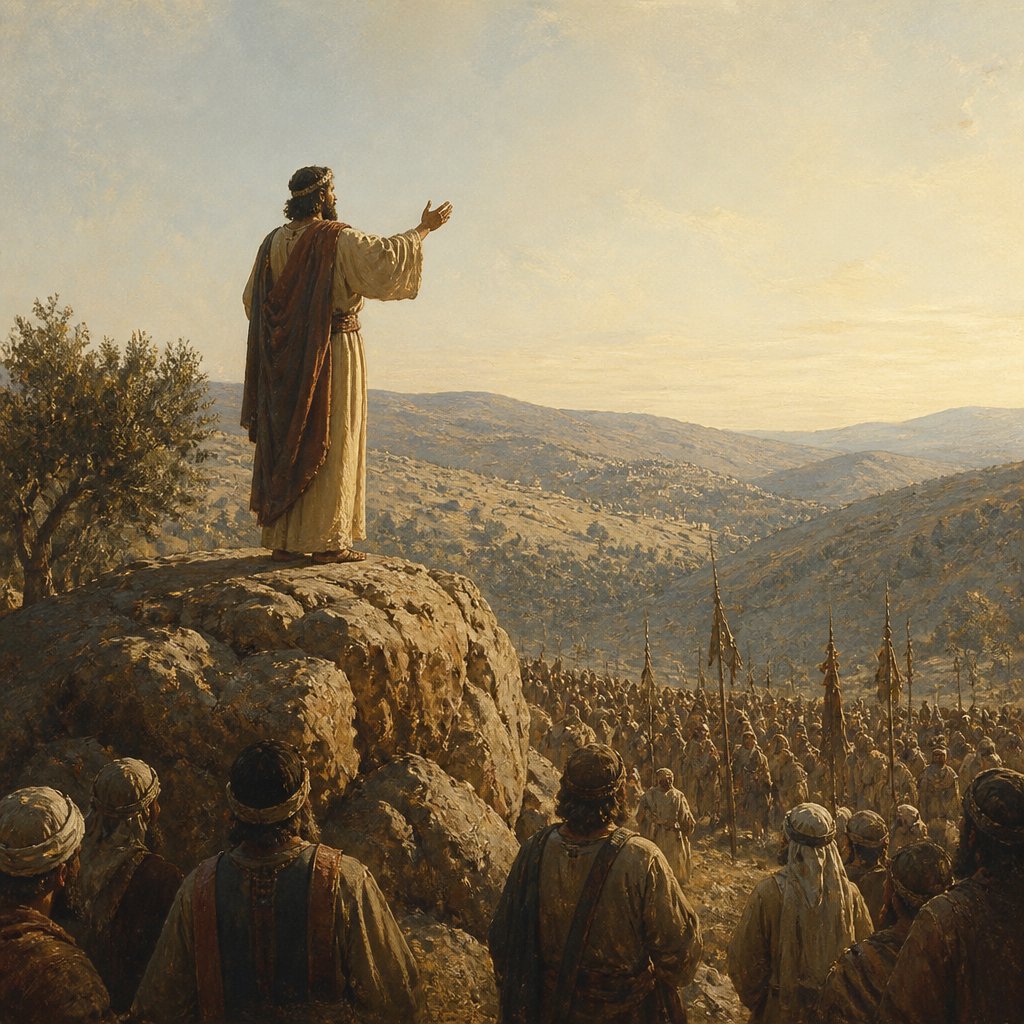
The verse 2 Chronicles 13:4 in the King James Version reads, "And Abijah stood up upon mount Zemaraim, which is in mount Ephraim, and said, Hear me, thou Jeroboam, and all Israel;"
This verse comes from the Old Testament and is part of the account of the divided kingdom of Israel. It is a very specific and historical verse that captures an important moment in the conflict between the northern kingdom of Israel, ruled by Jeroboam, and the southern kingdom of Judah, ruled by Abijah.
To fully understand the meaning and commentary of this verse, it is important to provide some context. After the death of King Solomon, the united kingdom of Israel split into two separate kingdoms – the northern kingdom of Israel and the southern kingdom of Judah. This division was the result of political and religious tensions, and it ultimately led to a period of conflict and rivalry between the two kingdoms.
In this verse, Abijah, the king of Judah, is addressing Jeroboam, the king of Israel, and all of Israel. He does so from mount Zemaraim, which is in the territory of Mount Ephraim. This geographical detail is significant, as it highlights the strategic positioning of Abijah's speech and the importance of the location in the context of the conflict between the two kingdoms.
The theme of the verse is one of conflict and confrontation. Abijah is standing up to Jeroboam and making a bold declaration, asserting his authority and calling on the people of Israel to listen to him. The verse captures a moment of tension and rivalry between the two kingdoms, and it sets the stage for the ensuing battle and the resolution of the conflict.
Symbolism can also be found in this verse. Mount Zemaraim and Mount Ephraim hold symbolic significance as they represent the territories and strongholds of the two kingdoms. Abijah's decision to stand upon mount Zemaraim is a symbolic act of asserting his authority and representing the strength and resilience of the kingdom of Judah. The location of the speech serves to emphasize the power and determination of Abijah and his commitment to defending his kingdom.
Furthermore, the verse also reveals the religious and spiritual aspect of the conflict between the two kingdoms. As the descendants of Jacob, both Judah and Israel were bound by their shared ancestry and faith. The confrontation between Abijah and Jeroboam carries religious significance, as it reflects the struggle for legitimacy and authority within the context of the divine covenant and the promise to the descendants of Abraham.
In conclusion, 2 Chronicles 13:4 is a verse that captures a pivotal moment in the history of the divided kingdom of Israel. It is a testament to the political, geographical, and religious tensions that defined the relationship between the two kingdoms. The verse also carries symbolic significance, highlighting the strength and determination of Abijah as he confronts Jeroboam and asserts his authority. It serves as a reminder of the complexities of the biblical narrative and the profound themes of conflict, division, and faith.
Get our apps


Artwork for 2 Chronicles 13:4

2 Chronicles 13:4 - "¶ And Abijah stood up upon mount Zemaraim, which is in mount Ephraim, and said, Hear me, thou Jeroboam, and all Israel;"
"¶ And Abijah stood up upon mount Zemaraim, which is in mount Ephraim, and said, Hear me, thou Jeroboam, and all Israel;" - 2 Chronicles 13:4

2 chronicles 13:12

2 Chronicles 4:13 - "And four hundred pomegranates on the two wreaths; two rows of pomegranates on each wreath, to cover the two pommels of the chapiters which were upon the pillars."

1 Chronicles 4:13 - "And the sons of Kenaz; Othniel, and Seraiah: and the sons of Othniel; Hathath."

2 Chronicles 6:13

1 Chronicles 13:4 - "And all the congregation said that they would do so: for the thing was right in the eyes of all the people."

2 Chronicles 4:22

2 Chronicles 2:13 - "And now I have sent a cunning man, endued with understanding, of Huram my father's,"

2 Chronicles 13:13 - "¶ But Jeroboam caused an ambushment to come about behind them: so they were before Judah, and the ambushment was behind them."

2 Chronicles 29:13 - "And of the sons of Elizaphan; Shimri, and Jeiel: and of the sons of Asaph; Zechariah, and Mattaniah:"

2 Chronicles 4:15 - "One sea, and twelve oxen under it."

2 Chronicles 30:4 - "And the thing pleased the king and all the congregation."

2 Chronicles 13:1 - "Now in the eighteenth year of king Jeroboam began Abijah to reign over Judah."

2 Chronicles 20:13 - "And all Judah stood before the LORD, with their little ones, their wives, and their children."

2 Chronicles 13:16 - "And the children of Israel fled before Judah: and God delivered them into their hand."

1 Chronicles 2:13 - "¶ And Jesse begat his firstborn Eliab, and Abinadab the second, and Shimma the third,"

2 Chronicles 10:13 - "And the king answered them roughly; and king Rehoboam forsook the counsel of the old men,"

2 Chronicles 16:13 - "¶ And Asa slept with his fathers, and died in the one and fortieth year of his reign."

2 Chronicles 11:13 - "¶ And the priests and the Levites that were in all Israel resorted to him out of all their coasts."

2 Chronicles 7:4 - "¶ Then the king and all the people offered sacrifices before the LORD."

2 Chronicles 13:21 - "¶ But Abijah waxed mighty, and married fourteen wives, and begat twenty and two sons, and sixteen daughters."

2 Chronicles 18:13 - "And Micaiah said, As the LORD liveth, even what my God saith, that will I speak."

2 Chronicles 13:22 - "And the rest of the acts of Abijah, and his ways, and his sayings, are written in the story of the prophet Iddo."

2 Chronicles 4:21 - "And the flowers, and the lamps, and the tongs, made he of gold, and that perfect gold;"

2 Chronicles 24:4 - "¶ And it came to pass after this, that Joash was minded to repair the house of the LORD."

2 Chronicles 5:4 - "And all the elders of Israel came; and the Levites took up the ark."

2 Chronicles 13:2 - "He reigned three years in Jerusalem. His mother's name also was Michaiah the daughter of Uriel of Gibeah. And there was war between Abijah and Jeroboam."

"And the sons of Kenaz; Othniel, and Seraiah: and the sons of Othniel; Hathath." - 1 Chronicles 4:13

2 Chronicles 3:13 - "The wings of these cherubims spread themselves forth twenty cubits: and they stood on their feet, and their faces were inward."