What does 2 Chronicles 13:5 mean?
“Ought ye not to know that the LORD God of Israel gave the kingdom over Israel to David for ever, even to him and to his sons by a covenant of salt?” — 2 Chronicles 13:5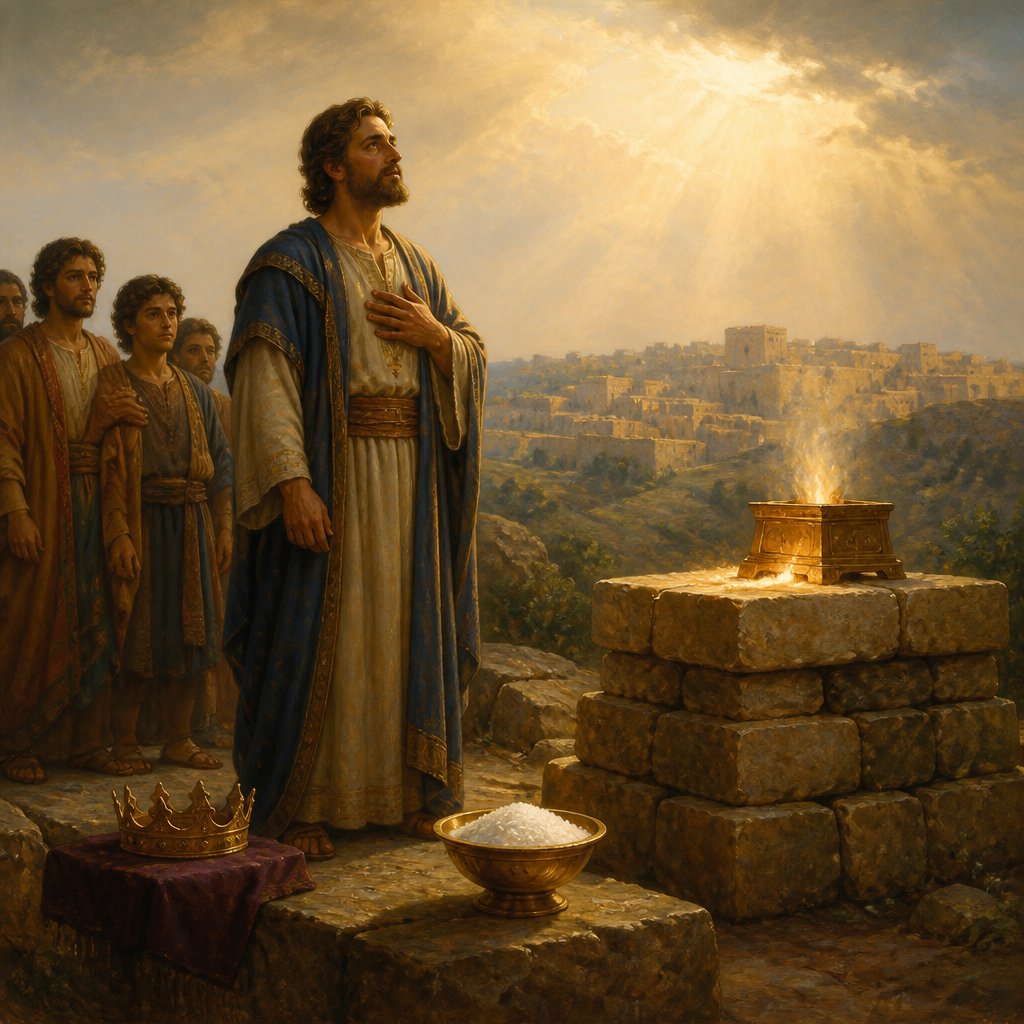
The Bible verse 2 Chronicles 13:5 from the King James Version (KJV) states:
"Ought ye not to know that the Lord God of Israel gave the kingdom over Israel to David for ever, even to him and to his sons by a covenant of salt?"
This verse is part of a speech given by Abijah, the son of Rehoboam, the king of Judah, as he prepares to go to war against Jeroboam, the king of Israel. In this speech, Abijah asserts that the kingdom of Israel was given to David and his descendants by God through a "covenant of salt."
The phrase "covenant of salt" is significant in this verse as it holds deeper symbolism and meaning. In ancient times, salt was a precious and valuable commodity and was often used ceremonially to seal covenants and agreements. It was a symbol of permanence, incorruptibility, and loyalty. By referencing the "covenant of salt," Abijah is emphasizing the enduring and unbreakable nature of the covenant between God and the descendants of David. This covenant was a promise from God that the kingdom of Israel would be established under the line of David forever.
This verse reflects the theme of God's faithfulness and the fulfillment of His promises. Throughout the Old Testament, God repeatedly makes covenants with His people, promising them His protection, guidance, and blessings. The covenant of salt in this verse signifies the unchanging nature of God's promises and His commitment to His chosen people.
Furthermore, the verse also speaks to the theme of divine sovereignty and the establishment of kingly authority. It asserts that the kingdom of Israel is not simply a result of human conquest or manipulation, but rather the result of God's divine intervention and plan. The reference to David as the recipient of the kingdom through God's covenant underscores the role of God in establishing and maintaining the lineage of kings in Israel.
In a broader context, the verse also reflects the ongoing struggle for power and authority between the kingdoms of Israel and Judah. The division of the kingdom after the reign of Solomon created a rift between the northern kingdom of Israel, ruled by Jeroboam, and the southern kingdom of Judah, ruled by Rehoboam and, later, Abijah. This division led to a series of conflicts and wars between the two kingdoms, and the speech in this verse is a call to arms by Abijah as he seeks to reclaim authority over the entirety of Israel.
The symbolism of the "covenant of salt" in this verse also carries significance for contemporary Christian believers. It serves as a reminder of God's faithfulness and the enduring nature of His promises. It encourages believers to trust in the sovereignty of God and His unwavering commitment to His people.
In conclusion, 2 Chronicles 13:5 from the King James Version of the Bible offers a powerful message about the unchanging nature of God's promises, the divine establishment of kingly authority, and the ongoing struggles for power and authority. Through the symbolism of the "covenant of salt," the verse conveys a deep sense of God's faithfulness and the enduring nature of His covenant with His people. It serves as a source of encouragement and reassurance for believers, reminding them of the unchanging and steadfast nature of God's promises.
Get our apps


Artwork for 2 Chronicles 13:5

2 Chronicles 13:5 - "Ought ye not to know that the LORD God of Israel gave the kingdom over Israel to David for ever, even to him and to his sons by a covenant of salt?"
"Ought ye not to know that the LORD God of Israel gave the kingdom over Israel to David for ever, even to him and to his sons by a covenant of salt?" - 2 Chronicles 13:5

2 chronicles 13:12

2 Chronicles 6:13

1 Chronicles 5:13 - "And their brethren of the house of their fathers were, Michael, and Meshullam, and Sheba, and Jorai, and Jachan, and Zia, and Heber, seven."

1 Chronicles 2:5 - "The sons of Pharez; Hezron, and Hamul."

2 Chronicles 2:13 - "And now I have sent a cunning man, endued with understanding, of Huram my father's,"

1 Chronicles 13:5 - "So David gathered all Israel together, from Shihor of Egypt even unto the entering of Hemath, to bring the ark of God from Kirjath-jearim."

2 Chronicles 13:13 - "¶ But Jeroboam caused an ambushment to come about behind them: so they were before Judah, and the ambushment was behind them."

2 Chronicles 2:5 - "And the house which I build is great: for great is our God above all gods."

2 Chronicles 29:13 - "And of the sons of Elizaphan; Shimri, and Jeiel: and of the sons of Asaph; Zechariah, and Mattaniah:"

2 Chronicles 13:1 - "Now in the eighteenth year of king Jeroboam began Abijah to reign over Judah."

2 Chronicles 11:5 - "¶ And Rehoboam dwelt in Jerusalem, and built cities for defence in Judah."

2 Chronicles 20:13 - "And all Judah stood before the LORD, with their little ones, their wives, and their children."

2 Chronicles 13:16 - "And the children of Israel fled before Judah: and God delivered them into their hand."

1 Chronicles 2:13 - "¶ And Jesse begat his firstborn Eliab, and Abinadab the second, and Shimma the third,"

2 Chronicles 5:5 - "And they brought up the ark, and the tabernacle of the congregation, and all the holy vessels that were in the tabernacle, these did the priests and the Levites bring up."

2 Chronicles 5:4 - "And all the elders of Israel came; and the Levites took up the ark."

2 Chronicles 10:13 - "And the king answered them roughly; and king Rehoboam forsook the counsel of the old men,"

2 Chronicles 16:13 - "¶ And Asa slept with his fathers, and died in the one and fortieth year of his reign."

2 Chronicles 11:13 - "¶ And the priests and the Levites that were in all Israel resorted to him out of all their coasts."

2 Chronicles 5:13 - "It came even to pass, as the trumpeters and singers were as one, to make one sound to be heard in praising and thanking the LORD; and when they lifted up their voice with the trumpets and cymbals and instruments of musick, and praised the LORD, saying, For he is good; for his mercy endureth for ever: that then the house was filled with a cloud, even the house of the LORD;"

2 Chronicles 34:5 - "And he burnt the bones of the priests upon their altars, and cleansed Judah and Jerusalem."

2 Chronicles 13:21 - "¶ But Abijah waxed mighty, and married fourteen wives, and begat twenty and two sons, and sixteen daughters."

2 Chronicles 18:13 - "And Micaiah said, As the LORD liveth, even what my God saith, that will I speak."

2 Chronicles 13:22 - "And the rest of the acts of Abijah, and his ways, and his sayings, are written in the story of the prophet Iddo."

2 Chronicles 13:2 - "He reigned three years in Jerusalem. His mother's name also was Michaiah the daughter of Uriel of Gibeah. And there was war between Abijah and Jeroboam."

2 Chronicles 20:5 - "¶ And Jehoshaphat stood in the congregation of Judah and Jerusalem, in the house of the LORD, before the new court,"

2 Chronicles 33:5 - "And he built altars for all the host of heaven in the two courts of the house of the LORD."

2 Chronicles 3:13 - "The wings of these cherubims spread themselves forth twenty cubits: and they stood on their feet, and their faces were inward."