What does 2 Chronicles 18:27 mean?
"And Micaiah said, If thou certainly return in peace, then hath not the LORD spoken by me. And he said, Hearken, all ye people." - 2 Chronicles 18:27
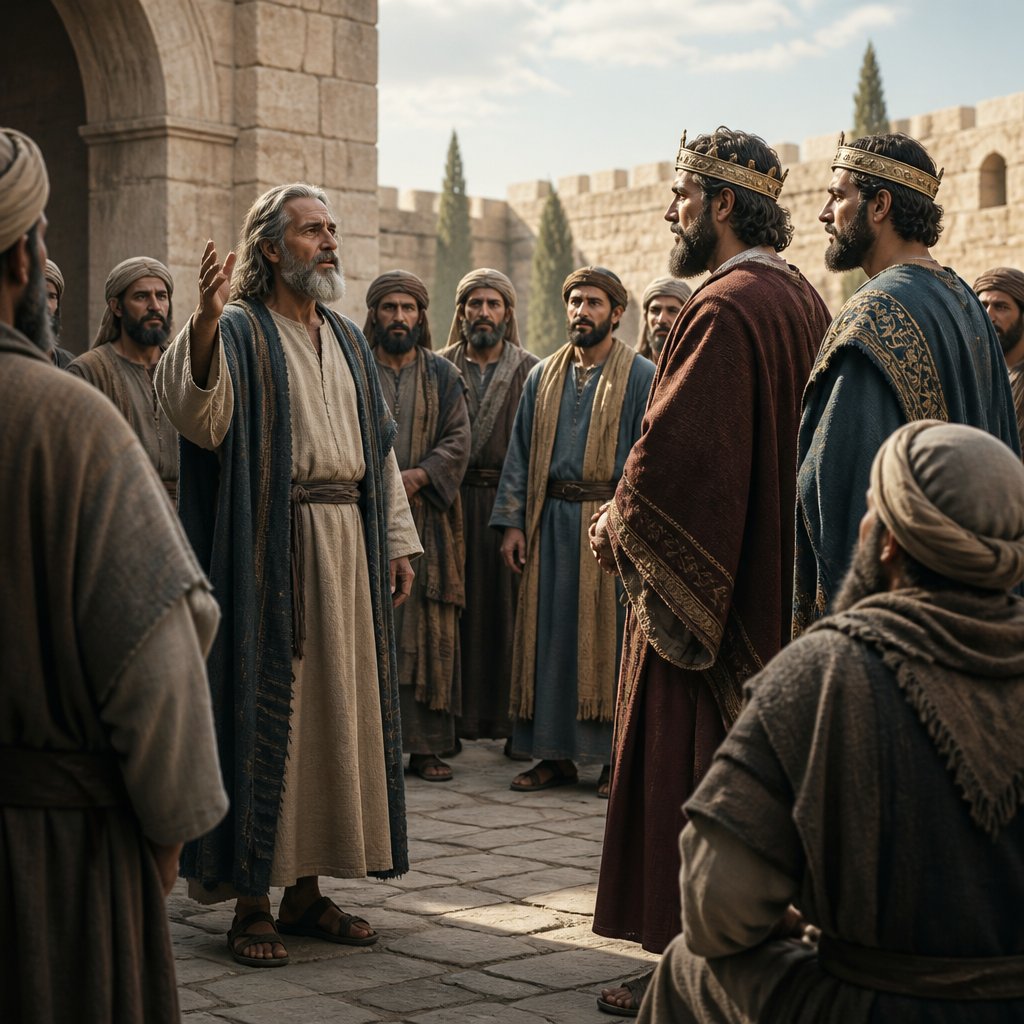
2 Chronicles 18:27 (KJV) states, "And Micaiah said, If thou certainly return in peace, then hath not the Lord spoken by me. And he said, Hearken, all ye people."
This verse is part of a larger narrative that details the interaction between King Ahab of Israel and King Jehoshaphat of Judah as they consult with prophets before going to war. Ahab was a wicked king who frequently disobeyed God, while Jehoshaphat was known for seeking the counsel of the Lord. Ahab wanted to go to war against the Syrians to take back Ramoth-Gilead, and he sought the advice of his prophets who all predicted victory. However, Jehoshaphat was hesitant and desired to seek a word from the Lord.
At the urging of Jehoshaphat, Ahab eventually calls for Micaiah, a prophet of the Lord, to seek his advice. Micaiah initially sarcastically confirms the false prophets' assurances, but when pressed by Ahab for the truth, Micaiah prophecies defeat and death for Ahab in the battle. Ahab imprisons Micaiah for his prophecy, showing his unwillingness to accept the truth and his preference for false reassurances.
The verse 2 Chronicles 18:27 marks the moment when Micaiah confidently stands by his prophetic utterance, stating, "If thou certainly return in peace, then hath not the Lord spoken by me. And he said, Hearken, all ye people." This statement is a powerful declaration of the authority and integrity of Micaiah's words as a true prophet of the Lord. By asserting that the Lord's words will be proven true through the outcome of the battle, Micaiah displays unwavering faith in God's sovereignty and his own role as a messenger of God's truth.
This passage carries several important themes that are relevant for both the historical context of the biblical narrative and for contemporary application. Firstly, it underscores the conflict between obedience and disobedience to God's word. Ahab's stubbornness and disregard for the Lord's truth led to his downfall, while Jehoshaphat's willingness to seek God's counsel ultimately preserved his life. This serves as a cautionary tale about the consequences of ignoring God's word and following the advice of false prophets.
Additionally, the verse highlights the role of true prophets in speaking forth God's truth, even in the face of opposition and persecution. Micaiah's bold declaration demonstrates the courage and steadfastness required of those who are called to speak on behalf of God, even when their message is unpopular or unwelcome. The verse also serves as a reminder for believers to discern God's voice amidst the multitude of conflicting messages and to prioritize the truth of God's word above all else.
Symbolically, this verse can be seen as a representation of the unchanging nature of God's truth. Despite Ahab's attempts to silence Micaiah and reject his prophecy, the truth of God's word prevailed in the end. This symbolizes the enduring power and authority of God's word, which cannot be altered or suppressed by human resistance. It also serves as a reminder of the certainty of God's promises and the inevitability of the fulfillment of his word.
In conclusion, 2 Chronicles 18:27 serves as a pivotal moment in the biblical narrative, emphasizing the themes of obedience to God's word, the role of true prophets, and the unchanging nature of God's truth. It provides valuable lessons for believers regarding the importance of seeking and adhering to God's counsel, discerning truth amidst falsehood, and standing firm in faith, even in the face of opposition. The verse also carries a symbolic significance, highlighting the enduring power and authority of God's word. Overall, this passage offers profound insights and practical guidance for navigating the complexities of life with unwavering faith in God's truth.
Have questions about 2 Chronicles 18:27?
Dive deeper into this scripture with Bible Chat — an AI-powered tool for exploring God's Word through conversation. Ask questions, get context, and grow in your understanding of the Bible.
Get Our Apps


2 Chronicles 18:27 Artwork

2 Chronicles 18:27 - "And Micaiah said, If thou certainly return in peace, then hath not the LORD spoken by me. And he said, Hearken, all ye people."
"And Micaiah said, If thou certainly return in peace, then hath not the LORD spoken by me. And he said, Hearken, all ye people." - 2 Chronicles 18:27

1 Chronicles 27:18 - "Of Judah, Elihu, one of the brethren of David: of Issachar, Omri the son of Michael:"

2 Chronicles 18:9

2 Chronicles 18:9

2 Chronicles 20:18

1 Chronicles 2:27 - "And the sons of Ram the firstborn of Jerahmeel were, Maaz, and Jamin, and Eker."

2 Chronicles 35:27 - "And his deeds, first and last, behold, they are written in the book of the kings of Israel and Judah."

2 Chronicles 27:4 - "Moreover he built cities in the mountains of Judah, and in the forests he built castles and towers."

2 Chronicles 27:3 - "He built the high gate of the house of the LORD, and on the wall of Ophel he built much."

"Of Judah, Elihu, one of the brethren of David: of Issachar, Omri the son of Michael:" - 1 Chronicles 27:18

2 Kings 14:18 - "And the rest of the acts of Amaziah, are they not written in the book of the chronicles of the kings of Judah?"

2 Chronicles 27:6 - "So Jotham became mighty, because he prepared his ways before the LORD his God."

2 Chronicles 27:8 - "He was five and twenty years old when he began to reign, and reigned sixteen years in Jerusalem."

2 Chronicles 21:18 - "¶ And after all this the LORD smote him in his bowels with an incurable disease."

2 Chronicles 18:1 - "Now Jehoshaphat had riches and honour in abundance, and joined affinity with Ahab."

1 Chronicles 18:2 - "And he smote Moab; and the Moabites became David's servants, and brought gifts."

2 Chronicles 9:27 - "And the king made silver in Jerusalem as stones, and cedar trees made he as the sycomore trees that are in the low plains in abundance."

1 Chronicles 27:2 - "Over the first course for the first month was Jashobeam the son of Zabdiel: and in his course were twenty and four thousand."

2 Chronicles 27:9 - "¶ And Jotham slept with his fathers, and they buried him in the city of David: and Ahaz his son reigned in his stead."

2 Chronicles 17:18 - "And next him was Jehozabad, and with him an hundred and fourscore thousand ready prepared for the war."

2 Chronicles 18:6 - "But Jehoshaphat said, Is there not here a prophet of the LORD besides, that we might enquire of him?"

2 Chronicles 18:28 - "So the king of Israel and Jehoshaphat the king of Judah went up to Ramoth-gilead."

2 Chronicles 27:7 - "¶ Now the rest of the acts of Jotham, and all his wars, and his ways, lo, they are written in the book of the kings of Israel and Judah."

2 Chronicles 27:2 - "And he did that which was right in the sight of the LORD, according to all that his father Uzziah did: howbeit he entered not into the temple of the LORD. And the people did yet corruptly."

2 Chronicles 18:13 - "And Micaiah said, As the LORD liveth, even what my God saith, that will I speak."

2 Chronicles 18:8 - "And the king of Israel called for one of his officers, and said, Fetch quickly Micaiah the son of Imla."

2 Chronicles 4:18 - "Thus Solomon made all these vessels in great abundance: for the weight of the brass could not be found out."

2 Kings 1:18 - "Now the rest of the acts of Ahaziah which he did, are they not written in the book of the chronicles of the kings of Israel?"

2 Chronicles 18:4 - "¶ And Jehoshaphat said unto the king of Israel, Enquire, I pray thee, at the word of the LORD to day."