What does 2 Chronicles 18:3 mean?
“And Ahab king of Israel said unto Jehoshaphat king of Judah, Wilt thou go with me to Ramoth-gilead? And he answered him, I am as thou art, and my people as thy people; and we will be with thee in the war.” — 2 Chronicles 18:3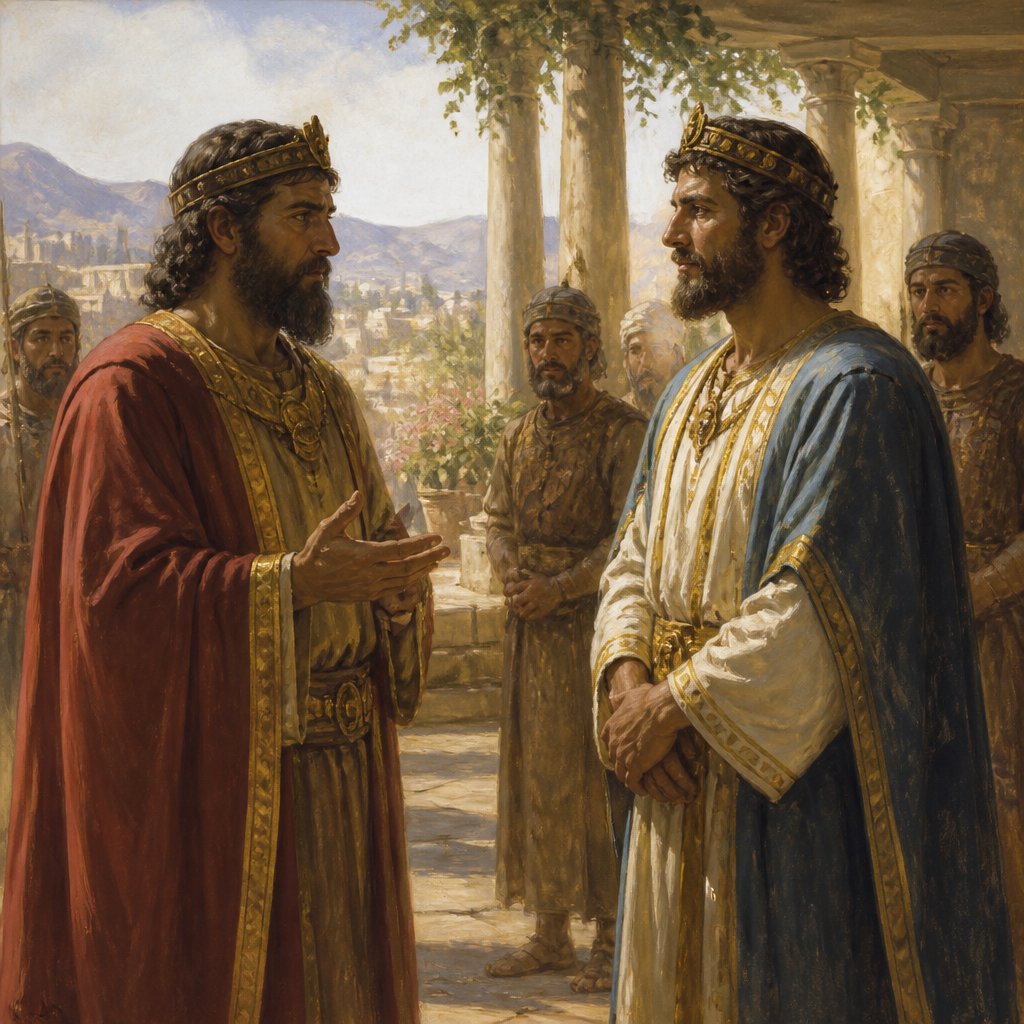
The verse 2 Chronicles 18:3 in the King James Version of the Bible reads, "And Ahab king of Israel said unto Jehoshaphat king of Judah, Wilt thou go with me to Ramothgilead? And he answered him, I am as thou art, and my people as thy people; and we will be with thee in the war."
This verse is part of the story of the reigns of Ahab, the king of Israel, and Jehoshaphat, the king of Judah. Ahab was known for his unfaithfulness to God, as demonstrated by his marriage to Jezebel, who led him and the people of Israel into idolatry. On the other hand, Jehoshaphat was considered a righteous king who sought to follow God's commandments and lead his people in a godly manner.
In this passage, Ahab seeks to form an alliance with Jehoshaphat to go to war with the city of Ramothgilead. Ahab's invitation to Jehoshaphat to join him in battle reflects both his desire for military support and his willingness to enter into a covenant with the king of Judah. Jehoshaphat, in turn, responds affirmatively, expressing his solidarity with Ahab and the people of Israel.
The narrative presented in this verse speaks to the complex dynamics of leadership, alliance, and faithfulness to God. Ahab's invitation to Jehoshaphat reveals his reliance on human power and military strength, rather than seeking God's guidance and direction in making decisions. His disregard for spiritual discernment ultimately leads to his downfall, as he is later killed in battle.
Jehoshaphat's response, on the other hand, reflects his commitment to unity and cooperation with the people of Israel, despite their spiritual and moral failings. However, this alliance with Ahab ultimately leads to Jehoshaphat's own near-death in battle and draws God's wrath upon him for aligning himself with an ungodly leader.
The verse 2 Chronicles 18:3 highlights the themes of leadership, faithfulness, and the consequences of aligning oneself with ungodly individuals. It underscores the importance of seeking God's guidance and remaining faithful to His commandments, rather than relying on human alliances and military might. The passage serves as a cautionary tale about the dangers of compromise and the consequences of forsaking God's wisdom and sovereignty.
Moreover, the context of this verse within the larger narrative of Ahab and Jehoshaphat's reigns provides a broader perspective on the political and spiritual climate of ancient Israel and Judah. It reveals the challenges and temptations that leaders faced in navigating alliances, power dynamics, and the influence of ungodly forces.
Symbolically, the verse can be interpreted as a reflection of the ongoing struggle between good and evil, righteousness and unrighteousness. Ahab represents the lure of power, ambition, and worldly success, while Jehoshaphat embodies the struggle to remain faithful to God and His commandments in the midst of political turmoil and moral compromise.
In conclusion, 2 Chronicles 18:3 captures the complexities of leadership, alliance, and faithfulness within the context of ancient Israel and Judah. It serves as a cautionary tale about the dangers of aligning oneself with ungodly individuals and the importance of seeking God's guidance and remaining faithful to His commandments. The verse offers valuable insights into the spiritual and political challenges faced by leaders and the enduring relevance of remaining steadfast in one's faith amidst the temptations and conflicts of the world.
Get our apps


Artwork for 2 Chronicles 18:3
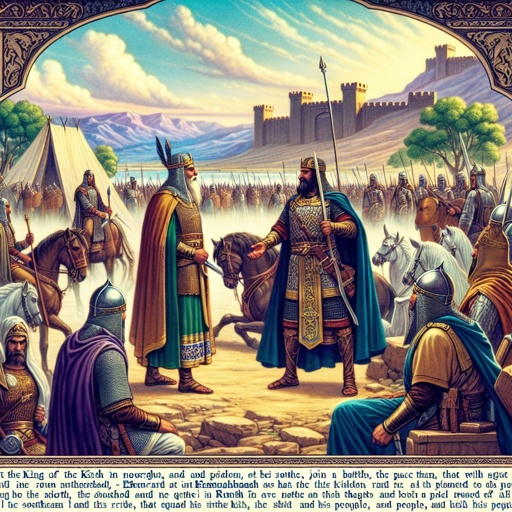
2 Chronicles 18:3 - "And Ahab king of Israel said unto Jehoshaphat king of Judah, Wilt thou go with me to Ramoth-gilead? And he answered him, I am as thou art, and my people as thy people; and we will be with thee in the war."
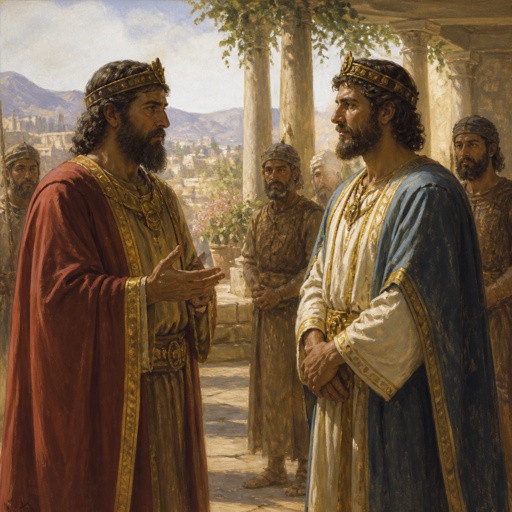
"And Ahab king of Israel said unto Jehoshaphat king of Judah, Wilt thou go with me to Ramoth-gilead? And he answered him, I am as thou art, and my people as thy people; and we will be with thee in the war." - 2 Chronicles 18:3

2 Chronicles 18:9

2 Chronicles 18:9

1 Chronicles 3:18 - "Malchiram also, and Pedaiah, and Shenazar, Jecamiah, Hoshama, and Nedabiah."

2 Chronicles 20:18

1 Chronicles 18:3 - "¶ And David smote Hadarezer king of Zobah unto Hamath, as he went to stablish his dominion by the river Euphrates."

2 Chronicles 28:3

2 Kings 14:18 - "And the rest of the acts of Amaziah, are they not written in the book of the chronicles of the kings of Judah?"

2 Corinthians 3:18

2 Chronicles 21:18 - "¶ And after all this the LORD smote him in his bowels with an incurable disease."

2 Chronicles 18:1 - "Now Jehoshaphat had riches and honour in abundance, and joined affinity with Ahab."

1 Chronicles 18:2 - "And he smote Moab; and the Moabites became David's servants, and brought gifts."

2 Chronicles 17:18 - "And next him was Jehozabad, and with him an hundred and fourscore thousand ready prepared for the war."

2 Chronicles 18:6 - "But Jehoshaphat said, Is there not here a prophet of the LORD besides, that we might enquire of him?"

2 Chronicles 18:28 - "So the king of Israel and Jehoshaphat the king of Judah went up to Ramoth-gilead."

2 Chronicles 18:13 - "And Micaiah said, As the LORD liveth, even what my God saith, that will I speak."

2 Chronicles 8:3 - "And Solomon went to Hamath-zobah, and prevailed against it."

2 Chronicles 3:2 - "And he began to build in the second day of the second month, in the fourth year of his reign."

2 Chronicles 18:8 - "And the king of Israel called for one of his officers, and said, Fetch quickly Micaiah the son of Imla."

2 Chronicles 4:18 - "Thus Solomon made all these vessels in great abundance: for the weight of the brass could not be found out."

2 Kings 1:18 - "Now the rest of the acts of Ahaziah which he did, are they not written in the book of the chronicles of the kings of Israel?"

2 Chronicles 18:4 - "¶ And Jehoshaphat said unto the king of Israel, Enquire, I pray thee, at the word of the LORD to day."
"Malchiram also, and Pedaiah, and Shenazar, Jecamiah, Hoshama, and Nedabiah." - 1 Chronicles 3:18

2 Chronicles 18:18 - "Again he said, Therefore hear the word of the LORD; I saw the LORD sitting upon his throne, and all the host of heaven standing on his right hand and on his left."

2 Chronicles 11:18 - "¶ And Rehoboam took him Mahalath the daughter of Jerimoth the son of David to wife, and Abihail the daughter of Eliab the son of Jesse;"

2 Chronicles 18:32 - "For it came to pass, that, when the captains of the chariots perceived that it was not the king of Israel, they turned back again from pursuing him."

2 Chronicles 24:18 - "And they left the house of the LORD God of their fathers, and served groves and idols: and wrath came upon Judah and Jerusalem for this their trespass."

1 Chronicles 2:18 - "¶ And Caleb the son of Hezron begat children of Azubah his wife, and of Jerioth: her sons are these; Jesher, and Shobab, and Ardon."

2 Chronicles 2:18 - "And he set threescore and ten thousand of them to be bearers of burdens, and fourscore thousand to be hewers in the mountain, and three thousand and six hundred overseers to set the people a work."