What does 2 Chronicles 19:1 mean?
“And Jehoshaphat the king of Judah returned to his house in peace to Jerusalem.” — 2 Chronicles 19:1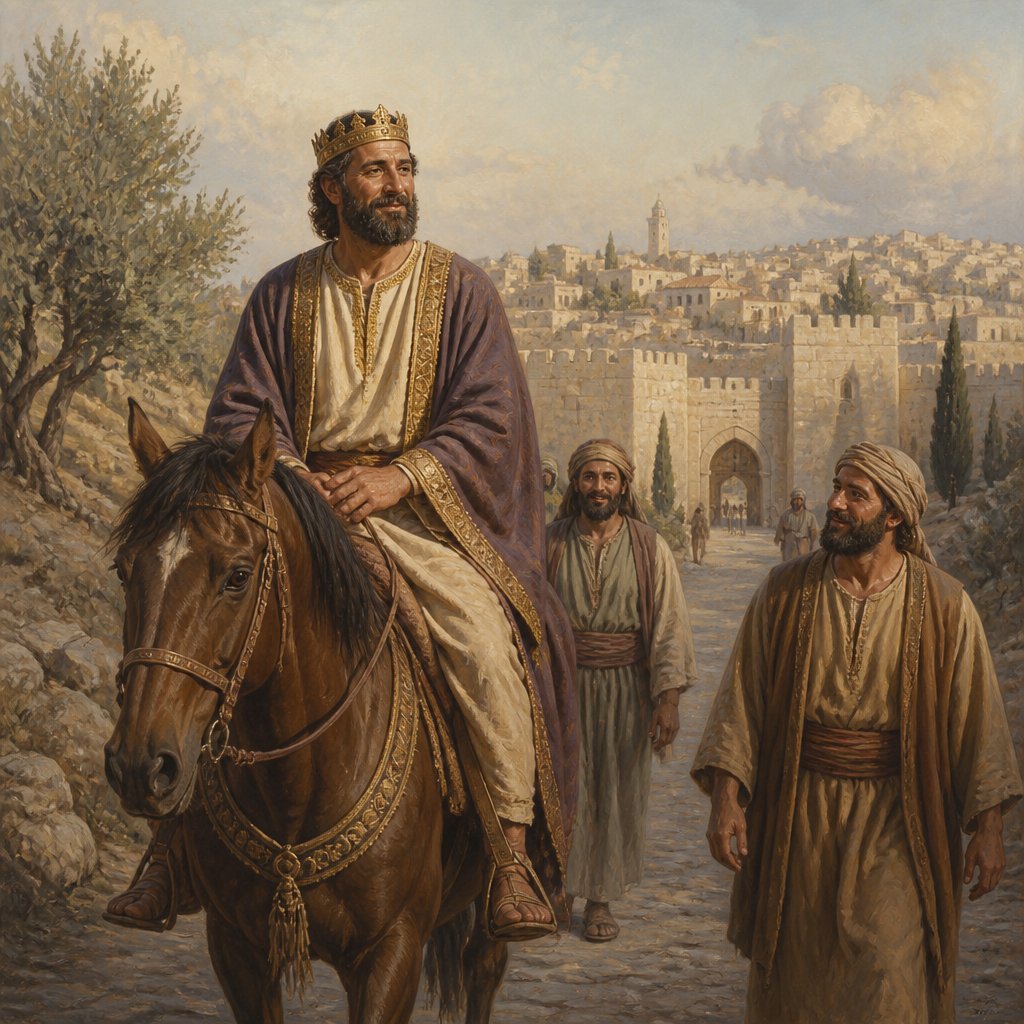
2 Chronicles 19:1 (KJV) states, "And Jehoshaphat the king of Judah returned to his house in peace to Jerusalem." This verse comes in the context of the larger narrative of the reign of King Jehoshaphat, a significant figure in the history of ancient Judah. In order to fully understand the meaning and significance of this verse, it is important to explore the historical context, the themes present in the passage, and the symbolism it conveys.
Historical Context:
Jehoshaphat was the son of King Asa and reigned as the fourth king of Judah, following in the footsteps of his father. He was known for his religious reforms and his dedication to serving God. The verse in question comes after a significant event in Jehoshaphat's reign. In 2 Chronicles 18, it is recorded that Jehoshaphat allied himself with King Ahab of Israel to go to war against the Arameans. However, this alliance was not supported by God, and despite Ahab's death in battle, Jehoshaphat was rebuked for his actions by the prophet Jehu. The events of 2 Chronicles 19:1 occur as Jehoshaphat returns to his house in peace after the events of the war.
Themes:
The verse contains several themes that are relevant to the broader narrative of Jehoshaphat's reign and the biblical understanding of kingship and leadership. Peace and rest are central themes in this verse, reflecting the idea of divine favor and protection for the king. Despite his earlier missteps, Jehoshaphat is granted peace as he returns to his house. This emphasizes the importance of seeking God's guidance and repentance in the face of error, as well as the theme of divine sovereignty in the lives of leaders.
Contextually, the verse also speaks to the broader theme of faithfulness and obedience to God. Jehoshaphat's actions, both in forming the alliance with Ahab and in his subsequent repentance, demonstrate the complex nature of human fallibility and the need for reliance on God's guidance. The verse serves as a reminder that even in difficult times, God's peace and favor can be experienced by those who seek His will and repent of their mistakes.
Symbolism:
The verse also holds symbolic significance within the broader biblical narrative. The peace experienced by Jehoshaphat can be seen as a foreshadowing of the peace that comes with reconciliation and obedience to God. It serves as a reminder of the biblical promise that those who seek God's favor and repent of their sins will experience His peace and protection. The return to Jerusalem, the holy city, can also be interpreted symbolically as a return to spiritual truth and alignment with God's will.
Furthermore, the verse illustrates the tension between human actions and divine providence. Jehoshaphat's earlier actions and subsequent repentance highlight the delicate balance between human agency and the sovereignty of God. The verse can be seen as a reminder that even in moments of error and misjudgment, God's grace and peace can be experienced by those who turn to Him in repentance.
In conclusion, 2 Chronicles 19:1 holds rich meaning and significance within the broader context of Jehoshaphat's reign and the biblical narrative as a whole. It speaks to the themes of divine favor, repentance, and the complex nature of human leadership. The verse serves as a powerful reminder of the peace and protection that comes with seeking God's will and aligning with His purposes. As such, it continues to be a source of inspiration and guidance for believers seeking to understand the complexities of faith and leadership.
Get our apps


Artwork for 2 Chronicles 19:1

2 Chronicles 19:1 - "And Jehoshaphat the king of Judah returned to his house in peace to Jerusalem."
"And Jehoshaphat the king of Judah returned to his house in peace to Jerusalem." - 2 Chronicles 19:1

1 Chronicles 2:19 - "And when Azubah was dead, Caleb took unto him Ephrath, which bare him Hur."

2 Chronicles 34:19

2 Chronicles 34:19

1 Chronicles 19:1 - "Now it came to pass after this, that Nahash the king of the children of Ammon died, and his son reigned in his stead."

1 Chronicles 8:19 - "And Jakim, and Zichri, and Zabdi,"

2 Chronicles 35:19 - "In the eighteenth year of the reign of Josiah was this passover kept."

2 Chronicles 11:19 - "Which bare him children; Jeush, and Shamariah, and Zaham."

2 Chronicles 10:19 - "And Israel rebelled against the house of David unto this day."

1 Chronicles 5:19 - "And they made war with the Hagarites, with Jetur, and Nephish, and Nodab."

2 Chronicles 15:19 - "And there was no more war unto the five and thirtieth year of the reign of Asa."

1 Chronicles 16:19 - "When ye were but few, even a few, and strangers in it."

1 Chronicles 7:19 - "And the sons of Shemidah were, Ahian, and Shechem, and Likhi, and Aniam."

1 Chronicles 26:19 - "These are the divisions of the porters among the sons of Kore, and among the sons of Merari."

1 Chronicles 6:19 - "The sons of Merari; Mahli, and Mushi. And these are the families of the Levites according to their fathers."

1 Chronicles 27:19 - "Of Zebulun, Ishmaiah the son of Obadiah: of Naphtali, Jerimoth the son of Azriel:"

2 Chronicles 19:5 - "¶ And he set judges in the land throughout all the fenced cities of Judah, city by city,"

2 Kings 12:19 - "¶ And the rest of the acts of Joash, and all that he did, are they not written in the book of the chronicles of the kings of Judah?"

1 Chronicles 25:19 - "The twelfth to Hashabiah, he, his sons, and his brethren, were twelve:"

"And Jakim, and Zichri, and Zabdi," - 1 Chronicles 8:19
"And when Azubah was dead, Caleb took unto him Ephrath, which bare him Hur." - 1 Chronicles 2:19

2 Kings 16:19 - "¶ Now the rest of the acts of Ahaz which he did, are they not written in the book of the chronicles of the kings of Judah?"

1 Chronicles 15:19 - "So the singers, Heman, Asaph, and Ethan, were appointed to sound with cymbals of brass;"

1 Chronicles 19:8 - "And when David heard of it, he sent Joab, and all the host of the mighty men."

1 Chronicles 21:19 - "And David went up at the saying of Gad, which he spake in the name of the LORD."

2 Chronicles 34:19 - "And it came to pass, when the king had heard the words of the law, that he rent his clothes."

2 Chronicles 17:19 - "These waited on the king, beside those whom the king put in the fenced cities throughout all Judah."

1 Chronicles 23:19 - "Of the sons of Hebron; Jeriah the first, Amariah the second, Jahaziel the third, and Jekameam the fourth."

2 Kings 19:2