What does 2 Chronicles 1:13 mean?
“Then Solomon came from his journey to the high place that was at Gibeon to Jerusalem, from before the tabernacle of the congregation, and reigned over Israel.” — 2 Chronicles 1:13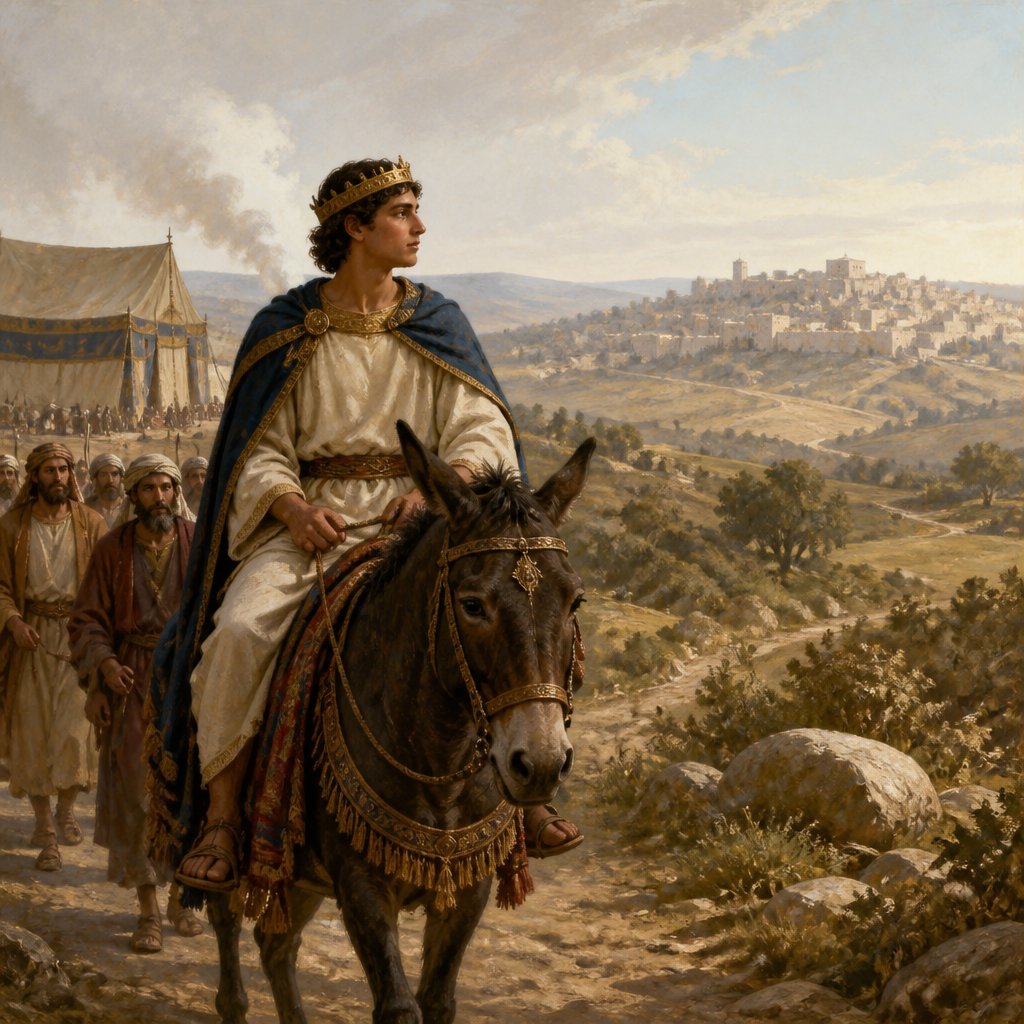
The verse 2 Chronicles 1:13 in the King James Version (KJV) of the Bible reads, "Then Solomon came from his journey to the high place that was at Gibeon to Jerusalem, from before the tabernacle of the congregation, and reigned over Israel."
This verse is part of the account of Solomon's reign as king of Israel. Solomon was the son of David, and he became king after David's death. In the preceding verses, Solomon had gone to the high place at Gibeon to offer a thousand burnt offerings to the Lord. This act demonstrated Solomon's desire to seek the Lord's favor and acknowledge Him as the ultimate authority over Israel. The Lord was pleased with Solomon's sacrifice and appeared to him in a dream, asking him what he wanted. Solomon's request for wisdom pleased the Lord, and He not only granted Solomon wisdom but also wealth and honor, making him the wisest and richest king of his time.
The specific verse 2 Chronicles 1:13 describes Solomon's return from his journey to the high place at Gibeon to Jerusalem, where he reigned over Israel. This event signifies the beginning of Solomon's reign as king – a reign that was characterized by great wisdom, wealth, and prosperity for the people of Israel. The mention of the tabernacle of the congregation also highlights the central role of worship and seeking God's presence in Solomon's reign.
One of the themes present in this verse is the divine favor and blessing. Solomon's act of offering burnt sacrifices demonstrated his commitment to seeking the Lord's favor, and God responded by granting him wisdom, wealth, and honor. This theme of divine favor is a recurring motif in the Bible, highlighting the importance of seeking God's will and acknowledging His sovereignty in order to receive His blessings.
Another theme in this verse is the significance of worship and seeking God's presence. The high place at Gibeon was a place of worship, and Solomon's decision to offer sacrifices there demonstrated his desire to seek God's presence. The tabernacle of the congregation further emphasizes the role of worship and seeking God in Solomon's reign. This theme underscores the importance of spiritual devotion and seeking God's will in the life of a leader and the nation as a whole.
The context of this verse is important for understanding its significance. Solomon's reign was a pivotal period in Israel's history, marked by unprecedented wealth, wisdom, and territorial expansion. His reign was also characterized by the construction of the glorious temple in Jerusalem, which became the center of worship for the Israelites. The mention of Solomon's return to Jerusalem from the high place at Gibeon is significant in this context, as it marks the beginning of his reign and sets the stage for the prosperity and success that would characterize his rule.
Symbolism can also be found in this verse. The journey from the high place at Gibeon to Jerusalem symbolizes Solomon's ascent to the throne and the transition from seeking God's favor to reigning over the nation. The tabernacle of the congregation represents the presence of God among His people and the central role of worship in Solomon's reign. The image of Solomon reigning over Israel symbolizes his authority and leadership, as well as the divine favor and blessing that accompanied his reign.
In conclusion, 2 Chronicles 1:13 in the King James Version of the Bible portrays the beginning of Solomon's reign as king of Israel, marked by his seeking of God's favor, the significance of worship and seeking God's presence, and the themes of divine favor and blessing. The context of Solomon's reign and the symbolism in this verse further underscore its significance in the biblical narrative. It serves as a reminder of the importance of seeking God's will and acknowledging His sovereignty, both for leaders and individuals, in order to receive His blessings and favor.
Get our apps


Artwork for 2 Chronicles 1:13

2 Chronicles 1:13 - "¶ Then Solomon came from his journey to the high place that was at Gibeon to Jerusalem, from before the tabernacle of the congregation, and reigned over Israel."
"¶ Then Solomon came from his journey to the high place that was at Gibeon to Jerusalem, from before the tabernacle of the congregation, and reigned over Israel." - 2 Chronicles 1:13

1 Chronicles 2:13 - "¶ And Jesse begat his firstborn Eliab, and Abinadab the second, and Shimma the third,"

2 Chronicles 13:1 - "Now in the eighteenth year of king Jeroboam began Abijah to reign over Judah."

1 Chronicles 1:3 - "Henoch, Methuselah, Lamech,"

1 Chronicles 1:13 - "And Canaan begat Zidon his firstborn, and Heth,"

"Henoch, Methuselah, Lamech," - 1 Chronicles 1:3

2 Chronicles 1:3 - "So Solomon, and all the congregation with him, went to the high place that was at Gibeon; for there was the tabernacle of the congregation of God, which Moses the servant of the LORD had made in the wilderness."

"And Canaan begat Zidon his firstborn, and Heth," - 1 Chronicles 1:13

2 Chronicles 6:13

2 chronicles 13:12

1 Chronicles 13:1 - "And David consulted with the captains of thousands and hundreds, and with every leader."

1 Chronicles 24:13 - "The thirteenth to Huppah, the fourteenth to Jeshebeab,"

1 Chronicles 12:13 - "Jeremiah the tenth, Machbanai the eleventh."
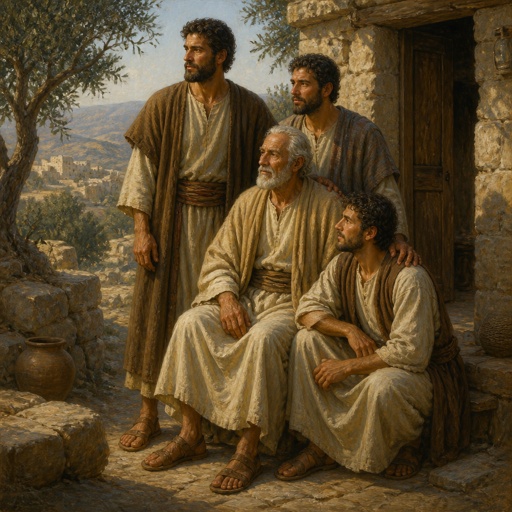
"¶ And Jesse begat his firstborn Eliab, and Abinadab the second, and Shimma the third," - 1 Chronicles 2:13

2 Chronicles 2:13 - "And now I have sent a cunning man, endued with understanding, of Huram my father's,"

2 Chronicles 13:13 - "¶ But Jeroboam caused an ambushment to come about behind them: so they were before Judah, and the ambushment was behind them."
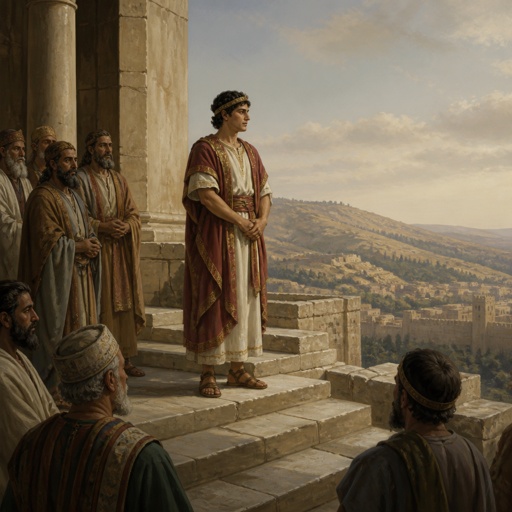
"Now in the eighteenth year of king Jeroboam began Abijah to reign over Judah." - 2 Chronicles 13:1

2 Chronicles 29:13 - "And of the sons of Elizaphan; Shimri, and Jeiel: and of the sons of Asaph; Zechariah, and Mattaniah:"

1 Chronicles 6:13 - "And Shallum begat Hilkiah, and Hilkiah begat Azariah,"

1 Chronicles 13:13 - "So David brought not the ark home to himself to the city of David, but carried it aside into the house of Obed-edom the Gittite."

1 Chronicles 4:13 - "And the sons of Kenaz; Othniel, and Seraiah: and the sons of Othniel; Hathath."

1 Chronicles 14:13 - "And the Philistines yet again spread themselves abroad in the valley."

2 Chronicles 20:13 - "And all Judah stood before the LORD, with their little ones, their wives, and their children."

2 Chronicles 13:16 - "And the children of Israel fled before Judah: and God delivered them into their hand."

2 Chronicles 10:13 - "And the king answered them roughly; and king Rehoboam forsook the counsel of the old men,"

2 Chronicles 16:13 - "¶ And Asa slept with his fathers, and died in the one and fortieth year of his reign."

1 Chronicles 7:13 - "¶ The sons of Naphtali; Jahziel, and Guni, and Jezer, and Shallum, the sons of Bilhah."

2 Chronicles 11:13 - "¶ And the priests and the Levites that were in all Israel resorted to him out of all their coasts."

1 Chronicles 1:2 - "Kenan, Mahalaleel, Jered,"