What does 2 Chronicles 21:1 mean?
“Now Jehoshaphat slept with his fathers, and was buried with his fathers in the city of David. And Jehoram his son reigned in his stead.” — 2 Chronicles 21:1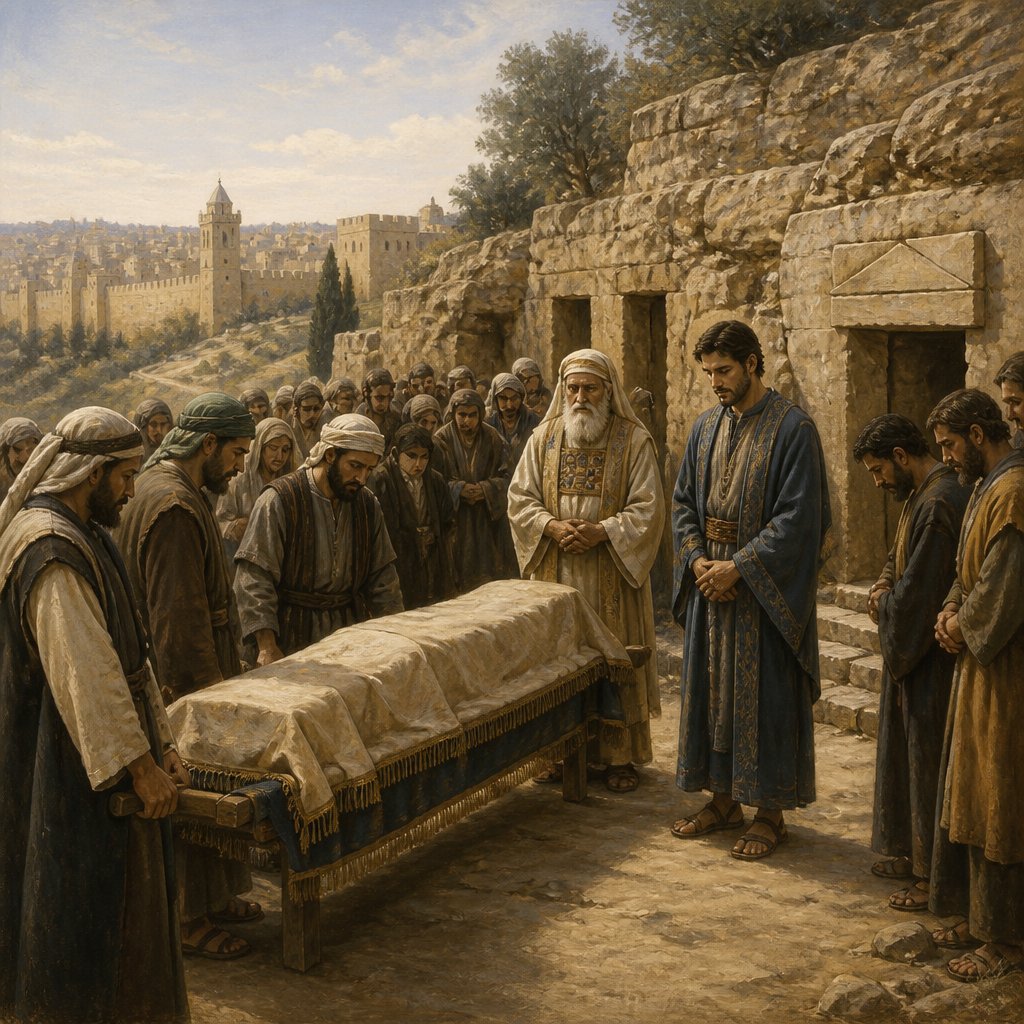
The verse 2 Chronicles 21:1 from the King James Version states, "Now Jehoshaphat slept with his fathers, and was buried with his fathers in the city of David. And Jehoram his son reigned in his stead." This verse is part of the Old Testament of the Bible and is situated in the historical books, specifically in the second part of the book of Chronicles.
To fully understand the meaning and significance of this verse, it is important to provide some context about the characters mentioned and historical events surrounding this passage. Jehoshaphat was a king of Judah, the southern kingdom of Israel, who reigned during the 9th century BC. He was known for his faithfulness to God, his efforts to bring spiritual revival to the nation, and his military alliances with the northern kingdom of Israel. During his reign, there was relative peace and prosperity in Judah, and the nation experienced a period of spiritual renewal.
However, despite the positive aspects of Jehoshaphat's reign, he made some unwise decisions, especially in his attempts to form alliances with wicked kings such as Ahab of Israel. These actions ultimately brought trouble and judgment upon Judah, and they serve as a cautionary tale about the dangers of compromising one's faith and principles for the sake of political expediency.
The verse mentions that Jehoshaphat "slept with his fathers," a common euphemism in the Bible for death. This signifies the end of his earthly reign and his transition to the afterlife. His burial in the city of David, which was the capital city of Judah, reflects his honored status as a king of the nation. The passing of Jehoshaphat and the succession of his son, Jehoram, to the throne mark a significant turning point in the history of Judah.
Jehoram, who is mentioned as the successor of Jehoshaphat, is portrayed in the biblical narrative as a significantly different kind of ruler. Unlike his father, Jehoram is depicted as a wicked and unfaithful king who led the nation into idolatry and moral decadence. His reign was characterized by social upheaval, military conflicts, and divine judgment, including the loss of his own life through a painful illness. Therefore, the transition of power from Jehoshaphat to Jehoram represents a shift from a righteous and God-fearing leader to a corrupt and ungodly one.
One of the prominent themes in this verse is the contrast between good and bad leadership, as exemplified by Jehoshaphat and Jehoram, respectively. Jehoshaphat's faithful rule brought blessings and prosperity to the nation, while his son's unrighteous reign led to calamity and suffering. This serves as a reminder of the profound impact that leaders can have on the spiritual and moral condition of a nation, as well as the consequences that result from their choices and actions.
Another important theme is the concept of generational succession and its implications for the fate of a nation. The passing of the baton from a godly and wise king to a corrupt and foolish one illustrates the profound influence that parents and rulers have on their descendants and the subsequent generations. This theme resonates with the broader biblical motif of the transmission of blessings and curses from one generation to another, as articulated in the context of the covenantal relationship between God and His people.
Symbolically, the verse also underscores the transient nature of human power and the inevitability of mortality. Despite his royal status and accomplishments, Jehoshaphat eventually succumbed to death and was buried like any other mortal being. This symbolizes the temporary and fleeting nature of earthly authority and emphasizes the ultimate sovereignty of God over the affairs of humanity. It also serves as a sobering reminder of the brevity of life and the need for individuals, especially leaders, to prioritize their spiritual legacy and relationship with God over worldly pursuits.
In conclusion, 2 Chronicles 21:1 encapsulates a pivotal moment in the history of Judah, marked by the passing of a revered king and the rise of a morally bankrupt successor. Through its themes of leadership, succession, and mortality, this verse invites readers to reflect on the profound implications of human choices, the impact of generational influence, and the transient nature of earthly power. These insights carry timeless relevance and offer valuable lessons for individuals and societies seeking to navigate the complexities of governance, spirituality, and the human experience.
Get our apps


Artwork for 2 Chronicles 21:1

2 Chronicles 21:1 - "Now Jehoshaphat slept with his fathers, and was buried with his fathers in the city of David. And Jehoram his son reigned in his stead."
"Now Jehoshaphat slept with his fathers, and was buried with his fathers in the city of David. And Jehoram his son reigned in his stead." - 2 Chronicles 21:1

1 Chronicles 21:1 - "And Satan stood up against Israel, and provoked David to number Israel."

2 Chronicles 21:9

2 Chronicles 20:21

1 Chronicles 1:21 - "Hadoram also, and Uzal, and Diklah,"
1 Chronicles 2:21 - "¶ And afterward Hezron went in to the daughter of Machir the father of Gilead, whom he married when he was threescore years old; and she bare him Segub."

1 Chronicles 21:2 - "And David said to Joab and to the rulers of the people, Go, number Israel from Beer-sheba even to Dan; and bring the number of them to me, that I may know it."

1 Chronicles 8:21 - "And Adaiah, and Beraiah, and Shimrath, the sons of Shimhi;"

"And Satan stood up against Israel, and provoked David to number Israel." - 1 Chronicles 21:1

1 Chronicles 24:21 - "Concerning Rehabiah: of the sons of Rehabiah, the first was Isshiah."

2 Chronicles 4:21 - "And the flowers, and the lamps, and the tongs, made he of gold, and that perfect gold;"

1 Chronicles 9:21 - "And Zechariah the son of Meshelemiah was porter of the door of the tabernacle of the congregation."

2 Chronicles 21:18 - "¶ And after all this the LORD smote him in his bowels with an incurable disease."

1 Chronicles 21:7 - "And God was displeased with this thing; therefore he smote Israel."

1 Chronicles 21:9 - "¶ And the LORD spake unto Gad, David's seer, saying,"

"Hadoram also, and Uzal, and Diklah," - 1 Chronicles 1:21

1 Chronicles 21:21 - "And as David came to Ornan, Ornan looked and saw David, and went out of the threshingfloor, and bowed himself to David with his face to the ground."

1 Chronicles 23:21 - "¶ The sons of Merari; Mahli, and Mushi. The sons of Mahli; Eleazar, and Kish."

2 Kings 15:21 - "¶ And the rest of the acts of Menahem, and all that he did, are they not written in the book of the chronicles of the kings of Israel?"

2 Chronicles 24:21 - "And they conspired against him, and stoned him with stones at the commandment of the king in the court of the house of the LORD."

1 Chronicles 25:21 - "The fourteenth to Mattithiah, he, his sons, and his brethren, were twelve:"

2 Chronicles 23:21 - "And all the people of the land rejoiced: and the city was quiet, after that they had slain Athaliah with the sword."

2 Chronicles 21:8 - "¶ In his days the Edomites revolted from under the dominion of Judah, and made themselves a king."

2 Chronicles 21:2 - "And he had brethren the sons of Jehoshaphat, Azariah, and Jehiel, and Zechariah, and Azariah, and Michael, and Shephatiah: all these were the sons of Jehoshaphat king of Israel."

2 Chronicles 13:21 - "¶ But Abijah waxed mighty, and married fourteen wives, and begat twenty and two sons, and sixteen daughters."

2 Chronicles 21:16 - "¶ Moreover the LORD stirred up against Jehoram the spirit of the Philistines, and of the Arabians, that were near the Ethiopians:"

1 Chronicles 21:19 - "And David went up at the saying of Gad, which he spake in the name of the LORD."

2 Kings 21:25 - "Now the rest of the acts of Amon which he did, are they not written in the book of the chronicles of the kings of Judah?"

1 Chronicles 21:6 - "But Levi and Benjamin counted he not among them: for the king's word was abominable to Joab."