What does 2 Chronicles 26:23 mean?
"So Uzziah slept with his fathers, and they buried him with his fathers in the field of the burial which belonged to the kings; for they said, He is a leper: and Jotham his son reigned in his stead." - 2 Chronicles 26:23
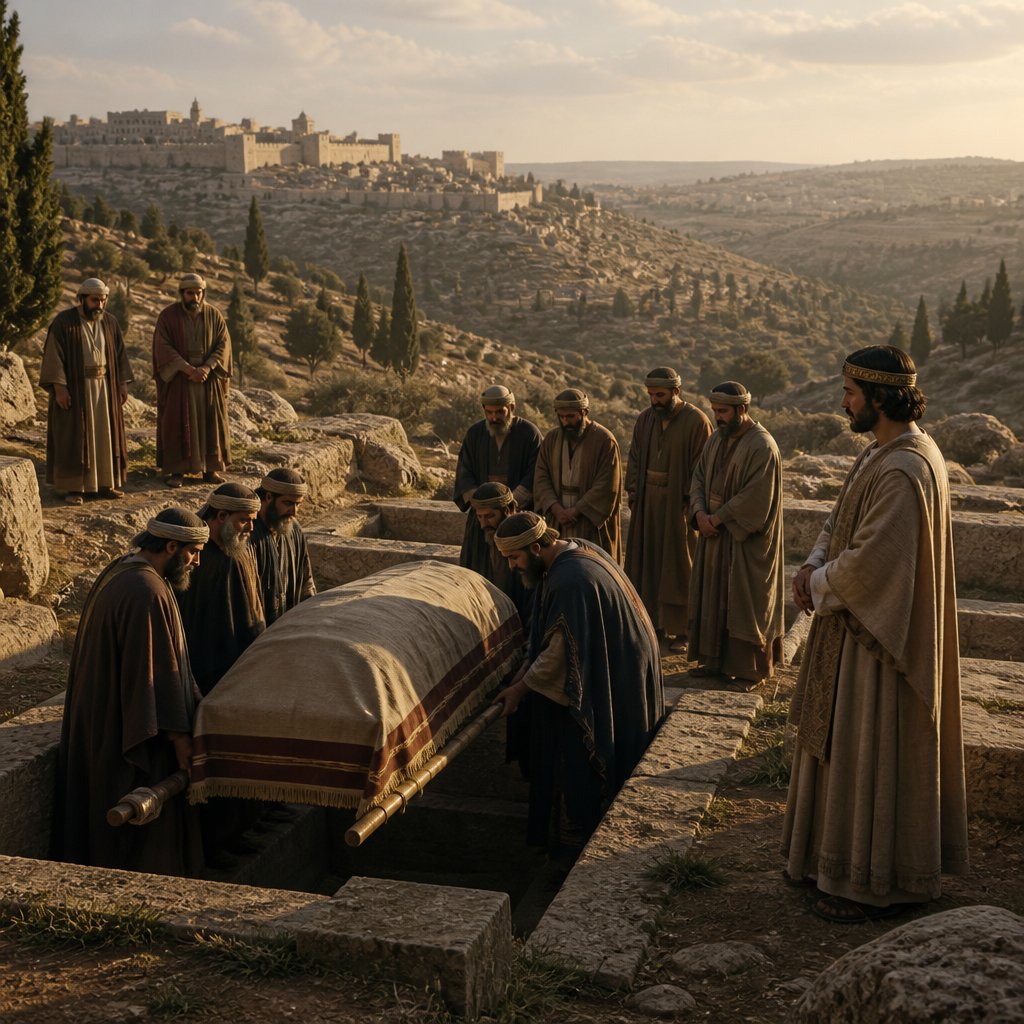
2 Chronicles 26:23 (KJV) reads: "So Uzziah slept with his fathers, and they buried him with his fathers in the field of the burial which belonged to the kings; for they said, He is a leper: and Jotham his son reigned in his stead."
This verse marks the end of the reign of Uzziah, also known as Azariah, as king of Judah. Uzziah was a king who began his reign at the young age of 16 and reigned for 52 years. He was generally a good and prosperous king, known for his military strength, fortifications of Jerusalem, and his devotion to the Lord. However, his downfall came when he became proud and attempted to burn incense in the temple, a duty reserved for the priests. As a result, he was struck with leprosy and lived out the rest of his life in isolation.
The verse begins with the phrase "So Uzziah slept with his fathers," which is a common euphemism in the Bible for the death of a king. This phrase emphasizes the finality of Uzziah's reign and his passing from the earthly realm to join his ancestors in death. The idea of sleeping with one's fathers also reflects the belief in the afterlife, where the souls of the deceased join their ancestors in the afterworld.
After Uzziah's death, he was buried in the field of the burial belonging to the kings. This signifies his status as a king and the honor accorded to him even in his death. The phrase "with his fathers" also denotes his connection to his ancestors and the continuity of the royal lineage. The burial of a king in a designated royal burial ground was a mark of respect and a way of honoring their legacy.
The verse then mentions that "they said, He is a leper," which reflects the stigma and isolation that came with Uzziah's affliction. Leprosy was not only a physical disease but also carried spiritual and social implications in ancient Israel. Those who were leprous were considered unclean and were often ostracized from society. This statement serves as a reminder of Uzziah's downfall and the consequences of his pride and disobedience to the Lord.
The verse concludes with the mention of Jotham, Uzziah's son, who reigned in his father's place. This transition of power symbolizes the continuity of the royal lineage and the succession of kingship. It also signifies the passing of the torch to the next generation of rulers. Jotham's reign also brings hope for a new beginning and a fresh start for the kingdom of Judah after the troubled end of Uzziah's reign.
In terms of themes, this verse encompasses the themes of mortality, legacy, and the consequences of pride. It serves as a cautionary tale about the dangers of arrogance and the importance of remaining obedient to the will of the Lord. It also highlights the transient nature of power and the inevitability of death, regardless of one's status or achievements.
The context of this verse is within the broader narrative of the history of the kings of Judah. It serves as a pivotal moment in Uzziah's story, marking the end of his reign and the beginning of a new era under the rule of Jotham. This verse also reflects the spiritual and moral lessons that the people of Judah were meant to draw from the events of Uzziah's life and reign.
In conclusion, 2 Chronicles 26:23 is a verse that encapsulates the end of Uzziah's reign, the consequences of his actions, and the transition of power to his son, Jotham. It carries important themes and spiritual lessons that are timeless and applicable to individuals and societies throughout history. The verse serves as a reminder of the fragility of human life, the importance of humility, and the enduring legacy of those who have come before us.
Have questions about 2 Chronicles 26:23?
Dive deeper into this scripture with Bible Chat — an AI-powered tool for exploring God's Word through conversation. Ask questions, get context, and grow in your understanding of the Bible.
Get Our Apps


2 Chronicles 26:23 Artwork

2 Chronicles 26:23 - "So Uzziah slept with his fathers, and they buried him with his fathers in the field of the burial which belonged to the kings; for they said, He is a leper: and Jotham his son reigned in his stead."
"So Uzziah slept with his fathers, and they buried him with his fathers in the field of the burial which belonged to the kings; for they said, He is a leper: and Jotham his son reigned in his stead." - 2 Chronicles 26:23

1 Chronicles 26:23 - "Of the Amramites, and the Izharites, the Hebronites, and the Uzzielites:"

"Of the Amramites, and the Izharites, the Hebronites, and the Uzzielites:" - 1 Chronicles 26:23

1 Chronicles 23:26 - "And also unto the Levites; they shall no more carry the tabernacle, nor any vessels of it for the service thereof."

2 Chronicles 23:10
2 Chronicles 35:23

2 Chronicles 23:17

2 Chronicles 23:17

2 Chronicles 23:10

2 Samuel 23:26 - "Helez the Paltite, Ira the son of Ikkesh the Tekoite,"

2 Chronicles 26:2 - "He built Eloth, and restored it to Judah, after that the king slept with his fathers."

2 Chronicles 29:26 - "And the Levites stood with the instruments of David, and the priests with the trumpets."

2 Chronicles 29:26 (KJVA) 26 And the Levites stood with the instruments of David, and the priests with the trumpets.

1 Chronicles 23:2 - "¶ And he gathered together all the princes of Israel, with the priests and the Levites."

2 Chronicles 26:7 - "And God helped him against the Philistines, and against the Arabians that dwelt in Gurbaal, and the Mehunims."

2 Chronicles 35:26 - "Now the rest of the acts of Josiah, and his goodness, according to that which was written in the law of the LORD,"

2 Chronicles 24:26 - "And these are they that conspired against him; Zabad the son of Shimeath an Ammonitess, and Jehozabad the son of Shimrith a Moabitess."

2 Chronicles 23:2 - "And they went about in Judah, and gathered the Levites out of all the cities of Judah, and the chief of the fathers of Israel, and they came to Jerusalem."

1 Chronicles 26:2 - "And the sons of Meshelemiah were, Zechariah the firstborn, Jediael the second, Zebadiah the third, Jathniel the fourth,"

1 Chronicles 2:26 - "Jerahmeel had also another wife, whose name was Atarah; she was the mother of Onam."

2 Chronicles 25:26 - "Now the rest of the acts of Amaziah, first and last, behold, are they not written in the book of the kings of Judah and Israel?"

2 Chronicles 26:4 - "And he did that which was right in the sight of the LORD, according to all that his father Amaziah did."

2 Chronicles 26:17 - "And Azariah the priest went in after him, and with him fourscore priests of the LORD, that were valiant men:"

2 Chronicles 26:12 - "The whole number of the chief of the fathers of the mighty men of valour were two thousand and six hundred."

2 Chronicles 26:22 - "¶ Now the rest of the acts of Uzziah, first and last, did Isaiah the prophet, the son of Amoz, write."

2 Kings 15:26 - "And the rest of the acts of Pekahiah, and all that he did, behold, they are written in the book of the chronicles of the kings of Israel."

2 Chronicles 30:26 - "So there was great joy in Jerusalem: for since the time of Solomon the son of David king of Israel there was not the like in Jerusalem."

2 Chronicles 9:26 - "¶ And he reigned over all the kings from the river even unto the land of the Philistines, and to the border of Egypt."

2 Kings 8:23 - "And the rest of the acts of Joram, and all that he did, are they not written in the book of the chronicles of the kings of Judah?"