What does 2 Chronicles 28:18 mean?
“The Philistines also had invaded the cities of the low country, and of the south of Judah, and had taken Beth-shemesh, and Ajalon, and Gederoth, and Shocho with the villages thereof, and Timnah with the villages thereof, Gimzo also and the villages thereof: and they dwelt there.” — 2 Chronicles 28:18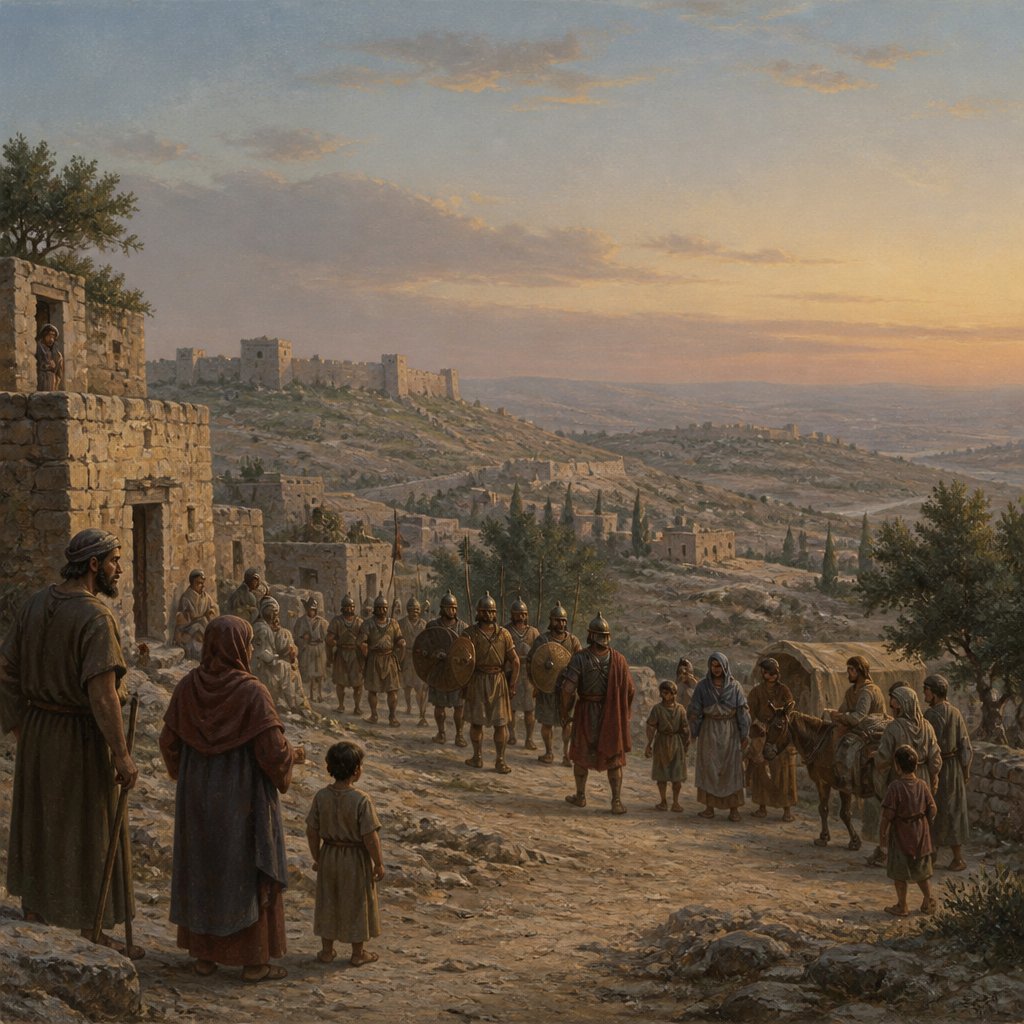
The Bible verse 2 Chronicles 28:18 in the King James Version states, "The Philistines also had invaded the cities of the low country, and of the south of Judah, and had taken Bethshemesh, and Ajalon, and Gederoth, and Shocho with the villages thereof, and Timnah with the villages thereof, Gimzo also and the villages thereof: and they dwelt there."
This verse comes from the Old Testament book of 2 Chronicles, which is a historical narrative that focuses on the reigns of the kings of Judah. In this particular verse, the writer describes how the Philistines, an ancient people who lived along the coast of what is now modern-day Israel and the Gaza Strip, invaded the cities in the low country and the southern regions of Judah.
The context of this verse is the reign of King Ahaz of Judah. Ahaz was an ungodly king who did not follow the ways of the Lord. Instead, he embraced the idolatrous practices of the surrounding nations and led the people of Judah into sin. As a result of his disobedience to God, the nation faced many hardships, including attacks from neighboring enemies such as the Philistines.
The invasion of the Philistines into the cities of the low country and the south of Judah was a direct consequence of the unfaithfulness of the people of Judah and their king. The Philistines were a constant thorn in the side of the Israelites throughout the Old Testament, often serving as a tool of God's judgment against the Israelites when they strayed from His commands.
The cities mentioned in this verse - Bethshemesh, Ajalon, Gederoth, Shocho, Timnah, and Gimzo - were all taken by the Philistines, and it is likely that the inhabitants of these cities suffered greatly as a result of the invasion. This serves as a sobering reminder of the consequences of turning away from God and the protection and blessings He provides.
Symbolically, the invasion of the Philistines can be seen as a representation of the spiritual warfare that believers face when they turn away from God and His ways. The Philistines can be seen as a metaphor for the forces of evil that seek to destroy and conquer those who are not firmly grounded in their faith and obedience to God.
The themes present in this verse include the consequences of unfaithfulness, the sovereignty of God in allowing nations to rise and fall as instruments of His judgment, and the importance of remaining steadfast in faith and obedience to God. The invasion of the Philistines serves as a warning to the people of Judah, and to readers today, about the dangers of straying from God's commands and the resulting vulnerability to the attacks of the enemy.
In conclusion, 2 Chronicles 28:18 is a sobering reminder of the consequences of unfaithfulness and disobedience to God. It serves as a warning to believers about the spiritual warfare they face when they turn away from God, and the importance of remaining steadfast in faith and obedience. The historical context and symbolic meaning of this verse provide valuable lessons for readers today about the dangers of straying from God's commands and the protection He provides when His people remain faithful.
Get our apps


Artwork for 2 Chronicles 28:18

2 Chronicles 28:18 - "The Philistines also had invaded the cities of the low country, and of the south of Judah, and had taken Beth-shemesh, and Ajalon, and Gederoth, and Shocho with the villages thereof, and Timnah with the villages thereof, Gimzo also and the villages thereof: and they dwelt there."
"The Philistines also had invaded the cities of the low country, and of the south of Judah, and had taken Beth-shemesh, and Ajalon, and Gederoth, and Shocho with the villages thereof, and Timnah with the villages thereof, Gimzo also and the villages thereof: and they dwelt there." - 2 Chronicles 28:18

2 Chronicles 18:28 - "So the king of Israel and Jehoshaphat the king of Judah went up to Ramoth-gilead."

"So the king of Israel and Jehoshaphat the king of Judah went up to Ramoth-gilead." - 2 Chronicles 18:28

2 Chronicles 28:3

2 Chronicles 20:28

2 Chronicles 28:2 - "For he walked in the ways of the kings of Israel, and made also molten images for Baalim."

1 Chronicles 28:18 - "And for the altar of incense refined gold by weight; and gold for the pattern of the chariot of the cherubims, that spread out their wings, and covered the ark of the covenant of the LORD."

2 Chronicles 18:9

2 Chronicles 20:18

2 Chronicles 18:9

2 Chronicles 20:28 - "And they came to Jerusalem with psalteries and harps and trumpets unto the house of the LORD."

2 Chronicles 9:28 - "And they brought unto Solomon horses out of Egypt, and out of all lands."

1 Chronicles 2:28 - "And the sons of Onam were, Shammai, and Jada. And the sons of Shammai; Nadab, and Abishur."

2 Chronicles 28:17 - "For again the Edomites had come and smitten Judah, and carried away captives."

2 Chronicles 28:14 - "So the armed men left the captives and the spoil before the princes and all the congregation."

2 Chronicles 28:16 - "¶ At that time did king Ahaz send unto the kings of Assyria to help him."

2 Chronicles 25:28 - "And they brought him upon horses, and buried him with his fathers in the city of Judah."

2 Chronicles 28:20 - "And Tilgath-pilneser king of Assyria came unto him, and distressed him, but strengthened him not."

2 Chronicles 28:22 - "¶ And in the time of his distress did he trespass yet more against the LORD: this is that king Ahaz."

2 Chronicles 28:4 - "He sacrificed also and burnt incense in the high places, and on the hills, and under every green tree."

2 Kings 23:28 - "Now the rest of the acts of Josiah, and all that he did, are they not written in the book of the chronicles of the kings of Judah?"

2 Chronicles 32:28 - "Storehouses also for the increase of corn, and wine, and oil; and stalls for all manner of beasts, and cotes for flocks."

2 Kings 14:18 - "And the rest of the acts of Amaziah, are they not written in the book of the chronicles of the kings of Judah?"

2 Chronicles 29:28 - "And all the congregation worshipped, and the singers sang, and the trumpeters sounded: and all this continued until the burnt offering was finished."

2 Chronicles 28:7 - "And Zichri, a mighty man of Ephraim, slew Maaseiah the king's son, and Azrikam the governor of the house, and Elkanah that was next to the king."

2 Chronicles 21:18 - "¶ And after all this the LORD smote him in his bowels with an incurable disease."

2 Chronicles 18:1 - "Now Jehoshaphat had riches and honour in abundance, and joined affinity with Ahab."

1 Chronicles 18:2 - "And he smote Moab; and the Moabites became David's servants, and brought gifts."

2 Chronicles 28:26 - "¶ Now the rest of his acts and of all his ways, first and last, behold, they are written in the book of the kings of Judah and Israel."