What does 2 Chronicles 29:24 mean?
“And the priests killed them, and they made reconciliation with their blood upon the altar, to make an atonement for all Israel: for the king commanded that the burnt offering and the sin offering should be made for all Israel.” — 2 Chronicles 29:24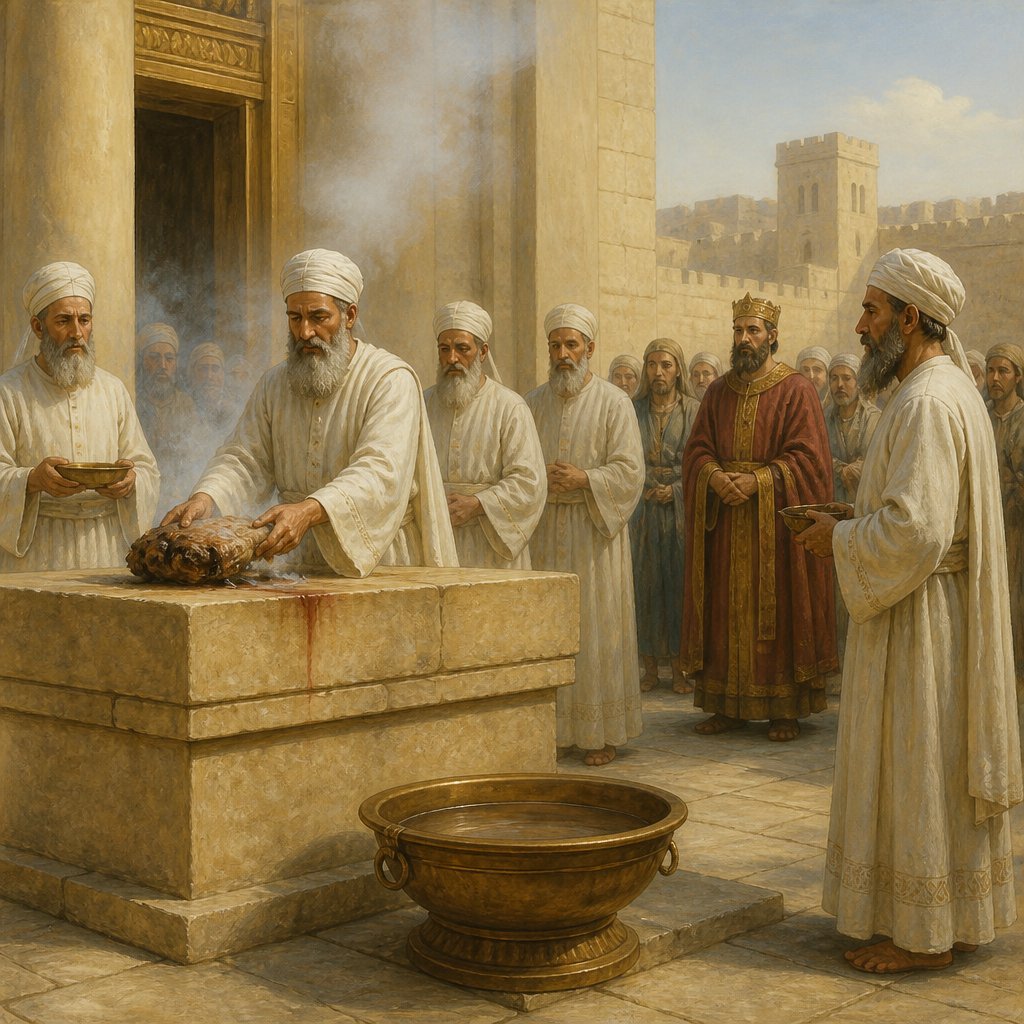
2 Chronicles 29:24 in the King James Version of the Bible states, "And the priests killed them, and they made reconciliation with their blood upon the altar, to make an atonement for all Israel: for the king commanded that the burnt offering and the sin offering should be made for all Israel." This verse is part of the Old Testament and it describes a specific event in the religious history of Israel. To fully understand the meaning and significance of this verse, it is important to examine its context, themes, and symbolism within the broader narrative of the Bible.
The book of 2 Chronicles is a historical account of the kings of Judah from the reign of Solomon to the Babylonian exile. Chapter 29 details the reign of King Hezekiah, who was known for instituting religious reforms in Judah. Hezekiah sought to restore the worship of the Lord in the temple, which had fallen into disrepair and neglect during the reign of his father Ahaz. The verse in question describes the efforts of the priests to cleanse the temple and reinstate proper sacrificial worship according to the Law of Moses.
One of the key themes of this verse is the concept of atonement. In ancient Israelite religious practice, atonement was achieved through the offering of sacrifices, particularly the blood of animals. The shedding of blood was believed to cleanse and purify the people from their sins, allowing them to be reconciled with God. This act of atonement was central to the religious life of ancient Israel, and it foreshadowed the ultimate atonement offered by Jesus Christ in the New Testament.
The verse also highlights the role of the priests as mediators between God and the people. The priests were responsible for performing the sacrificial rituals and making atonement on behalf of the nation of Israel. Their actions were in accordance with the commands of the king, who had the authority to establish religious practices and enforce adherence to the Law. This demonstrates the interconnectedness of political and religious authority in ancient Israel and the importance of obedience to the king's decrees.
Furthermore, the symbolism of the burnt offering and sin offering is significant. The burnt offering represented total surrender and devotion to God, as the entire animal was consumed by fire on the altar. The sin offering, on the other hand, was intended to atone for specific sins committed by the people. Together, these offerings symbolized the need for both personal repentance and commitment to God. They also pointed forward to the ultimate sacrifice of Jesus Christ, who would offer himself as the perfect atonement for the sins of all humanity.
In the broader context of the Bible, this verse serves as a reminder of the importance of atonement and the role of the priesthood in facilitating reconciliation between God and humanity. It also underscores the significance of obedience to God's commands and the proper observance of religious rituals. By studying this verse in relation to the entire narrative of Scripture, we can gain a deeper understanding of God's redemptive plan for humanity and the central role of atonement in restoring our relationship with Him.
In conclusion, 2 Chronicles 29:24 is a rich and multifaceted verse that carries deep theological and symbolic significance. It reflects the themes of atonement, the role of the priesthood, and the obedience to God's commands within the context of ancient Israelite religious practice. By delving into the historical context and broader biblical narrative, we can glean a greater appreciation for the spiritual truths encapsulated in this verse and apply them to our own understanding of God's redemptive work in the world.
Get our apps


Artwork for 2 Chronicles 29:24

2 Chronicles 29:24 - "And the priests killed them, and they made reconciliation with their blood upon the altar, to make an atonement for all Israel: for the king commanded that the burnt offering and the sin offering should be made for all Israel."
"And the priests killed them, and they made reconciliation with their blood upon the altar, to make an atonement for all Israel: for the king commanded that the burnt offering and the sin offering should be made for all Israel." - 2 Chronicles 29:24

1 Chronicles 24:29 - "Concerning Kish: the son of Kish was Jerahmeel."

"Concerning Kish: the son of Kish was Jerahmeel." - 1 Chronicles 24:29

1 Chronicles 29:24 - "And all the princes, and the mighty men, and all the sons likewise of king David, submitted themselves unto Solomon the king."

2 Chronicles 29:29 - "And when they had made an end of offering, the king and all that were present with him bowed themselves, and worshipped."

2 Chronicles 29:26 - "And the Levites stood with the instruments of David, and the priests with the trumpets."

2 Chronicles 29:13 - "And of the sons of Elizaphan; Shimri, and Jeiel: and of the sons of Asaph; Zechariah, and Mattaniah:"

2 Chronicles 34:29 - "¶ Then the king sent and gathered together all the elders of Judah and Jerusalem."

2 Chronicles 29:14 - "And of the sons of Heman; Jehiel, and Shimei: and of the sons of Jeduthun; Shemaiah, and Uzziel."

2 Chronicles 29:2 - "And he did that which was right in the sight of the LORD, according to all that David his father had done."

2 Chronicles 29:33 - "And the consecrated things were six hundred oxen and three thousand sheep."

2 Chronicles 29:4 - "And he brought in the priests and the Levites, and gathered them together into the east street,"

1 Chronicles 2:29 - "And the name of the wife of Abishur was Abihail, and she bare him Ahban, and Molid."

2 Chronicles 24:2 - "And Joash did that which was right in the sight of the LORD all the days of Jehoiada the priest."

2 Chronicles 29:20 - "¶ Then Hezekiah the king rose early, and gathered the rulers of the city, and went up to the house of the LORD."

2 Chronicles 29:36 - "And Hezekiah rejoiced, and all the people, that God had prepared the people: for the thing was done suddenly."

2 Chronicles 24:4 - "¶ And it came to pass after this, that Joash was minded to repair the house of the LORD."

2 Chronicles 24:8 - "And at the king's commandment they made a chest, and set it without at the gate of the house of the LORD."

2 Chronicles 29:23 - "And they brought forth the he goats for the sin offering before the king and the congregation; and they laid their hands upon them:"

2 Chronicles 24:3 - "And Jehoiada took for him two wives; and he begat sons and daughters."

2 Chronicles 29:9 - "For, lo, our fathers have fallen by the sword, and our sons and our daughters and our wives are in captivity for this."

2 Chronicles 29:28 - "And all the congregation worshipped, and the singers sang, and the trumpeters sounded: and all this continued until the burnt offering was finished."

2 Chronicles 29:15 - "And they gathered their brethren, and sanctified themselves, and came, according to the commandment of the king, by the words of the LORD, to cleanse the house of the LORD."

2 Chronicles 29:3 - "¶ He in the first year of his reign, in the first month, opened the doors of the house of the LORD, and repaired them."

2 Chronicles 20:29 - "And the fear of God was on all the kingdoms of those countries, when they had heard that the LORD fought against the enemies of Israel."

2 Chronicles 33:24 - "And his servants conspired against him, and slew him in his own house."

2 Chronicles 24:26 - "And these are they that conspired against him; Zabad the son of Shimeath an Ammonitess, and Jehozabad the son of Shimrith a Moabitess."

2 Chronicles 24:21 - "And they conspired against him, and stoned him with stones at the commandment of the king in the court of the house of the LORD."

2 Kings 24:5 - "¶ Now the rest of the acts of Jehoiakim, and all that he did, are they not written in the book of the chronicles of the kings of Judah?"