What does 2 Chronicles 29:34 mean?
“But the priests were too few, so that they could not flay all the burnt offerings: wherefore their brethren the Levites did help them, till the work was ended, and until the other priests had sanctified themselves: for the Levites were more upright in heart to sanctify themselves than the priests.” — 2 Chronicles 29:34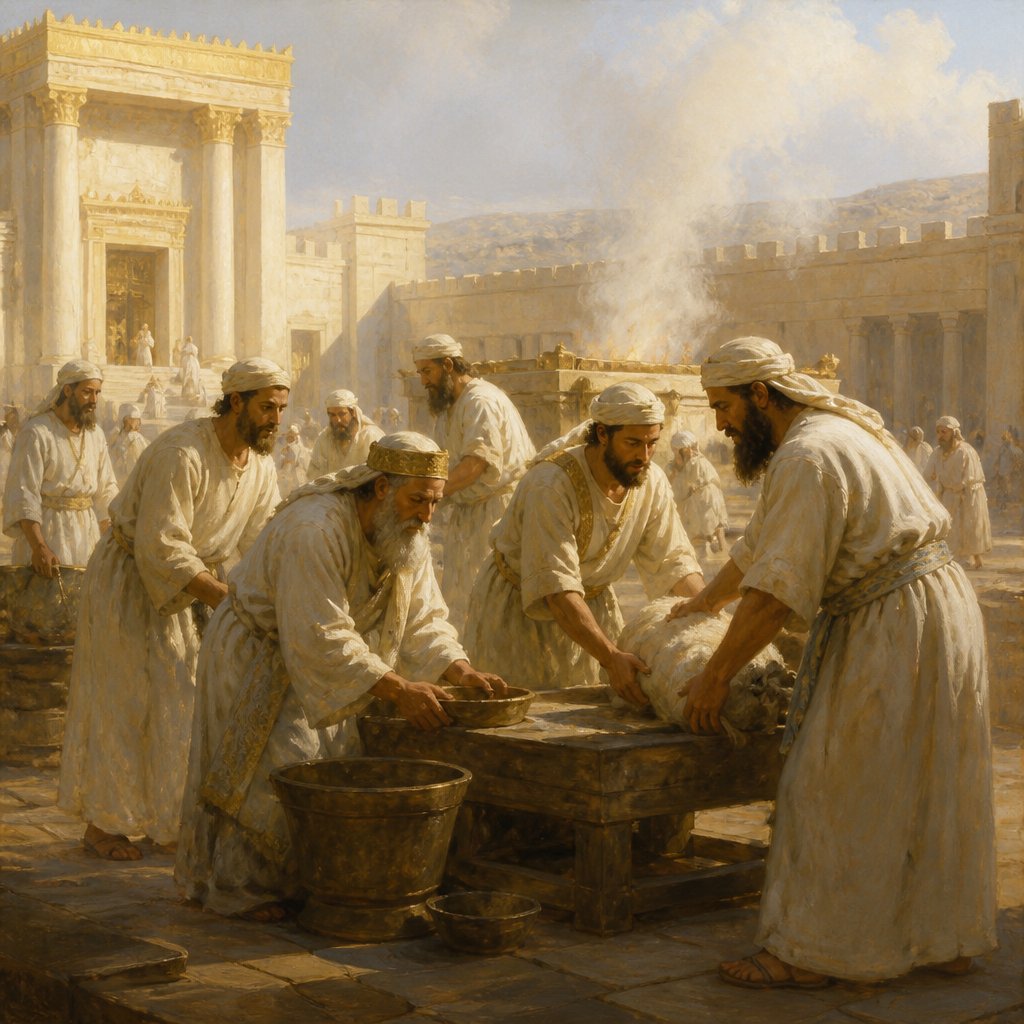
2 Chronicles 29:34 in the King James Version of the Bible reads,
"But the priests were too few, so that they could not flay all the burnt offerings: wherefore their brethren the Levites did help them, till the work was ended, and until the other priests had sanctified themselves: for the Levites were more upright in heart to sanctify themselves than the priests."
This verse comes from the Book of 2 Chronicles, which is a historical record of the reign of various kings of Judah. In this passage, King Hezekiah has just come to power in Judah, and he is instituting a series of religious reforms aimed at restoring the worship of the one true God. This verse describes the shortage of priests available to flay the burnt offerings, and how the Levites stepped in to assist them until the work was completed. It also highlights the fact that the Levites were more upright in heart to sanctify themselves than the priests, implying that their hearts were more dedicated to God.
The theme of this verse is the importance of service and dedication to God's work. The shortage of priests meant that there was not enough manpower to complete the necessary rituals and offerings. However, the Levites did not hesitate to step in and help, demonstrating their dedication to the Lord's work. This verse serves as a reminder that serving God often requires sacrifice and willingness to step in and help where needed, even if it is not our assigned duty.
The context of this verse is important for understanding its significance. During the reign of King Hezekiah, the worship of the one true God had been neglected and overshadowed by idolatry and pagan practices. Hezekiah sought to bring about a religious revival in Judah by reinstating the proper worship of God at the temple in Jerusalem. This involved cleansing the temple, offering sacrifices, and reinstating the Levitical priesthood. Therefore, the shortage of priests at this time would have been a major impediment to carrying out these religious reforms.
The symbolic significance of this verse lies in the contrast between the priests and the Levites. In ancient Israel, the priests were the ones responsible for carrying out the rituals and offerings at the temple, while the Levites served as assistants and caretakers of the temple. However, in this verse, we see that it is the Levites who demonstrate a greater dedication to sanctifying themselves and assisting in the work of the priests. This serves as a reminder that true devotion to God is not necessarily determined by one's official role or position, but by the purity of one's heart and willingness to serve.
Furthermore, the fact that the Levites were willing to step in and assist the priests until they had sanctified themselves reflects the importance of community and mutual support in the service of God. This verse underscores the idea that when there is a shortage or a need, it is the responsibility of the community to come together and help each other in carrying out God's work.
In conclusion, 2 Chronicles 29:34 serves as a powerful reminder of the importance of service, dedication, and community in the worship of God. It highlights the willingness of the Levites to step in and assist the priests in their work, and the greater purity of their hearts in sanctifying themselves. This verse carries a timeless message about the nature of true devotion to God and the importance of mutual support within the community of believers.
Get our apps


Artwork for 2 Chronicles 29:34
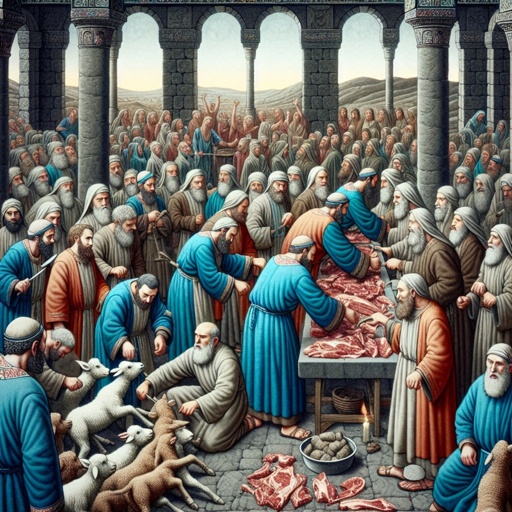
2 Chronicles 29:34 - "But the priests were too few, so that they could not flay all the burnt offerings: wherefore their brethren the Levites did help them, till the work was ended, and until the other priests had sanctified themselves: for the Levites were more upright in heart to sanctify themselves than the priests."
"But the priests were too few, so that they could not flay all the burnt offerings: wherefore their brethren the Levites did help them, till the work was ended, and until the other priests had sanctified themselves: for the Levites were more upright in heart to sanctify themselves than the priests." - 2 Chronicles 29:34

2 Chronicles 34:29 - "¶ Then the king sent and gathered together all the elders of Judah and Jerusalem."
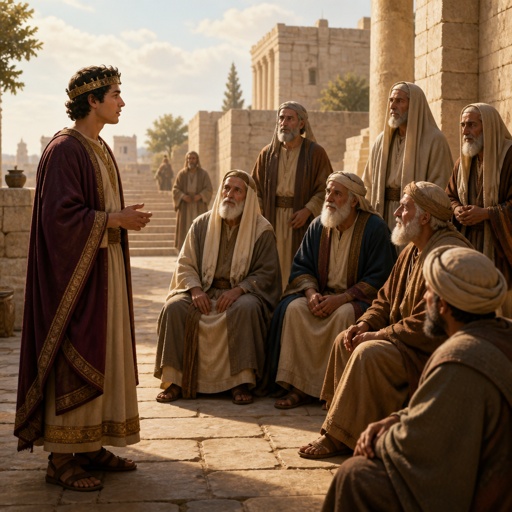
"¶ Then the king sent and gathered together all the elders of Judah and Jerusalem." - 2 Chronicles 34:29

2 Chronicles 34:19

2 Chronicles 34:19

2 Chronicles 29:29 - "And when they had made an end of offering, the king and all that were present with him bowed themselves, and worshipped."

2 Chronicles 34:5 - "And he burnt the bones of the priests upon their altars, and cleansed Judah and Jerusalem."

2 Chronicles 29:26 - "And the Levites stood with the instruments of David, and the priests with the trumpets."

2 Chronicles 29:13 - "And of the sons of Elizaphan; Shimri, and Jeiel: and of the sons of Asaph; Zechariah, and Mattaniah:"

2 Chronicles 29:14 - "And of the sons of Heman; Jehiel, and Shimei: and of the sons of Jeduthun; Shemaiah, and Uzziel."

2 Chronicles 29:2 - "And he did that which was right in the sight of the LORD, according to all that David his father had done."

2 Chronicles 34:19 - "And it came to pass, when the king had heard the words of the law, that he rent his clothes."

1 Chronicles 2:34 - "¶ Now Sheshan had no sons, but daughters. And Sheshan had a servant, an Egyptian, whose name was Jarha."

2 Chronicles 34:2 - "And he did that which was right in the sight of the LORD, and walked in the ways of David his father, and declined neither to the right hand, nor to the left."

2 Chronicles 29:33 - "And the consecrated things were six hundred oxen and three thousand sheep."

2 Chronicles 29:4 - "And he brought in the priests and the Levites, and gathered them together into the east street,"

1 Chronicles 2:29 - "And the name of the wife of Abishur was Abihail, and she bare him Ahban, and Molid."

2 Chronicles 34:17 - "And they have gathered together the money that was found in the house of the LORD, and have delivered it into the hand of the overseers, and to the hand of the workmen."

2 Chronicles 34:6 - "And so did he in the cities of Manasseh, and Ephraim, and Simeon, even unto Naphtali, with their mattocks round about."

Matthew 20:29-34

2 Chronicles 34:1 - "Josiah was eight years old when he began to reign, and he reigned in Jerusalem one and thirty years."

2 Chronicles 34:23 - "¶ And she answered them, Thus saith the LORD God of Israel, Tell ye the man that sent you to me,"

2 Chronicles 29:20 - "¶ Then Hezekiah the king rose early, and gathered the rulers of the city, and went up to the house of the LORD."

2 Chronicles 34:10 - "And they put it in the hand of the workmen that had the oversight of the house of the LORD, and they gave it to the workmen that wrought in the house of the LORD, to repair and amend the house:"

2 Chronicles 34:14 - "¶ And when they brought out the money that was brought into the house of the LORD, Hilkiah the priest found a book of the law of the LORD given by Moses."

2 Chronicles 34:18 - "Then Shaphan the scribe told the king, saying, Hilkiah the priest hath given me a book. And Shaphan read it before the king."

2 Kings 10:34 - "Now the rest of the acts of Jehu, and all that he did, and all his might, are they not written in the book of the chronicles of the kings of Israel?"

2 Chronicles 29:36 - "And Hezekiah rejoiced, and all the people, that God had prepared the people: for the thing was done suddenly."

2 Chronicles 34:20 - "And the king commanded Hilkiah, and Ahikam the son of Shaphan, and Abdon the son of Micah, and Shaphan the scribe, and Asaiah a servant of the king's, saying,"