What does 2 Chronicles 30:1 mean?
“And Hezekiah sent to all Israel and Judah, and wrote letters also to Ephraim and Manasseh, that they should come to the house of the LORD at Jerusalem, to keep the passover unto the LORD God of Israel.” — 2 Chronicles 30:1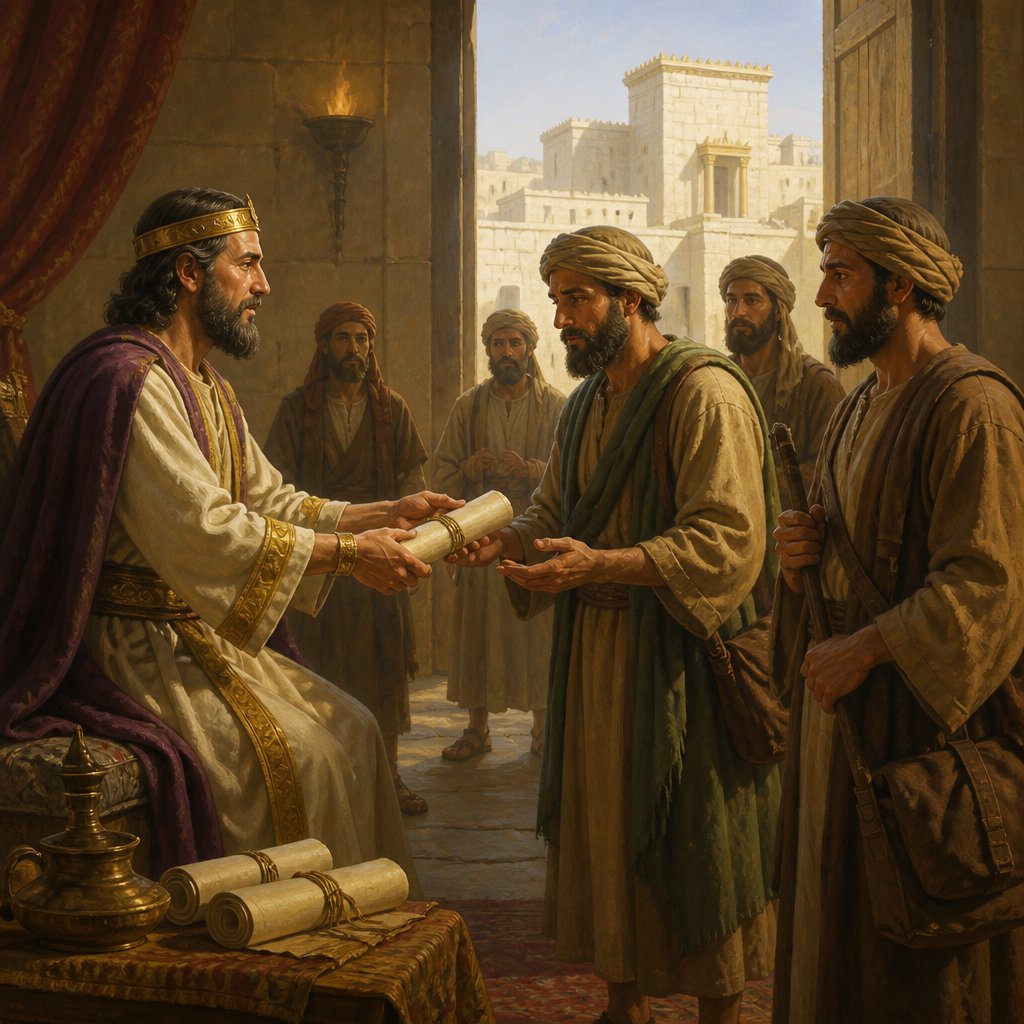
2 Chronicles 30:1 (KJV): "And Hezekiah sent to all Israel and Judah, and wrote letters also to Ephraim and Manasseh, that they should come to the house of the Lord at Jerusalem, to keep the passover unto the Lord God of Israel."
2 Chronicles 30:1 depicts a significant moment in the history of the Kingdom of Judah under the reign of King Hezekiah. The verse reflects not only the religious revival and reformation initiated by Hezekiah but also the themes of unity, forgiveness, and obedience to God's commandments.
Contextually, the verse takes place during a time of spiritual and moral decay in the Kingdom of Judah. Hezekiah, regarded as one of the most righteous kings in the Old Testament, sought to bring about a revival of the worship of Yahweh, the God of Israel. He recognized the importance of obeying the commandments of God, particularly the observance of the Passover, a feast that commemorated the Israelites' liberation from slavery in Egypt and the beginning of their journey to the Promised Land.
The act of Hezekiah sending letters to all Israel and Judah, and even to the tribes of Ephraim and Manasseh, was a bold and inclusive move. This demonstrated a desire for reconciliation and unity among the various factions in the divided kingdom. Despite the political and geographical divisions, Hezekiah understood the importance of coming together as a nation to worship and honor God. This act of reaching out to the northern tribes of Israel, known as Ephraim and Manasseh, showed a desire for reconciliation and unity, echoing the need for healing in a society marked by division and conflict.
The verse also highlights the central role of the house of the Lord in Jerusalem as the focal point of worship and the observance of religious rituals. Hezekiah's call for the people to gather at the temple for the Passover celebration underscored his commitment to restoring the centrality of Jerusalem and the temple as the spiritual center of the nation.
Furthermore, the verse emphasizes the importance of obedience to God's commandments. The Passover was a divinely mandated feast, and Hezekiah's initiative to reinstate its observance reflected his determination to lead the people back to a faithful and obedient relationship with God. Through his actions, Hezekiah sought to inspire a spirit of repentance and renewal among the people, redirecting their focus toward a life of faithfulness and obedience to God.
Symbolically, 2 Chronicles 30:1 represents the themes of reconciliation, restoration, and obedience. The invitation extended to the northern tribes signifies the hope for healing the rifts within the nation. The gathering at the house of the Lord in Jerusalem symbolizes the centrality of worship and the restoration of the spiritual identity of the people. The Passover itself symbolizes redemption, freedom, and the covenant relationship between God and His people.
In conclusion, 2 Chronicles 30:1 is a pivotal verse that captures the spirit of revival and restoration under the leadership of King Hezekiah. It reveals the significance of unity, reconciliation, and obedience to God's commandments. The verse presents a timeless message of faithfulness and the constant need for spiritual revival and renewal. Ultimately, it is a reminder of the enduring importance of coming together in worship and obedience to God, regardless of our differences, and seeking unity and reconciliation in faith.
Get our apps


Artwork for 2 Chronicles 30:1

2 Chronicles 30:1 - "And Hezekiah sent to all Israel and Judah, and wrote letters also to Ephraim and Manasseh, that they should come to the house of the LORD at Jerusalem, to keep the passover unto the LORD God of Israel."
"And Hezekiah sent to all Israel and Judah, and wrote letters also to Ephraim and Manasseh, that they should come to the house of the LORD at Jerusalem, to keep the passover unto the LORD God of Israel." - 2 Chronicles 30:1

1 Chronicles 2:30 - "And the sons of Nadab; Seled, and Appaim: but Seled died without children."

2 Chronicles 30:10

1 Chronicles 1:30 - "Mishma, and Dumah, Massa, Hadad, and Tema,"

1 Chronicles 4:30 - "And at Bethuel, and at Hormah, and at Ziklag,"

2 Chronicles 30:4 - "And the thing pleased the king and all the congregation."

2 Chronicles 30:20 - "And the LORD hearkened to Hezekiah, and healed the people."

"And the sons of Nadab; Seled, and Appaim: but Seled died without children." - 1 Chronicles 2:30

1 Chronicles 11:30 - "Maharai the Netophathite, Heled the son of Baanah the Netophathite,"

1 Chronicles 9:30 - "And some of the sons of the priests made the ointment of the spices."

2 Chronicles 9:30 - "And Solomon reigned in Jerusalem over all Israel forty years."

2 Chronicles 30:2 - "For the king had taken counsel, and his princes, and all the congregation in Jerusalem, to keep the passover in the second month."

2 Chronicles 30:11 - "Nevertheless divers of Asher and Manasseh and of Zebulun humbled themselves, and came to Jerusalem."

1 Chronicles 23:30 - "And to stand every morning to thank and praise the LORD, and likewise at even;"

1 Chronicles 7:30 - "The sons of Asher; Imnah, and Isuah, and Ishuai, and Beriah, and Serah their sister."

1 Chronicles 8:30 - "And his firstborn son Abdon, and Zur, and Kish, and Baal, and Nadab,"

1 Chronicles 6:30 - "Shimea his son, Haggiah his son, Asaiah his son."

1 Chronicles 27:30 - "Over the camels also was Obil the Ishmaelite: and over the asses was Jehdeiah the Meronothite:"

"And at Bethuel, and at Hormah, and at Ziklag," - 1 Chronicles 4:30

2 Chronicles 20:30 - "So the realm of Jehoshaphat was quiet: for his God gave him rest round about."

"Mishma, and Dumah, Massa, Hadad, and Tema," - 1 Chronicles 1:30

1 Chronicles 16:30 - "Fear before him, all the earth: the world also shall be stable, that it be not moved."

1 Chronicles 25:30 - "The three and twentieth to Mahazioth, he, his sons, and his brethren, were twelve:"

2 Chronicles 30:23 - "And the whole assembly took counsel to keep other seven days: and they kept other seven days with gladness."

2 Chronicles 30:26 - "So there was great joy in Jerusalem: for since the time of Solomon the son of David king of Israel there was not the like in Jerusalem."

2 Chronicles 30:13 - "¶ And there assembled at Jerusalem much people to keep the feast of unleavened bread in the second month, a very great congregation."

"And the LORD hearkened to Hezekiah, and healed the people." - 2 Chronicles 30:20

"And the thing pleased the king and all the congregation." - 2 Chronicles 30:4

1 Chronicles 21:30 - "But David could not go before it to enquire of God: for he was afraid because of the sword of the angel of the LORD."