What does 2 Chronicles 3:10 mean?
“And in the most holy house he made two cherubims of image work, and overlaid them with gold.” — 2 Chronicles 3:10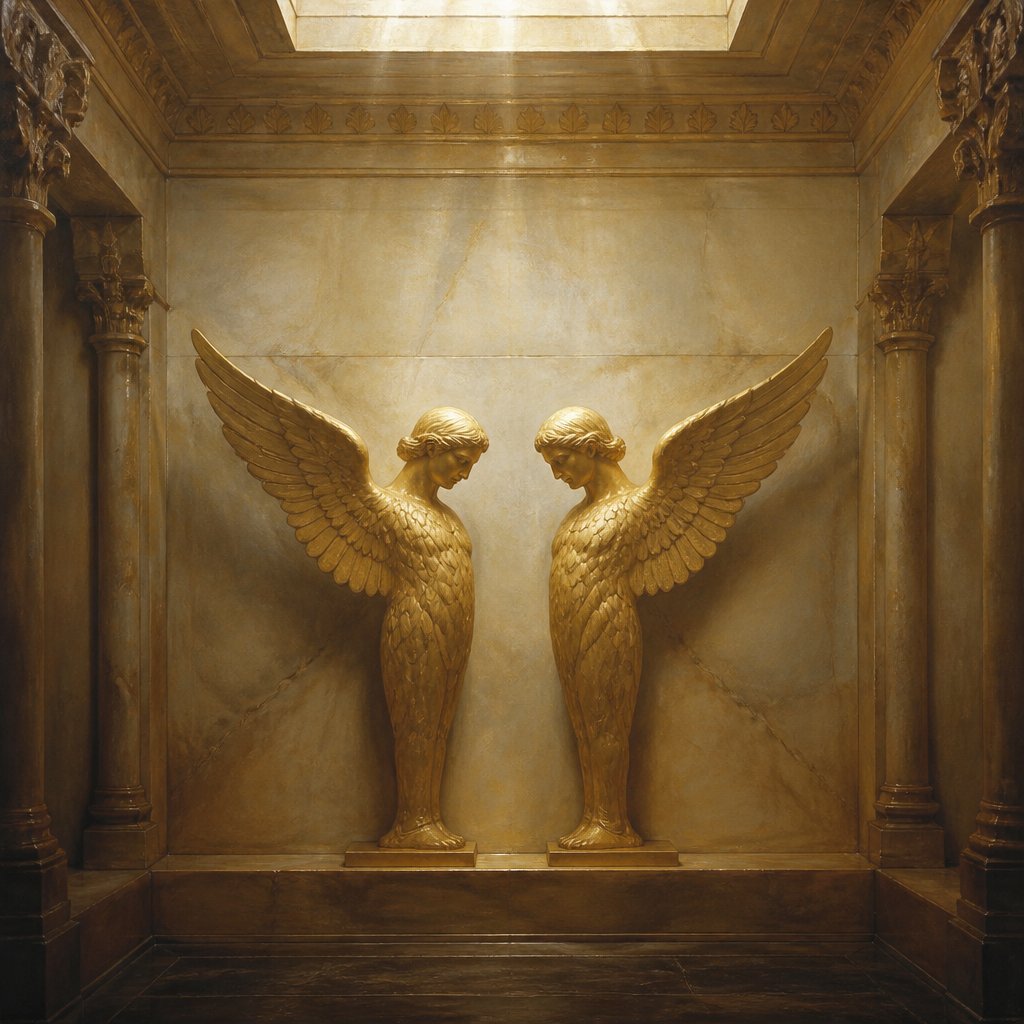
2 Chronicles 3:10 (KJV) states:
"And in the most holy house he made two cherubims of image work, and overlaid them with gold."
This verse comes from the Old Testament and is part of the description of the construction of Solomon's temple. The temple was a monumental structure built in Jerusalem to house the Ark of the Covenant and serve as a place for the Israelites to worship God. This particular verse describes the crafting of two cherubim, which are angelic beings, that were made of image work and overlaid with gold.
The construction of the temple and the intricate detail given to the cherubim symbolize the importance and reverence the Israelites had for God. The use of gold in the construction was significant because it was a symbol of purity, divinity, and worth. By overlaying the cherubim with gold, they were being adorned with the highest value and honor. This reflected the Israelites' belief in the holiness of the temple and the need to offer their best to God.
The symbolism of the cherubim itself is also rich in meaning. In the Bible, cherubim are often associated with guarding and protecting sacred spaces. In Genesis, after Adam and Eve were banished from the Garden of Eden, cherubim were placed to guard the way to the Tree of Life. In the construction of the Ark of the Covenant, cherubim were carved into the mercy seat, serving as a reminder of God's presence and protection. Therefore, the depiction of cherubim in the most holy place of the temple signifies the presence and protection of God in that sacred space.
Furthermore, the use of image work in the crafting of the cherubim adds another layer of symbolism. The intricate details and artistry put into creating the cherubim reflect the Israelites' commitment to honoring and worshiping God. It also demonstrates their understanding of the importance of beauty and craftsmanship in the context of their faith. This attention to detail and aesthetics further reinforces the reverence and sanctity of the temple.
In a broader context, this verse speaks to the importance of sacred spaces and the reverence that should be given to them. The temple was not just a physical structure but a symbolic representation of God's dwelling among his people. The meticulous construction and decoration of the cherubim reflect the Israelites' desire to create a place worthy of God's presence and worship.
The verse also serves as a reminder of the Israelites' covenant with God. By investing their time, resources, and skill into constructing the temple, they were reaffirming their commitment to God and their desire to honor Him. It serves as a lesson for believers today to consider how they approach their places of worship and the level of reverence and dedication they bring to them.
In conclusion, 2 Chronicles 3:10 is a verse that holds deep symbolism and relevance within the context of the construction of Solomon's temple. The crafting of the cherubim with gold and image work reflects the Israelites' commitment to honoring and revering God in the most holy place. It serves as a reminder of the importance of sacred spaces, the symbolism of the cherubim, and the significance of beauty and craftsmanship in the context of faith. This verse continues to hold meaning for believers today as a lesson in approaching places of worship with reverence and dedication.
Get our apps


Artwork for 2 Chronicles 3:10

2 Chronicles 3:10 - "And in the most holy house he made two cherubims of image work, and overlaid them with gold."
"And in the most holy house he made two cherubims of image work, and overlaid them with gold." - 2 Chronicles 3:10

2 Chronicles 10:3 - "And they sent and called him. So Jeroboam and all Israel came and spake to Rehoboam, saying,"

1 Chronicles 3:10 - "¶ And Solomon's son was Rehoboam, Abia his son, Asa his son, Jehoshaphat his son,"

2 Chronicles 23:10

2 Chronicles 23:10

2 Chronicles 30:10

2 Chronicles 35:10

"¶ And Solomon's son was Rehoboam, Abia his son, Asa his son, Jehoshaphat his son," - 1 Chronicles 3:10

"And they sent and called him. So Jeroboam and all Israel came and spake to Rehoboam, saying," - 2 Chronicles 10:3

2 Chronicles 28:3

2 corinthians 10:3-5

2 corinthians 10:3-5

2 corinthians 10:3-5

2 corinthians 10:3-5

2 corinthians 10:3-5

2 corinthians 10:3-5

2 corinthians 10:3-5

2 corinthians 10:3-5

2 corinthians 10:3-5

2 corinthians 10:3-5

1 Chronicles 10:3 - "And the battle went sore against Saul, and the archers hit him, and he was wounded of the archers."

2 corinthians 10:3-5

2 corinthians 10:3-5

2 Chronicles 10:19 - "And Israel rebelled against the house of David unto this day."

2 Chronicles 33:10 - "And the LORD spake to Manasseh, and to his people: but they would not hearken."

2 Chronicles 8:3 - "And Solomon went to Hamath-zobah, and prevailed against it."

2 Chronicles 11:10 - "And Zorah, and Aijalon, and Hebron, which are in Judah and in Benjamin fenced cities."

2 Chronicles 3:2 - "And he began to build in the second day of the second month, in the fourth year of his reign."

1 Chronicles 2:10 - "And Ram begat Amminadab; and Amminadab begat Nahshon, prince of the children of Judah;"