What does 2 Chronicles 4:12 mean?
“To wit, the two pillars, and the pommels, and the chapiters which were on the top of the two pillars, and the two wreaths to cover the two pommels of the chapiters which were on the top of the pillars;” — 2 Chronicles 4:12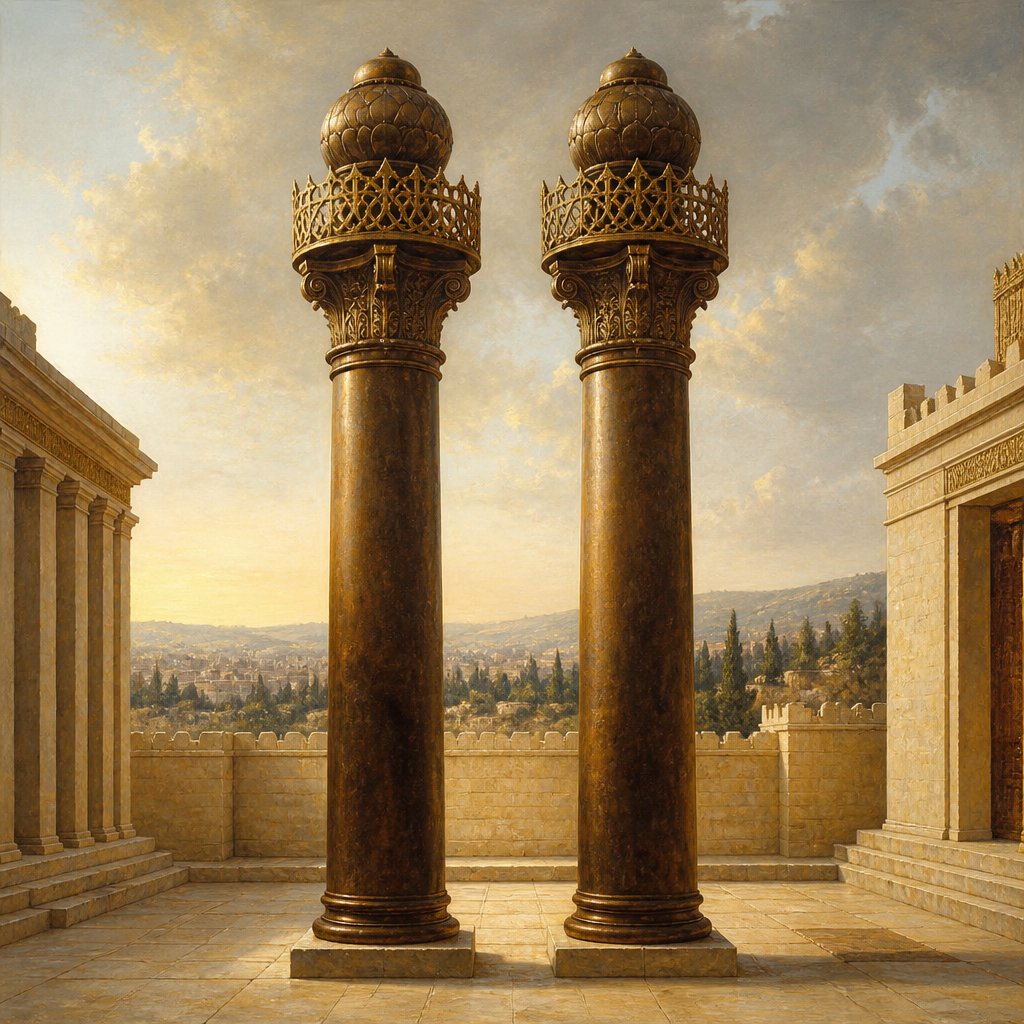
2 Chronicles 4:12 (KJV): "To wit, the two pillars, and the pommels, and the chapiters which were on the top of the two pillars, and the two wreaths to cover the two pommels of the chapiters which were on the top of the pillars."
In order to understand the meaning and significance of 2 Chronicles 4:12, we must first examine the broader context in which this verse is found. The book of 2 Chronicles is a historical account of the kings of Judah, focusing on their reigns, the rebuilding of the temple, and the religious reforms that took place during that time. The verse in question is part of a detailed description of the furnishings that were placed in the temple during the reign of King Solomon.
The specific mention of the "two pillars" in 2 Chronicles 4:12 is significant because these pillars, known as Jachin and Boaz, were an integral part of the structure of the temple. According to 1 Kings 7:21, the names of the two pillars signify "he shall establish" (Jachin) and "in strength" (Boaz), symbolizing the stability and strength of the temple. These pillars were made of bronze and were adorned with various decorations, including pommels, chapiters, and wreaths.
The pommels, chapiters, and wreaths mentioned in 2 Chronicles 4:12 were ornamental elements that adorned the tops of the pillars, enhancing their beauty and grandeur. The pommels were decorative knobs or globes, while the chapiters were ornate capital structures that adorned the top of the pillars. The wreaths served to cover the pommels of the chapiters, adding a touch of elegance to the overall design.
The significance of these ornate decorations goes beyond mere aesthetic beauty; they also hold symbolic meaning within the context of the temple. In ancient Near Eastern architecture, pillars were often used to represent strength, stability, and power. In the case of the temple, these pillars symbolized the strength and stability of the presence of God among His people. The intricate decorations, including the pommels, chapiters, and wreaths, served to enhance the symbolism of the pillars, signifying the splendor and majesty of God's dwelling place.
Furthermore, the mention of the "two wreaths to cover the two pommels of the chapiters" in 2 Chronicles 4:12 may also carry spiritual significance. In the Christian tradition, wreaths are often associated with victory, triumph, and eternal life. The presence of wreaths on the pillars of the temple could symbolize the triumph of God's kingdom and His eternal reign. Additionally, the use of the number "two" in reference to the pillars, pommels, chapiters, and wreaths may signify the dual nature of God – His divine sovereignty and His intimate presence among His people.
In a broader sense, the detailed description of the temple furnishings in 2 Chronicles serves as a reminder of the importance of beauty and craftsmanship in the worship of God. The meticulous attention to detail in the design and construction of the temple reflects the Israelites' desire to honor and glorify God through their worship. This emphasis on craftsmanship and beauty underscores the significance of offering the very best to God in worship, reflecting the principle of giving God our best in all aspects of our lives.
In conclusion, 2 Chronicles 4:12 offers a profound reflection on the symbolic and spiritual significance of the temple furnishings, particularly the pillars, pommels, chapiters, and wreaths. These ornate decorations not only added to the grandeur of the temple but also held deep spiritual meaning, symbolizing the strength, stability, and triumph of God's presence among His people. This verse serves as a reminder of the importance of offering our very best to God and honoring Him with beauty, craftsmanship, and reverence in our worship.
Get our apps


Artwork for 2 Chronicles 4:12

2 Chronicles 4:12 - "To wit, the two pillars, and the pommels, and the chapiters which were on the top of the two pillars, and the two wreaths to cover the two pommels of the chapiters which were on the top of the pillars;"
"To wit, the two pillars, and the pommels, and the chapiters which were on the top of the two pillars, and the two wreaths to cover the two pommels of the chapiters which were on the top of the pillars;" - 2 Chronicles 4:12

2 Chronicles 12:4 - "And he took the fenced cities which pertained to Judah, and came to Jerusalem."

"And he took the fenced cities which pertained to Judah, and came to Jerusalem." - 2 Chronicles 12:4

2 Chronicles 4:22

1 Chronicles 4:12 - "And Eshton begat Beth-rapha, and Paseah, and Tehinnah the father of Ir-nahash. These are the men of Rechah."

2 chronicles 13:12

1 Chronicles 2:12 - "And Boaz begat Obed, and Obed begat Jesse,"

2 Corinthians 12:2-4 – Paul’s vision of the third heaven.

2 Chronicles 4:15 - "One sea, and twelve oxen under it."

1 Chronicles 12:4 - "And Ismaiah the Gibeonite, a mighty man among the thirty, and over the thirty; and Jeremiah, and Jahaziel, and Johanan, and Josabad the Gederathite,"

2 Chronicles 30:4 - "And the thing pleased the king and all the congregation."

2 Chronicles 12:6 - "Whereupon the princes of Israel and the king humbled themselves; and they said, The LORD is righteous."

2 Chronicles 7:4 - "¶ Then the king and all the people offered sacrifices before the LORD."

2 Chronicles 17:12 - "¶ And Jehoshaphat waxed great exceedingly; and he built in Judah castles, and cities of store."

2 Chronicles 14:12 - "So the LORD smote the Ethiopians before Asa, and before Judah; and the Ethiopians fled."

2 Chronicles 15:12 - "And they entered into a covenant to seek the LORD God of their fathers with all their heart and with all their soul;"

2 Chronicles 12:14 - "And he did evil, because he prepared not his heart to seek the LORD."

2 Chronicles 12:12 - "And when he humbled himself, the wrath of the LORD turned from him, that he would not destroy him altogether: and also in Judah things went well."

"One sea, and twelve oxen under it." - 2 Chronicles 4:15

2 Chronicles 4:14 - "He made also bases, and lavers made he upon the bases;"

2 Chronicles 4:21 - "And the flowers, and the lamps, and the tongs, made he of gold, and that perfect gold;"

2 Chronicles 12:8 - "Nevertheless they shall be his servants; that they may know my service, and the service of the kingdoms of the countries."

2 Chronicles 24:4 - "¶ And it came to pass after this, that Joash was minded to repair the house of the LORD."

2 Chronicles 5:4 - "And all the elders of Israel came; and the Levites took up the ark."

2 Timothy 4:12 - "And Tychicus have I sent to Ephesus."

2 Chronicles 22:12 - "And he was with them hid in the house of God six years: and Athaliah reigned over the land."

2 Kings 12:19 - "¶ And the rest of the acts of Joash, and all that he did, are they not written in the book of the chronicles of the kings of Judah?"

2 Chronicles 29:4 - "And he brought in the priests and the Levites, and gathered them together into the east street,"

2 Chronicles 26:12 - "The whole number of the chief of the fathers of the mighty men of valour were two thousand and six hundred."