What does 2 Chronicles 5:3 mean?
“Wherefore all the men of Israel assembled themselves unto the king in the feast which was in the seventh month.” — 2 Chronicles 5:3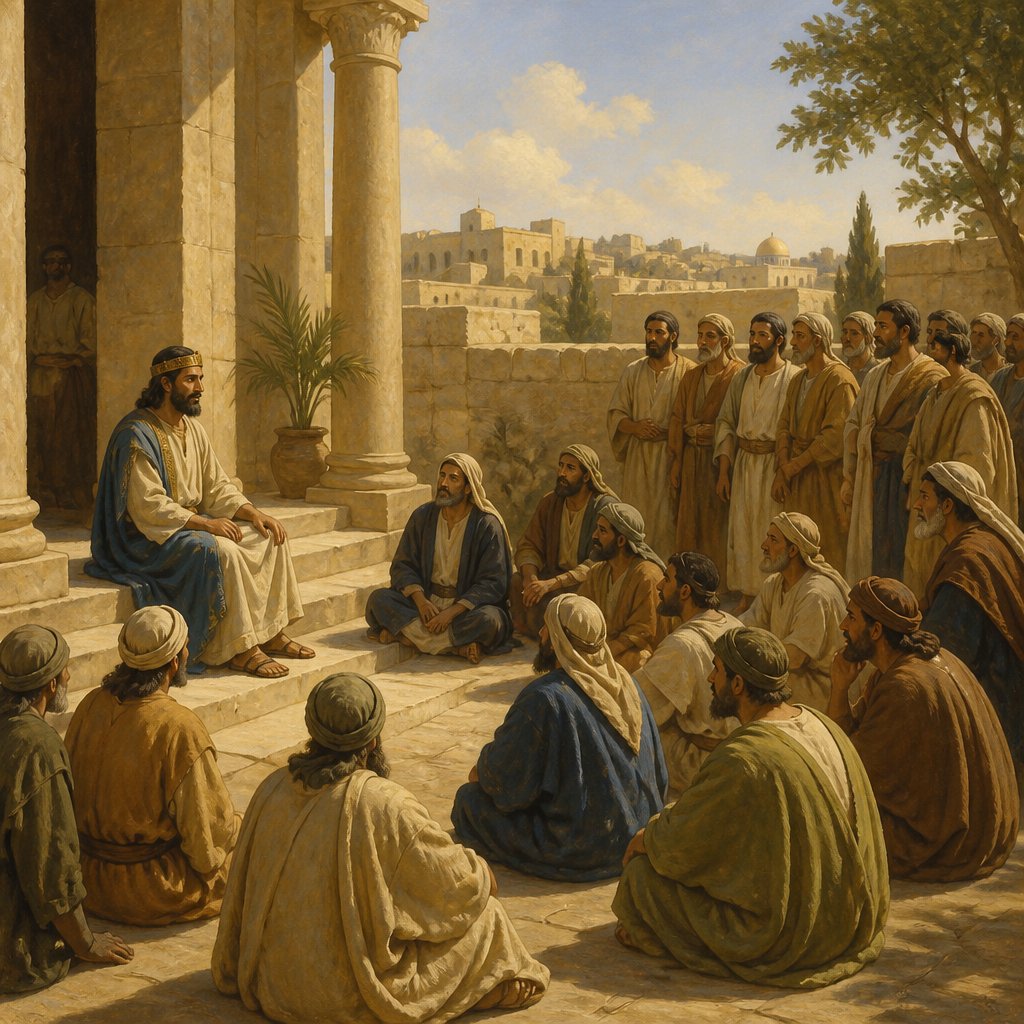
2 Chronicles 5:3 (KJV)
"Wherefore all the men of Israel assembled themselves unto the king in the feast which was in the seventh month."
This verse is part of a larger passage that describes the dedication of Solomon's temple. The temple was a central aspect of Jewish religious life, and its construction and consecration were significant events in the history of the Israelites. In this verse, we see the people of Israel coming together to celebrate and participate in the dedication of the temple.
The seventh month was a special time in the Jewish calendar, as it was the month of Tishrei, when several important festivals were celebrated, including Rosh Hashanah (the Jewish New Year) and Yom Kippur (the Day of Atonement). The fact that the dedication of the temple took place during this auspicious month adds to the significance of the event.
The gathering of all the men of Israel also highlights the communal nature of the Jewish faith. Throughout the Bible, we see the importance of coming together as a community to worship and celebrate. In this case, the people were united in their support of the construction and consecration of the temple, showing their dedication to their faith and their unity as a people.
Symbolically, the dedication of the temple represents the presence of God among His people. The temple was seen as the dwelling place of God on earth, and its completion and dedication were symbolic of God's presence and blessing. The assembly of the men of Israel in the feast demonstrates their desire to be in the presence of God and to honor Him through their worship and celebration.
This verse also reflects the theme of obedience to God's commands. The construction and dedication of the temple were carried out according to the instructions given by God to King David and later passed on to Solomon. The men of Israel's assembly to the king in the feast was a fulfillment of God's commands for the people to gather and celebrate the dedication of the temple. This theme of obedience and adherence to God's will is a recurring motif throughout the Bible and serves as a guiding principle for the Israelites and believers in their faith.
The larger context of this verse, within the book of 2 Chronicles, is the retelling of the history of the Israelites, focusing on the reign of King Solomon and the construction of the temple. The book of 2 Chronicles emphasizes the importance of faithfulness to God and the consequences of unfaithfulness. The dedication of the temple was a momentous occasion that signified the culmination of the promise God made to David to establish his kingdom forever. Thus, the dedication of the temple served as a pivotal moment in the history of the Israelites, symbolizing the fulfillment of God's promises and the continuation of His covenant with His people.
In conclusion, 2 Chronicles 5:3 captures the significance of the assembly of the men of Israel in the feast during the dedication of Solomon's temple. The verse highlights themes of community, obedience to God's commands, and the symbolic importance of the temple as the dwelling place of God. The context of this verse within the larger narrative of 2 Chronicles underscores the momentous nature of the temple dedication and its role in the history of the Israelites as a symbol of God's presence among His people.
Get our apps


Artwork for 2 Chronicles 5:3

2 Chronicles 5:3 - "Wherefore all the men of Israel assembled themselves unto the king in the feast which was in the seventh month."
"Wherefore all the men of Israel assembled themselves unto the king in the feast which was in the seventh month." - 2 Chronicles 5:3

2 Chronicles 3:5 - "And the greater house he cieled with fir tree, which he overlaid with fine gold, and set thereon palm trees and chains."

1 Chronicles 5:3 - "The sons, I say, of Reuben the firstborn of Israel were, Hanoch, and Pallu, Hezron, and Carmi."
"The sons, I say, of Reuben the firstborn of Israel were, Hanoch, and Pallu, Hezron, and Carmi." - 1 Chronicles 5:3

1 Chronicles 2:5 - "The sons of Pharez; Hezron, and Hamul."

2 Chronicles 28:3

2 corinthians 10:3-5

2 corinthians 10:3-5

2 corinthians 10:3-5

2 corinthians 10:3-5

2 corinthians 10:3-5

2 corinthians 10:3-5

2 corinthians 10:3-5

2 corinthians 10:3-5

2 corinthians 10:3-5

2 corinthians 10:3-5

2 corinthians 10:3-5

2 corinthians 10:3-5

2 Chronicles 5:4 - "And all the elders of Israel came; and the Levites took up the ark."

2 Chronicles 2:5 - "And the house which I build is great: for great is our God above all gods."

2 Chronicles 11:5 - "¶ And Rehoboam dwelt in Jerusalem, and built cities for defence in Judah."

2 Chronicles 8:3 - "And Solomon went to Hamath-zobah, and prevailed against it."

2 Chronicles 5:5 - "And they brought up the ark, and the tabernacle of the congregation, and all the holy vessels that were in the tabernacle, these did the priests and the Levites bring up."

2 Chronicles 3:2 - "And he began to build in the second day of the second month, in the fourth year of his reign."

1 Chronicles 3:5 - "And these were born unto him in Jerusalem; Shimea, and Shobab, and Nathan, and Solomon, four, of Bath-shua the daughter of Ammiel:"

Titus 2:3-5

2 Chronicles 34:5 - "And he burnt the bones of the priests upon their altars, and cleansed Judah and Jerusalem."

Titus 2:3-5

Titus 2:3-5