What does 2 Chronicles 8:10 mean?
“And these were the chief of king Solomon’s officers, even two hundred and fifty, that bare rule over the people.” — 2 Chronicles 8:10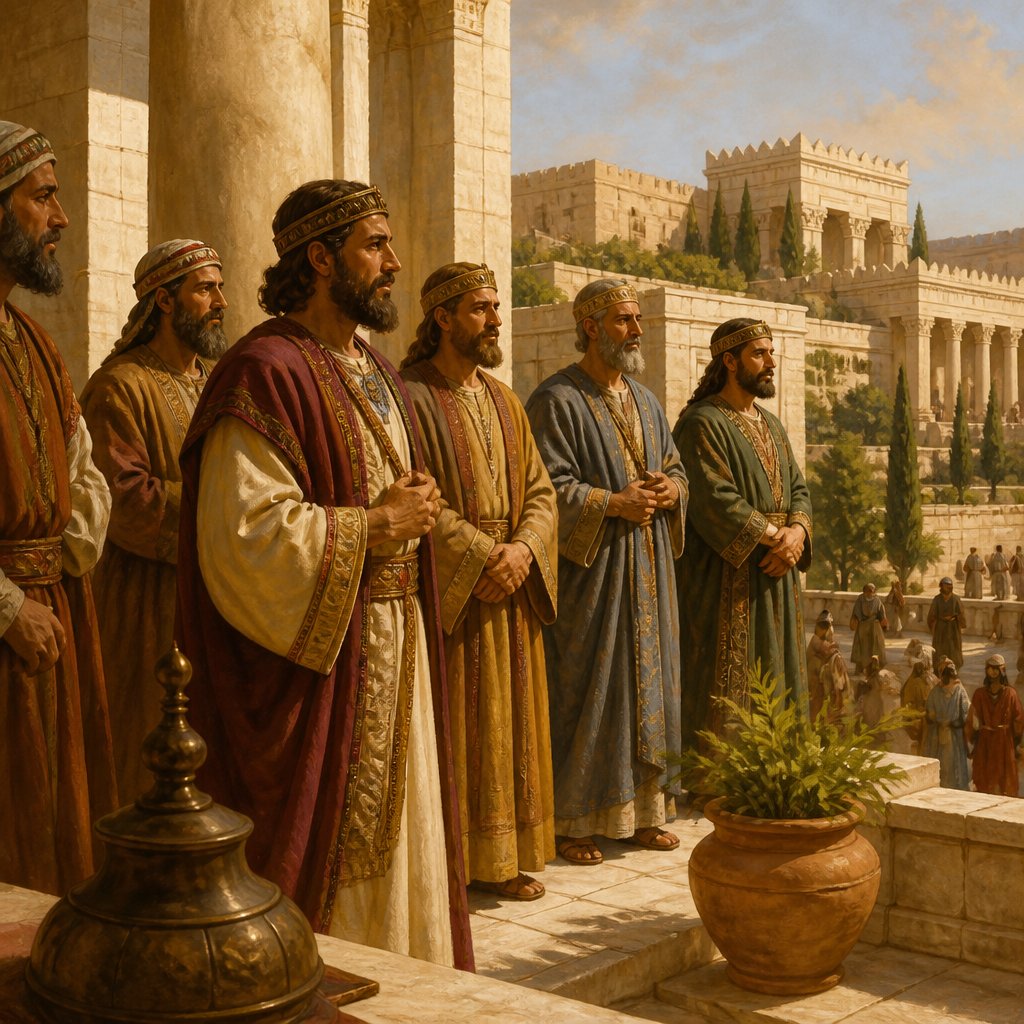
In 2 Chronicles 8:10 of the King James Version of the Bible, it says, "And these were the chief of king Solomon's officers, even two hundred and fifty, that bare rule over the people." This passage comes from the Old Testament, specifically from the book of 2 Chronicles, which is a historical account of the reign of King Solomon, the son of David.
To fully understand the meaning and significance of this verse, it is important to consider the broader context in which it is situated. King Solomon was known for his wisdom, wealth, and grandeur. After assuming the throne following the death of his father, David, Solomon set out to build the temple in Jerusalem to house the Ark of the Covenant and to serve as a center for the worship of the God of Israel. The verse in question comes from a passage detailing the organization of Solomon's kingdom, specifically the appointment of officers and officials to help govern and oversee the people.
The verse suggests that King Solomon had a well-structured and organized government, with specific individuals appointed to positions of authority and responsibility. The fact that there were 250 chief officers emphasizes the thoroughness and scale of Solomon's administration. This highlights Solomon's ability to manage and govern a large population, as well as his commitment to maintaining order and efficiency in his kingdom.
The verse also implies that King Solomon's rule was one of strength and centralized power. The phrase "bare rule over the people" suggests that these officers held considerable authority and were entrusted with the task of governing and leading the people. This reflects Solomon's desire to establish a stable and well-regulated society, one in which the people were subject to the king's authority and guidance.
Furthermore, the verse underscores the extent of Solomon's wealth and resources. The fact that he was able to appoint 250 chief officers indicates the affluence and abundance of his kingdom, as well as his ability to support a large administrative apparatus. This speaks to the grandeur and opulence of Solomon's reign, as well as his capacity to invest in and maintain a sophisticated system of governance.
In a broader sense, this verse can also be seen as a demonstration of the importance of leadership and organization in the pursuit of a just and prosperous society. The appointment of capable and principled officers reflects the value that Solomon placed on effective governance and the well-being of his people. Additionally, the verse serves as a reminder of the significance of structure and order in any form of collective endeavor, including the governance of a nation.
Symbolically, this verse can be interpreted as representing the ideal of a well-ordered and harmonious society, one in which the rulers are just and the people are obedient. It conveys the notion of a society in which power is wielded responsibly and for the betterment of all. The number 250 may also carry symbolic significance, though interpretations of numerical symbolism in the Bible vary among different traditions and scholars.
In conclusion, 2 Chronicles 8:10 provides a glimpse into the organization and administration of King Solomon's kingdom, emphasizing his commitment to effective governance and the welfare of his people. It also carries broader implications about the significance of leadership, organization, and structure in the pursuit of a just and prosperous society. The verse offers valuable insights into the principles and values that underpinned Solomon's reign, as well as the broader themes of good governance and order.
Get our apps


Artwork for 2 Chronicles 8:10

2 Chronicles 8:10 - "And these were the chief of king Solomon's officers, even two hundred and fifty, that bare rule over the people."
"And these were the chief of king Solomon's officers, even two hundred and fifty, that bare rule over the people." - 2 Chronicles 8:10

2 Chronicles 10:8 - "But he forsook the counsel which the old men gave him, and took counsel with the young men that were brought up with him, that stood before him."

1 Chronicles 8:10 - "And Jeuz, and Shachia, and Mirma. These were his sons, heads of the fathers."
"And Jeuz, and Shachia, and Mirma. These were his sons, heads of the fathers." - 1 Chronicles 8:10

2 Chronicles 23:10

2 Chronicles 23:10

2 Chronicles 30:10

2 Chronicles 35:10

1 Chronicles 2:8 - "And the sons of Ethan; Azariah."

2 Chronicles 11:8 - "And Gath, and Mareshah, and Ziph,"

1 Chronicles 8:2 - "Nohah the fourth, and Rapha the fifth."

2 Chronicles 8:3 - "And Solomon went to Hamath-zobah, and prevailed against it."

2 Chronicles 10:19 - "And Israel rebelled against the house of David unto this day."

2 Chronicles 33:10 - "And the LORD spake to Manasseh, and to his people: but they would not hearken."

1 Chronicles 10:8 - "¶ And it came to pass on the morrow, when the Philistines came to strip the slain, that they found Saul and his sons fallen in mount Gilboa."

2 Chronicles 11:10 - "And Zorah, and Aijalon, and Hebron, which are in Judah and in Benjamin fenced cities."

2 Chronicles 8:2 - "That the cities which Huram had restored to Solomon, Solomon built them, and caused the children of Israel to dwell there."

2 Chronicles 24:8 - "And at the king's commandment they made a chest, and set it without at the gate of the house of the LORD."

1 Chronicles 2:10 - "And Ram begat Amminadab; and Amminadab begat Nahshon, prince of the children of Judah;"

"And the sons of Ethan; Azariah." - 1 Chronicles 2:8

"And Gath, and Mareshah, and Ziph," - 2 Chronicles 11:8

2 Chronicles 10:17 - "But as for the children of Israel that dwelt in the cities of Judah, Rehoboam reigned over them."

2 Chronicles 8:17 - "¶ Then went Solomon to Ezion-geber, and to Eloth, at the sea side in the land of Edom."

2 Chronicles 4:10 - "And he set the sea on the right side of the east end, over against the south."

2 Chronicles 10:13 - "And the king answered them roughly; and king Rehoboam forsook the counsel of the old men,"

2 Chronicles 20:8 - "And they dwelt therein, and have built thee a sanctuary therein for thy name, saying,"

2 Chronicles 8:8 - "But of their children, who were left after them in the land, whom the children of Israel consumed not, them did Solomon make to pay tribute until this day."

2 Chronicles 31:8 - "And when Hezekiah and the princes came and saw the heaps, they blessed the LORD, and his people Israel."

2 Chronicles 8:4 - "And he built Tadmor in the wilderness, and all the store cities, which he built in Hamath."