What does 2 Corinthians 13:5 mean?
“Examine yourselves, whether ye be in the faith; prove your own selves. Know ye not your own selves, how that Jesus Christ is in you, except ye be reprobates?” — 2 Corinthians 13:5
“Examine yourselves, whether ye be in the faith; prove your own selves. Know ye not your own selves, how that Jesus Christ is in you, except ye be reprobates?” (2 Corinthians 13:5, KJV) stands near the close of Paul’s second epistle to the Corinthians, and it gathers into one sentence the burden of his whole appeal to a troubled church: that the reality of Christ’s work must be found not merely in outward profession, party spirit, spiritual talk, or demands for proof from an apostle, but in the inward and living presence of Christ that shows itself as true faith.
In its immediate context, Paul is preparing to come to Corinth again, and he has been dealing with accusations, disorder, and resistance to his authority. Some in Corinth were, in effect, putting Paul on trial, desiring a “proof of Christ speaking in” him. In that setting, the verse turns the courtroom around. Paul does not refuse examination, but he insists that the Corinthians themselves are the first proper subject of scrutiny. If they are so eager to test whether Christ is in Paul, let them apply the same test to their own souls, because the strongest evidence that Christ truly spoke through Paul would be the Corinthians’ own existence as a church born through the gospel he preached and the transforming power that gospel should still be working in them.
The command “Examine yourselves, whether ye be in the faith” carries the theme of spiritual self-scrutiny. “In the faith” is not merely agreement with certain statements; it is being within the sphere of true reliance upon Christ, the kind of faith that unites a person to Him. Paul’s concern is not to produce anxious introspection for its own sake, but to press them toward honest discernment: are they truly resting upon Christ, submitted to His lordship, and marked by the fruits that belong to those who are His? Because the Corinthians had tolerated sin, boasted in gifts, and sometimes despised apostolic correction, Paul calls them to look beneath their religious activity and ask whether their standing is real.
Then he intensifies it: “prove your own selves.” The word “prove” adds the idea of testing what is genuine, like a thing tried to show what it truly is. The verse therefore carries a theme of authenticity versus appearance. Corinth was a place where style, rhetoric, and outward impressiveness were prized; Paul repeatedly refuses to let spiritual reality be measured by such standards. This line presses the same point inwardly: the question is not how spiritual one seems, but whether one is truly Christ’s. In the wider flow of the letter, Paul has spoken of “godly sorrow” and repentance, of the “new creature,” of sincerity, of holiness, and of the fear of God; now he gathers that all up into a personal test. If faith is real, it will withstand examination. If it is only a name, it will not.
The heart of the verse is the startling statement, “Know ye not your own selves, how that Jesus Christ is in you.” Here is the central symbolism and spiritual reality the verse assumes: the believer is not merely a follower of Christ at a distance, but one in whom Christ dwells. “Christ is in you” is the language of union and indwelling. It speaks to the mystery of the Christian life as an inward life, where the presence of Christ is not confined to temple walls, ceremonies, or external marks, but is known within the person through the Spirit’s work and through the evidences of grace. In 2 Corinthians, Paul often contrasts the outward and the inward, the seen and the unseen, the letter and the spirit, the earthen vessel and the treasure. “Christ is in you” fits that contrast: the treasure is carried within; the power is not merely external persuasion but an internal reality. The Corinthians should be able to “know” this, not in the sense of boasting in private feelings, but in the sense that the marks of Christ’s life—truth, repentance, love, obedience, endurance—ought to be discernible in them.
At the same time, the verse retains a sober edge: “except ye be reprobates.” In the KJV, “reprobates” points to those who do not stand the test, those rejected when tried because they are not genuine. This does not mean that every believer who struggles is “reprobate,” but it does mean that the Christian claim is not immune from moral and spiritual evaluation. The Corinthians were tempted to treat the gospel as a badge while living contrary to it, or to treat spiritual power as something measured by spectacle rather than holiness. Paul warns that there is such a thing as profession without possession, and that self-examination is meant to expose that danger before it hardens into final ruin.
The significance of 2 Corinthians 13:5, then, is that it places responsibility where it belongs. It calls the church away from preoccupation with judging servants of Christ by worldly standards and toward the deeper question of whether Christ Himself is present and ruling in the life. It also shows that assurance and warning are both contained within the same sentence. There is comfort in the thought that Christ is truly “in” His people, not merely for them but within them, giving life and power. Yet there is also a necessary trembling in the word “reprobates,” because the gospel invites honest testing, and it refuses to let anyone hide behind mere membership, gifts, or religious speech. Paul’s aim is not to drive sincere believers to despair, but to bring a divided and often carnal congregation to repentance and restoration, so that when he comes he may rejoice in their proven faith rather than confront them in severity.
Read in its full weight, the verse is a pastoral summons to integrity. It teaches that the Christian life is not validated by argument alone, nor by demanding “proof” from others, but by the reality of Christ’s indwelling presence made evident in a life that can be examined and found to be in the faith.
Get our apps


Artwork for 2 Corinthians 13:5

"Examine yourselves, whether ye be in the faith; prove your own selves. Know ye not your own selves, how that Jesus Christ is in you, except ye be reprobates?" - 2 Corinthians 13:5

2 Corinthians 13:5 - "Examine yourselves, whether ye be in the faith; prove your own selves. Know ye not your own selves, how that Jesus Christ is in you, except ye be reprobates?"

"Examine yourselves, whether ye be in the faith; prove your own selves. Know ye not your own selves, how that Jesus Christ is in you, except ye be reprobates?" - 2 Corinthians 13:5

2 Corinthians 5:13 - "For whether we be beside ourselves, it is to God: or whether we be sober, it is for your cause."

2 Corinthians 13

2 Corinthians 13:13 - "All the saints salute you."

2 corinthians 10:3-5

2 corinthians 10:3-5

2 corinthians 10:3-5

2 corinthians 10:3-5

2 corinthians 10:3-5

2 corinthians 10:3-5

2 corinthians 10:3-5

2 corinthians 10:3-5

2 corinthians 10:3-5

2 corinthians 10:3-5

2 corinthians 10:3-5

2 corinthians 10:3-5
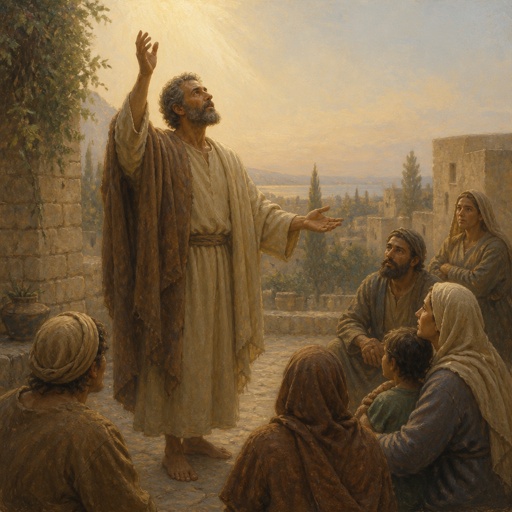
"For whether we be beside ourselves, it is to God: or whether we be sober, it is for your cause." - 2 Corinthians 5:13

2 Corinthians 5:17

2 Corinthians 5:17

2 Corinthians 5:17

2 Corinthians 5:17

2 Corinthians 5:17

2 Corinthians 5:17

2 Corinthians 5:17

2 Corinthians 5:17

2 Corinthians 5:17

2 Corinthians 5:17

2 Corinthians 5:17