What does 2 Corinthians 3:17 mean?
“Now the Lord is that Spirit: and where the Spirit of the Lord is, there is liberty.” — 2 Corinthians 3:17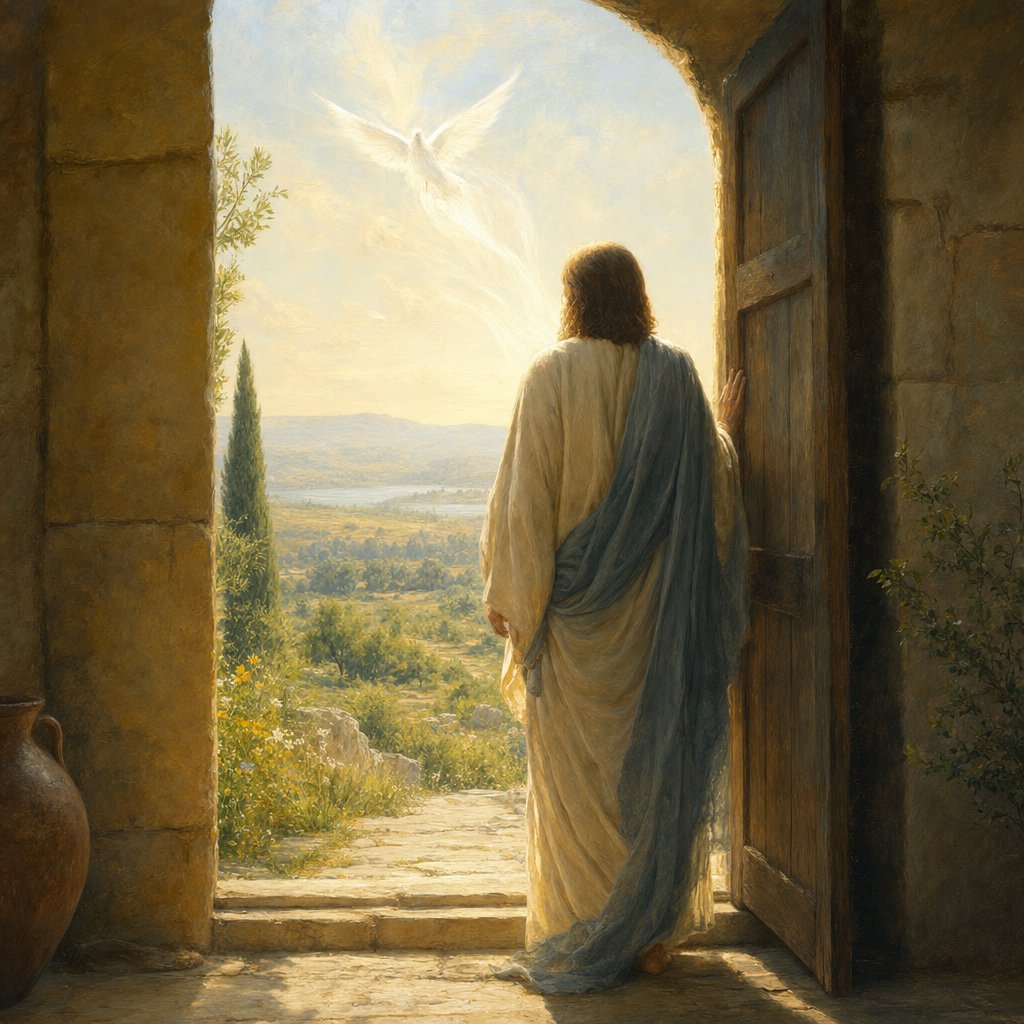
“Now the Lord is that Spirit: and where the Spirit of the Lord is, there is liberty.” (2 Corinthians 3:17, KJV)
In 2 Corinthians 3 Paul is explaining why the gospel ministry is glorious in a way that surpasses the glory connected with Moses. He has been speaking about “the ministration of death, written and engraven in stones” and contrasting it with “the ministration of the spirit” (2 Corinthians 3:7–8, KJV). The immediate context is the old covenant given at Sinai, associated with stone tables and an outward, condemning function when it meets the sin of man, and the new covenant, associated with the inward work of God by His Spirit. Paul is not insulting Moses; he is showing that what Moses administered was real and glorious, yet temporary in its form and limited in what it could accomplish inside the human heart. The new covenant ministry is glorious because God Himself, by His Spirit, brings what the law could command but could not produce: life, righteousness, and a changed heart.
This is why Paul has just said, “the letter killeth, but the spirit giveth life” (2 Corinthians 3:6, KJV). “Letter” in this chapter is tied to the law as an external code standing over sinful man, exposing guilt and thus functioning as an instrument of condemnation. “Spirit” is tied to God’s living action, not merely information about God but God’s own power effecting what He promises. When Paul arrives at verse 17, he is pressing the truth that the new covenant is not merely a revised set of regulations; it is the presence and operation of “that Spirit” who makes the covenant effective.
The phrase “Now the Lord is that Spirit” follows directly from verse 16: “Nevertheless when it shall turn to the Lord, the vail shall be taken away.” (2 Corinthians 3:16, KJV). Paul has been using the veil from Exodus as a governing image. Moses put a veil over his face, and Paul treats that veil as a symbol of what remains over the heart when the reading of the old testament is approached without the turning of the heart to the Lord: “But even unto this day, when Moses is read, the vail is upon their heart.” (2 Corinthians 3:15, KJV). The “turning” language reaches back to the pattern of Israel turning to the LORD, and it carries the sense of conversion, of a heart reoriented toward God. When such turning happens, the veil is removed. Paul then explains how that removal is effected and what it means: it is the Lord by His Spirit who takes away the veil, and therefore to meet the Lord in this covenant reality is to meet “that Spirit” at work.
Within the KJV wording, “that Spirit” points back to the Spirit already emphasized throughout the chapter: “the spirit giveth life” (v. 6), “ministration of the spirit” (v. 8), “the spirit of the living God” writing “in fleshy tables of the heart” (v. 3). Paul’s meaning is not that “the Lord” and “the Spirit” are interchangeable as if there were no distinction at all, but that the Lord whom one turns to is presently known and experienced in His saving operation by the Spirit. In the argument of the chapter, the reality of the Lord’s nearness, power, and covenant activity is mediated through the Spirit’s ministry. So the statement anchors the entire contrast: the old covenant is characterized by veiling, hardness, and condemnation; the new covenant is characterized by unveiled access because the Lord is present in and by “that Spirit.”
Then Paul declares the result: “and where the Spirit of the Lord is, there is liberty.” Liberty here is best read in the light of the veil and the covenant contrast Paul has been developing. It includes freedom of access to God, because the veil that symbolizes distance and obscurity is removed when one turns to the Lord. It includes freedom of understanding, because Paul has been speaking of a veil “upon their heart” in the reading of Moses; when the Spirit of the Lord is present, the heart is no longer shut up in blindness but opened to see the true end and meaning of what is read. It includes freedom from condemnation as a ruling verdict, because Paul has contrasted “the ministration of condemnation” with “the ministration of righteousness” (2 Corinthians 3:9, KJV). Under the law-as-letter, sin is exposed and judgment pronounced; under the Spirit’s ministry, righteousness is ministered and the believer is not held under the same condemning administration. It also includes freedom from the hardening power of sin and from the inability to obey, because the chapter has already described the Spirit writing not on stone but “in fleshy tables of the heart” (v. 3), pointing to an inward transformation rather than mere outward command.
This liberty is not presented as lawlessness. In the logic of the chapter, the Spirit does not free a person from God’s holiness; He frees a person into a living relationship with the Lord in which obedience is no longer merely an external demand but the fruit of an internal work. The liberty is the liberty of an unveiled face before God, the liberty of a conscience no longer crushed under condemnation, the liberty of a heart no longer shut behind a veil of hardness, the liberty of being acted upon by the Spirit who gives life.
The symbolism of the veil is crucial for grasping the significance of verse 17. The veil represents more than ignorance; it represents a barrier that keeps glory at a distance. Moses’ veiled face becomes a picture of a glory that is real but not abiding in that form, and a people who cannot steadily behold it. Paul says, “their minds were blinded: for until this day remaineth the same vail untaken away in the reading of the old testament; which vail is done away in Christ.” (2 Corinthians 3:14, KJV). So when verse 17 speaks of liberty where the Spirit of the Lord is, it is describing the removal of that barrier in Christ by the Spirit, so that the believer does not stand at arm’s length from God’s glory but is brought near to behold it.
That leads into the next verse’s language of transformation: “But we all, with open face beholding as in a glass the glory of the Lord, are changed into the same image from glory to glory, even as by the Spirit of the Lord.” (2 Corinthians 3:18, KJV). Verse 17 is therefore a hinge. It explains why open-faced beholding and real change are possible: the Lord is present by “that Spirit,” and His presence brings liberty—liberty that results in beholding and beholding that results in being changed.
Taken as a whole, 2 Corinthians 3:17 is Paul’s concentrated statement that the new covenant life is not maintained by human strength under an external code, but by the living Lord present through His Spirit; and that this presence means freedom—freedom to approach, to see, to be acquitted in the ministry of righteousness, and to be transformed. It is a verse about the character of Christian existence under the new covenant: not veiled, not bound, not merely commanded from without, but unveiled and liberated by the Spirit of the Lord.
Get our apps


Artwork for 2 Corinthians 3:17

2 Corinthians 3:17 - "Now the Lord is that Spirit: and where the Spirit of the Lord is, there is liberty."
!["Now the Lord is that Spirit: and where the Spirit of the Lord [is], there [is] liberty." - 2 Corinthians 3:17](https://media.bible.art/83c96572-3215-41d4-8daf-a8ac56290553-thumbnail.jpg)
"Now the Lord is that Spirit: and where the Spirit of the Lord [is], there [is] liberty." - 2 Corinthians 3:17

"Now the Lord is that Spirit: and where the Spirit of the Lord is, there is liberty." - 2 Corinthians 3:17

"Now the Lord is that Spirit: and where the Spirit of the Lord is, there is liberty." - 2 Corinthians 3:17

1 corinthians 3:16-17

1 corinthians 3:16-17

1 corinthians 3:16-17

2 Corinthians 3:6

2 Corinthians 5:17

2 Corinthians 4:17

2 Corinthians 5:17

2 Corinthians 5:17

2 Corinthians 5:17

2 Corinthians 5:17

2 Corinthians 3:18

2 Corinthians 3:6

2 Corinthians 5:17

2 Corinthians 5:17

2 Corinthians 5:17

2 Corinthians 5:17

2 Corinthians 5:17

2 Corinthians 5:17

2 corinthians 10:3-5

2 corinthians 10:3-5

2 corinthians 10:3-5

2 corinthians 10:3-5

2 corinthians 10:3-5

2 corinthians 10:3-5

2 corinthians 10:3-5

2 corinthians 10:3-5