What does 2 Corinthians 5:21 mean?
“For he hath made him to be sin for us, who knew no sin; that we might be made the righteousness of God in him.” — 2 Corinthians 5:21
2 Corinthians 5:21 in the King James Version (KJV) reads: "For he hath made him to be sin for us, who knew no sin; that we might be made the righteousness of God in him."
This verse is a powerful declaration of the fundamental Christian doctrine of atonement. It summarizes the profound and transformative work of Jesus Christ on behalf of humanity. In this verse, the apostle Paul succinctly encapsulates the redemptive plan of God, the sinless nature of Jesus, and the exchange of righteousness that takes place through faith in Christ.
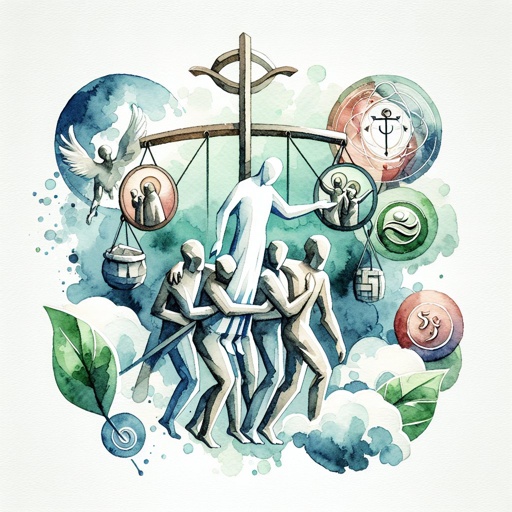
The key theme of 2 Corinthians 5:21 is substitutionary atonement, which is the belief that Jesus, in his sacrificial death on the cross, took upon himself the sins of humanity, thereby offering a complete and perfect sacrifice to reconcile us to God. The verse begins with the assertion that "he" (referring to God the Father) made Jesus "to be sin for us." This means that Jesus, who was sinless, was reckoned or regarded as if he were a sinner, and thus bore the full weight and consequences of sin in our place. This substitutionary act was foretold in the Old Testament, as in Isaiah 53:6 which states, "the Lord hath laid on him the iniquity of us all."
The next phrase, "who knew no sin," emphasizes the sinless nature of Jesus. As the eternal Son of God, Jesus lived a perfect life, free from any stain of sin. This is crucial because only a sinless sacrifice could fully atone for the sins of the world. The purity and holiness of Jesus are essential aspects of his role as the perfect Lamb of God, the one who takes away the sins of the world (John 1:29).
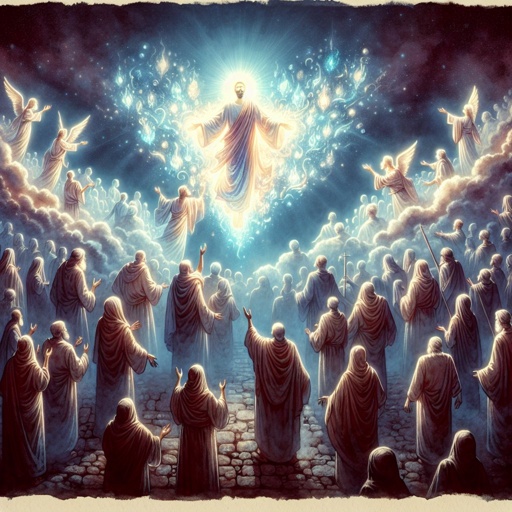
The verse concludes with the purpose of this atoning work: "that we might be made the righteousness of God in him." This speaks to the great exchange that takes place through faith in Christ. Through his sacrificial death, Jesus took upon himself the penalty and consequences of our sin, and in exchange, offers us his righteousness. This righteousness is not something we can earn by our own efforts, but is imputed to us as a free gift when we trust in Christ for salvation.
The context of 2 Corinthians 5:21 is important for understanding its deep significance. In the preceding verses, Paul discusses the ministry of reconciliation and the message of the gospel. He emphasizes that it is through Christ that God reconciles the world to himself, not counting people's sins against them (2 Corinthians 5:19). This sets the stage for the declaration in verse 21, as Paul presents Jesus as the central figure of this divine work of reconciliation. This verse serves as a powerful summary of the heart of the Christian message – that in Christ, we find forgiveness, redemption, and a new standing before God as righteous and holy.
The symbolism in 2 Corinthians 5:21 is rich and profound. It portrays Jesus as the unblemished sacrificial Lamb who takes upon himself the sins of the world, fulfilling the foreshadowing of the Old Testament sacrificial system. The imagery of sin being placed upon Jesus evokes the powerful image of the scapegoat in the Levitical sacrifices, where the sins of the people were symbolically placed on the animal and then sent away into the wilderness (Leviticus 16:20-22). Additionally, the concept of being made the righteousness of God in Christ points to the transformative nature of salvation, where believers are seen as clothed in the righteousness of Christ, standing before God as if they had never sinned.
In conclusion, 2 Corinthians 5:21 is a foundational verse that encapsulates the heart of the Christian faith. It speaks to the core beliefs of atonement, redemption, and the righteousness that believers have through faith in Christ. This verse serves as a powerful reminder of the great exchange that took place at the cross, where Jesus, the sinless Son of God, took upon himself the full weight of our sins, so that we might be reconciled to God and made righteous in him.
Get our apps


Artwork for 2 Corinthians 5:21

2 Corinthians 5:21 - "For he hath made him to be sin for us, who knew no sin; that we might be made the righteousness of God in him."

2 Corinthians 5:21 God made him who had no sin to be sin for us, so that in him we might become the righteousness of God.

2 Corinthians 5:21 God made him who had no sin to be sin for us, so that in him we might become the righteousness of God.
2 Corinthians 5:21 God made him who had no sin to be sin for us, so that in him we might become the righteousness of God.

2 Corinthians 5:21 God made him who had no sin to be sin for us, so that in him we might become the righteousness of God.

2 Corinthians 5:21 God made him who had no sin to be sin for us, so that in him we might become the righteousness of God.

2 Corinthians 5:21 God made him who had no sin to be sin for us, so that in him we might become the righteousness of God.

2 Corinthians 5:21 God made him who had no sin to be sin for us, so that in him we might become the righteousness of God.
2 Corinthians 5:21 God made him who had no sin to be sin for us, so that in him we might become the righteousness of God.

"For he hath made him to be sin for us, who knew no sin; that we might be made the righteousness of God in him." - 2 Corinthians 5:21

2 Corinthians 5:21 God made him who had no sin to be sin for us, so that in him we might become the righteousness of God.

2 Corinthians 5:17

2 Corinthians 5:17

2 Corinthians 5:17

2 Corinthians 5:17

2 Corinthians 5:17

2 Corinthians 5:17

2 Corinthians 5:17

2 Corinthians 5:17

2 Corinthians 5:17

2 Corinthians 5:17

2 Corinthians 5:17

2 corinthians 10:3-5

2 corinthians 10:3-5

2 corinthians 10:3-5

2 corinthians 10:3-5

2 corinthians 10:3-5

2 corinthians 10:3-5

2 corinthians 10:3-5

2 corinthians 10:3-5