What does 2 Corinthians 5:3 mean?
“If so be that being clothed we shall not be found naked.” — 2 Corinthians 5:3
2 Corinthians 5:3 (KJV) states, "If so be that being clothed we shall not be found naked." This verse, found in the New Testament, is a part of a larger passage where the apostle Paul is discussing the concept of our earthly bodies being like temporary tents, while our heavenly bodies are like eternal homes. In this specific verse, Paul is emphasizing the hope and assurance that comes with being clothed in the righteousness of Christ, so that we will not be found lacking or "naked" before God.
To fully understand the meaning and significance of 2 Corinthians 5:3, it is important to examine the context in which it was written. The apostle Paul's second letter to the Corinthians is a deeply personal and theological reflection on the nature of the Christian life and ministry. In this particular passage, Paul is addressing the struggles and hardships that he and his fellow believers face in their earthly bodies, while also pointing towards the hope and promise of resurrection and eternal life in Christ.
The metaphor of being "clothed" in this verse carries significant symbolic weight. In the Bible, clothing often represents one's spiritual state and relationship with God. In the Old Testament, for example, the prophet Isaiah writes about being clothed in garments of salvation and robes of righteousness (Isaiah 61:10). Similarly, in the New Testament, the book of Revelation speaks of the white robes worn by the saints in heaven (Revelation 6:11) as a symbol of their purity and righteousness before God.
In the context of 2 Corinthians 5:3, being "clothed" likely refers to being covered or enveloped in the righteousness and grace of Christ. As Christians, our sinful nature is covered by the righteousness of Christ, and it is through this covering that we are found acceptable before God. This concept is echoed in Galatians 3:27, where Paul writes, "For as many of you as have been baptized into Christ have put on Christ." This idea of "putting on" or being "clothed" with Christ emphasizes the transformative nature of the gospel, in which believers are given a new identity and standing before God.
The second half of the verse, "we shall not be found naked," serves as a contrast to the idea of being clothed in Christ. In biblical symbolism, nakedness often represents shame, vulnerability, and exposure. In the book of Genesis, for example, Adam and Eve felt shame and covered themselves after they sinned and realized they were naked before God (Genesis 3:10). Similarly, in the book of Revelation, the church in Laodicea is admonished to buy white garments to cover their nakedness (Revelation 3:18). In the context of 2 Corinthians 5:3, the idea of not being found naked suggests the assurance and security that comes from being clothed in Christ's righteousness. It implies that when we stand before God, we will not be exposed or ashamed because we are covered by the righteousness of Christ.
This verse speaks to the foundational Christian belief in justification by faith. It emphasizes that our acceptance before God is not based on our own merit or good works, but on the righteousness of Christ that covers us. This concept is central to the Christian faith and is echoed throughout the New Testament, particularly in the writings of the apostle Paul. In Romans 3:22, Paul writes that righteousness comes through faith in Jesus Christ for all who believe. Likewise, in Philippians 3:9, Paul speaks of "the righteousness that comes from God on the basis of faith."
The broader themes of hope, assurance, and redemption are also present in 2 Corinthians 5:3. The verse points towards the ultimate hope of believers, which is the resurrection and the eternal life that comes through Christ. It offers assurance that our earthly struggles and imperfections are not the end of the story, and that we have a secure and eternal dwelling place in heaven. This theme is consistent with other passages in the New Testament, such as Romans 8:18, where Paul writes that the sufferings of this present time are not worth comparing with the glory that will be revealed to us.
In conclusion, 2 Corinthians 5:3 is a rich and powerful verse that speaks to the foundational Christian belief in the covering and righteousness of Christ. It offers hope, assurance, and security to believers, reminding them that their standing before God is not based on their own efforts, but on the grace and righteousness of Christ. The verse carries deep symbolic significance, drawing on the themes of clothing, nakedness, and hope, and it serves as a powerful reminder of the transformative and redemptive nature of the gospel.
Get our apps


Artwork for 2 Corinthians 5:3

2 Corinthians 5:3 - "If so be that being clothed we shall not be found naked."

"If so be that being clothed we shall not be found naked." - 2 Corinthians 5:3

2 corinthians 10:3-5

2 corinthians 10:3-5

2 corinthians 10:3-5

2 corinthians 10:3-5

2 corinthians 10:3-5

2 corinthians 10:3-5

2 corinthians 10:3-5

2 corinthians 10:3-5

2 corinthians 10:3-5

2 corinthians 10:3-5

2 corinthians 10:3-5

2 corinthians 10:3-5

2 corinthians 10:3-5

2 Corinthians 3:5 - "Not that we are sufficient of ourselves to think any thing as of ourselves; but our sufficiency is of God;"

2 Corinthians 5:17

2 Corinthians 5:17

2 Corinthians 5:17

2 Corinthians 5:17

2 Corinthians 5:17

2 Corinthians 5:17

2 Corinthians 5:17

2 Corinthians 5:17

2 Corinthians 5:17

2 Corinthians 5:17

2 Corinthians 5:17
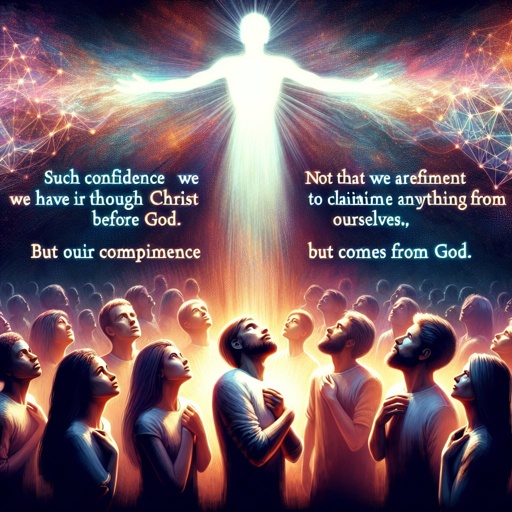
2 Corinthians 3:4-5 - "Such confidence we have through Christ before God. Not that we are competent in ourselves to claim anything for ourselves, but our competence comes from God."

"Not that we are sufficient of ourselves to think any thing as of ourselves; but our sufficiency is of God;" - 2 Corinthians 3:5

2 Corinthians 3:6