What does 2 Kings 10:35 mean?
“And Jehu slept with his fathers: and they buried him in Samaria. And Jehoahaz his son reigned in his stead.” — 2 Kings 10:35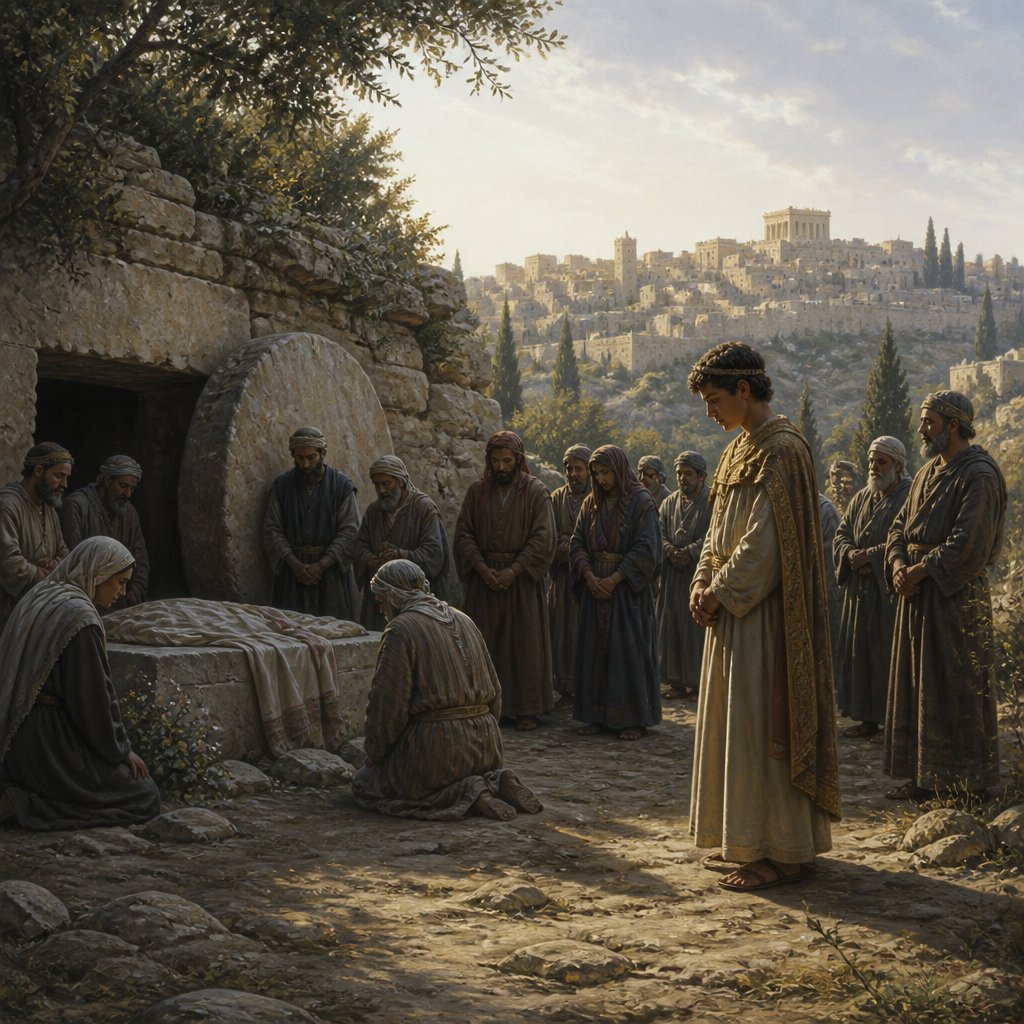
2 Kings 10:35 (KJV) says, "And Jehu slept with his fathers: and they buried him in Samaria. And Jehoahaz his son reigned in his stead."
This verse is part of the historical narrative found in the book of 2 Kings, which is a continuation of the story of the Israelite nation as it unfolds after the reign of King Solomon. The verse is a specific reference to the death of Jehu, a king of Israel, and the beginning of the reign of his son, Jehoahaz.
To truly understand the meaning and significance of this verse, it is necessary to delve into the context and themes of the passage. Throughout the book of 2 Kings, the central theme is the spiritual and moral decline of the Israelite nation. The kings of Israel are consistently portrayed as either disobedient to God and His commandments or as weak rulers who lead the people into idolatry and moral decay. This pattern is no different in the case of Jehu.
Jehu was a military leader who became king of Israel after he was anointed by the prophet Elisha. His rise to power was marked by his zealousness in executing God's judgment against the house of Ahab, a line of kings who had led Israel into idolatry and wickedness. Jehu's actions are seen as fulfilling the prophecy given to Elijah concerning the downfall of the house of Ahab. However, while he initially seemed to be a king who would bring about a spiritual revival in Israel, Jehu's reign ultimately failed to bring about lasting change. He is described as continuing in the sins of Jeroboam, the first king of the northern kingdom of Israel, by leading the people into idolatry and moral corruption.
The death of Jehu marks the end of his reign, and the transition of power to his son, Jehoahaz. The burial of Jehu in Samaria was a customary practice for the kings of Israel, but it also serves as a reminder of the mortality of earthly kings and the fleeting nature of human power and glory. This verse highlights the cyclical nature of leadership in ancient Israel, as one king is replaced by another, often with little lasting impact on the spiritual condition of the nation.
The verse also serves as a poignant reminder of the importance of faithful and obedient leadership. Throughout the history of Israel, the quality of the king often had a direct impact on the spiritual state of the nation. The reign of Jehu, while initially promising, ultimately failed to bring about the changes needed to lead Israel into a faithful relationship with God. This theme of leadership and its impact on the spiritual welfare of the nation is a consistent thread throughout the book of 2 Kings.
Symbolically, the death of Jehu and the beginning of Jehoahaz's reign can be seen as a metaphor for the ongoing struggle for righteousness and faithfulness in the midst of human weakness and sin. The succession of kings in Israel mirrors the ebb and flow of spiritual fervor and moral decay that characterized the nation's history. It serves as a sobering reminder of the need for steadfastness and commitment to God's commands in the face of the allure of worldly power and the corruption of human nature.
In conclusion, 2 Kings 10:35 encapsulates the broader themes of the book of 2 Kings, highlighting the spiritual and moral decline of Israel and the importance of faithful leadership. It serves as a poignant reminder of the fleeting nature of human power and the need for unwavering commitment to God's commands in the face of the allure of worldly influence. The verse ultimately points to the need for a leader who will faithfully guide the people in obedience to God, a theme that is fulfilled in the person of Jesus Christ, the ultimate leader and king who brings about a lasting transformation in the hearts of His people.
Get our apps


Artwork for 2 Kings 10:35

2 Kings 10:35 - "And Jehu slept with his fathers: and they buried him in Samaria. And Jehoahaz his son reigned in his stead."

"And Jehu slept with his fathers: and they buried him in Samaria. And Jehoahaz his son reigned in his stead." - 2 Kings 10:35

2 Chronicles 35:10

2 Chronicles 35:27 - "And his deeds, first and last, behold, they are written in the book of the kings of Israel and Judah."

2 Chronicles 35:10 - "So the service was prepared, and the priests stood in their place, and the Levites in their courses, according to the king's commandment."

2 Kings 9:35 - "And they went to bury her: but they found no more of her than the skull, and the feet, and the palms of her hands."

1 Kings 2:35 - "And the king put Benaiah the son of Jehoiada in his room over the host: and Zadok the priest did the king put in the room of Abiathar."

2 Kings 18:35 - "Who are they among all the gods of the countries, that have delivered their country out of mine hand, that the LORD should deliver Jerusalem out of mine hand?"

2 Kings 15:35 - "¶ Howbeit the high places were not removed: the people sacrificed and burned incense still in the high places. He built the higher gate of the house of the LORD."

2 Kings 4:35 - "Then he returned, and walked in the house to and fro; and went up, and stretched himself upon him: and the child sneezed seven times, and the child opened his eyes."

2 Kings 3:10 - "And the king of Israel said, Alas! that the LORD hath called these three kings together, to deliver them into the hand of Moab!"

2 Kings 10:28 - "Thus Jehu destroyed Baal out of Israel."

2 Kings 21:10 - "¶ And the LORD spake by his servants the prophets, saying,"

2 Kings 10:4 - "But they were exceedingly afraid, and said, Behold, two kings stood not before him: how then shall we stand?"

2 Kings 10:34 - "Now the rest of the acts of Jehu, and all that he did, and all his might, are they not written in the book of the chronicles of the kings of Israel?"

2 Kings 10:20 - "And Jehu said, Proclaim a solemn assembly for Baal. And they proclaimed it."

2 Kings 19:35 - "¶ And it came to pass that night, that the angel of the LORD went out, and smote in the camp of the Assyrians an hundred fourscore and five thousand: and when they arose early in the morning, behold, they were all dead corpses."

2 Kings 17:35 - "With whom the LORD had made a covenant, and charged them, saying, Ye shall not fear other gods, nor bow yourselves to them, nor serve them, nor sacrifice to them:"

"Thus Jehu destroyed Baal out of Israel." - 2 Kings 10:28

1 Kings 2:10 - "So David slept with his fathers, and was buried in the city of David."

2 Kings 10:26 - "And they brought forth the images out of the house of Baal, and burned them."

"And his deeds, first and last, behold, they are written in the book of the kings of Israel and Judah." - 2 Chronicles 35:27

Isaiah 35:8-10

Mark 10:35-45

Mark 10:35-45

Ezra 10:35 - "Benaiah, Bedeiah, Chelluh,"

2 Kings 10:12 - "¶ And he arose and departed, and came to Samaria. And as he was at the shearing house in the way,"

Mark 10:35-45

Mark 10:35-45

Psalms 2:10 - "Be wise now therefore, O ye kings: be instructed, ye judges of the earth."