What does 2 Kings 12:8 mean?
“And the priests consented to receive no more money of the people, neither to repair the breaches of the house.” — 2 Kings 12:8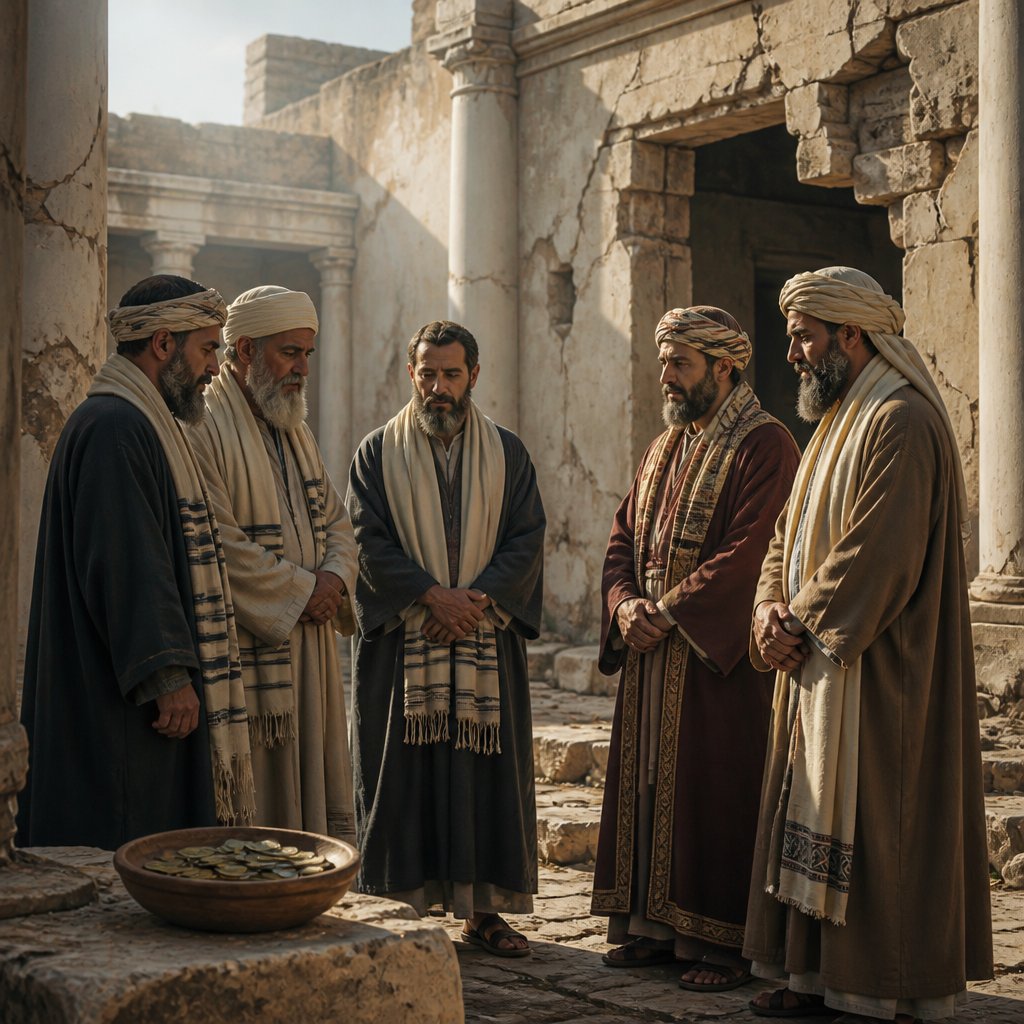
The verse 2 Kings 12:8 from the King James Version of the Bible states: "And the priests consented to receive no more money of the people, neither to repair the breaches of the house."
This verse comes from the second book of Kings, which is a historical narrative in the Old Testament. It recounts the reigns of various Israelite kings, focusing primarily on the kings of Judah and Israel. In this particular verse, we see a moment of reform during the reign of Joash, the king of Judah.
To fully understand the context and meaning of this verse, it is important to look at the preceding verses. In 2 Kings 12:4-6, it is described how Joash initiated a restoration project for the temple of the Lord. He directed the priests to collect money from the people in order to repair the temple and restore it to its former glory. However, in verse 7, we learn that the repairs had not been made in over twenty-three years since the temple had fallen into disrepair. It is evident from these verses that the temple, which was meant to be a place of worship and reverence, had been neglected and its upkeep had been overlooked.
Verse 8 signifies a pivotal moment in this narrative. The priests, upon realizing the condition of the temple and the financial burden it placed on the people, consented to cease collecting money from the people for its repairs. This decision was a significant shift in their approach to the temple's maintenance.
One of the central themes of this verse is the responsibility of religious leaders to steward the resources of the faithful. The priests recognized that the continual collection of funds for the temple's repair had become a burden on the people. Their consent to receive no more money reflected a commitment to alleviating this burden and responsibly managing the resources entrusted to them.
Another important theme in this verse is the concept of stewardship. The temple was more than just a physical structure; it was a spiritual symbol and the center of religious life for the Israelites. By allowing it to fall into disrepair, the religious leaders had neglected their responsibility to care for a place of worship and holiness. This verse serves as a reminder of the importance of stewardship, not only of material possessions but also of spiritual and communal assets.
Symbolism can also be found in this verse. The "breaches of the house" can be interpreted not only as the physical damages to the temple but also as the spiritual and communal ruptures that occurred as a result of its neglect. The decision of the priests to cease collecting money can be seen as a step towards repairing these breaches, mending the relationship between the religious leadership and the people they serve.
In conclusion, 2 Kings 12:8 presents a moment of reform and renewal in the history of ancient Israel. It underscores the themes of responsibility, stewardship, and the spiritual significance of physical structures. The symbolism in this verse emphasizes the importance of maintaining spiritual and communal integrity. Ultimately, it serves as a timeless lesson on the obligations of religious leaders and the importance of caring for sacred spaces.
Get our apps


Artwork for 2 Kings 12:8

2 Kings 12:8 - "And the priests consented to receive no more money of the people, neither to repair the breaches of the house."
"And the priests consented to receive no more money of the people, neither to repair the breaches of the house." - 2 Kings 12:8

2 Kings 12:12 - "And to masons, and hewers of stone, and to buy timber and hewed stone to repair the breaches of the house of the LORD, and for all that was laid out for the house to repair it."

1 Kings 8:12 - "¶ Then spake Solomon, The LORD said that he would dwell in the thick darkness."

2 KINGS 8:29

2 Kings 12:19 - "¶ And the rest of the acts of Joash, and all that he did, are they not written in the book of the chronicles of the kings of Judah?"

2 Kings 8:23 - "And the rest of the acts of Joram, and all that he did, are they not written in the book of the chronicles of the kings of Judah?"

2 Kings 12:14 - "But they gave that to the workmen, and repaired therewith the house of the LORD."

2 Kings 13:8 - "¶ Now the rest of the acts of Jehoahaz, and all that he did, and his might, are they not written in the book of the chronicles of the kings of Israel?"

2 Kings 25:12 - "But the captain of the guard left of the poor of the land to be vinedressers and husbandmen."

2 Kings 12:16 - "The trespass money and sin money was not brought into the house of the LORD: it was the priests'."

Judges 8:12 - "And when Zebah and Zalmunna fled, he pursued after them, and took the two kings of Midian, Zebah and Zalmunna, and discomfited all the host."

2 Kings 17:8 - "And walked in the statutes of the heathen, whom the LORD cast out from before the children of Israel, and of the kings of Israel, which they had made."

2 Kings 8:18 - "And he walked in the way of the kings of Israel, as did the house of Ahab: for the daughter of Ahab was his wife: and he did evil in the sight of the LORD."

2 Kings 12:2 - "And Jehoash did that which was right in the sight of the LORD all his days wherein Jehoiada the priest instructed him."

2 Kings 10:12 - "¶ And he arose and departed, and came to Samaria. And as he was at the shearing house in the way,"

2 Kings 13:12 - "And the rest of the acts of Joash, and all that he did, and his might wherewith he fought against Amaziah king of Judah, are they not written in the book of the chronicles of the kings of Israel?"

2 Kings 14:12 - "And Judah was put to the worse before Israel; and they fled every man to their tents."

2 Kings 12:6 - "But it was so, that in the three and twentieth year of king Jehoash the priests had not repaired the breaches of the house."

2 Kings 16:12 - "And when the king was come from Damascus, the king saw the altar: and the king approached to the altar, and offered thereon."

2 Kings 8:8 - "And the king said unto Hazael, Take a present in thine hand, and go, meet the man of God, and enquire of the LORD by him, saying, Shall I recover of this disease?"

2 Kings 8:20 - "¶ In his days Edom revolted from under the hand of Judah, and made a king over themselves."

2 Kings 16:8 - "And Ahaz took the silver and gold that was found in the house of the LORD, and in the treasures of the king's house, and sent it for a present to the king of Assyria."

2 Kings 8:2 - "And the woman arose, and did after the saying of the man of God: and she went with her household, and sojourned in the land of the Philistines seven years."

1 Kings 2:12 - "¶ Then sat Solomon upon the throne of David his father; and his kingdom was established greatly."

2 Kings 12:15 - "Moreover they reckoned not with the men, into whose hand they delivered the money to be bestowed on workmen: for they dealt faithfully."

2 kings 2:12 in which elisha is kneeling down while receiving brown old cloak

2 Kings 3:12 - "And Jehoshaphat said, The word of the LORD is with him. So the king of Israel and Jehoshaphat and the king of Edom went down to him."

2 Kings 8:11 - "And he settled his countenance stedfastly, until he was ashamed: and the man of God wept."
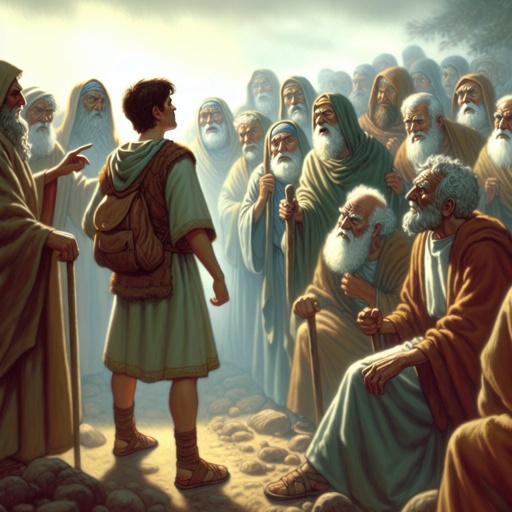
1 Kings 12:8 - "But he forsook the counsel of the old men, which they had given him, and consulted with the young men that were grown up with him, and which stood before him:"