What does 2 Kings 15:35 mean?
“Howbeit the high places were not removed: the people sacrificed and burned incense still in the high places. He built the higher gate of the house of the LORD.” — 2 Kings 15:35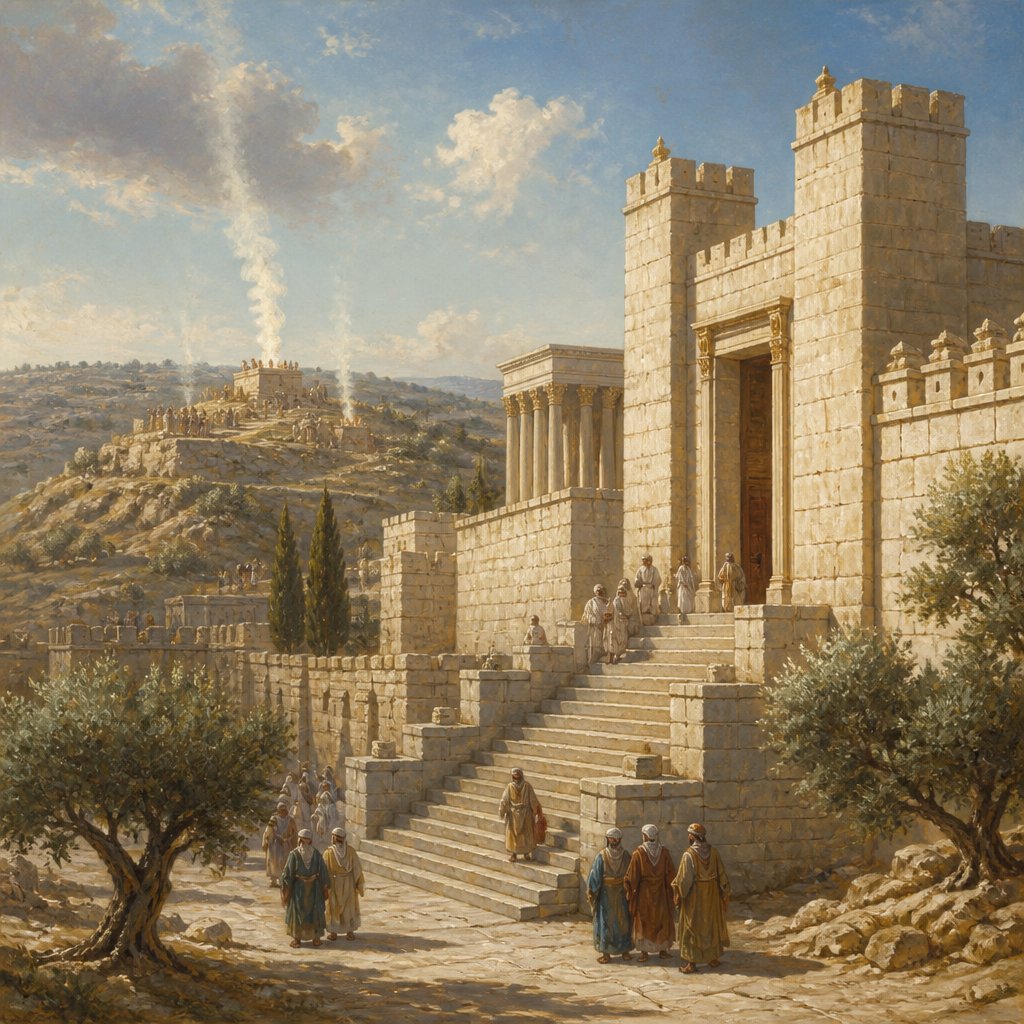
2 Kings 15:35 in the King James Version states, "Howbeit the high places were not removed: the people sacrificed and burnt incense still in the high places. He built the higher gate of the house of the Lord."
This verse comes from a chapter in the Book of Kings that details the reigns of various kings of Judah and Israel. In this particular verse, it refers to the reign of Jotham, who became king of Judah after his father Uzziah. Jotham is described as a king who did what was right in the eyes of the Lord, but the high places where the people offered sacrifices were not removed.
The high places were locations where people worshipped and offered sacrifices to idols, despite the fact that God had commanded them to worship only at the designated place, the temple in Jerusalem. The failure to remove these high places was a persistent problem throughout the history of Israel and Judah. It was a direct violation of God's law, and it led to the corruption and idolatry of the people.
In the context of this verse, Jotham is praised for his righteousness, but his failure to remove the high places reflects a compromise with the idolatrous practices of the people. This compromise was a recurring issue among the kings of Judah and Israel, as they often struggled to fully commit to the exclusive worship of Yahweh.
The implication of the verse is that despite Jotham's initial commitment to righteousness, his failure to remove the high places meant that the people continued to engage in idolatrous practices. The subsequent reigns of his son Ahaz and grandson Hezekiah were marked by further idolatry and unfaithfulness to God. This perpetual cycle of apostasy and reform characterizes much of the history of the two kingdoms of Israel and Judah.
Symbolically, the high places represent the temptations and distractions that pull people away from the true worship of God. The failure to remove these high places symbolizes the compromise and half-heartedness that often characterizes our own efforts to follow God faithfully. It serves as a cautionary tale about the dangers of compromise and the need for wholehearted devotion to God.
The higher gate of the house of the Lord, which is mentioned in the latter part of the verse, symbolizes a physical improvement or restoration of the temple. This act of construction demonstrates Jotham's commitment to the worship of God, as he sought to beautify and enhance the place of worship. However, the fact that the high places were not removed takes away from the significance of this construction, as it is overshadowed by the persistence of idolatry among the people.
Overall, 2 Kings 15:35 serves as a sober reminder of the consequences of compromise and the importance of wholehearted devotion to God. It highlights the persistent struggle of God's people to remain faithful amidst the temptations of idolatry and the constant need for reform and renewal. Ultimately, the verse points to the need for unwavering commitment to God and the removal of anything that hinders true worship.
Get our apps


Artwork for 2 Kings 15:35

2 Kings 15:35 - "¶ Howbeit the high places were not removed: the people sacrificed and burned incense still in the high places. He built the higher gate of the house of the LORD."
"¶ Howbeit the high places were not removed: the people sacrificed and burned incense still in the high places. He built the higher gate of the house of the LORD." - 2 Kings 15:35

2 Chronicles 35:27 - "And his deeds, first and last, behold, they are written in the book of the kings of Israel and Judah."

2 Kings 15:15 - "And the rest of the acts of Shallum, and his conspiracy which he made, behold, they are written in the book of the chronicles of the kings of Israel."

2 Kings 9:35 - "And they went to bury her: but they found no more of her than the skull, and the feet, and the palms of her hands."

2 Kings 10:35 - "And Jehu slept with his fathers: and they buried him in Samaria. And Jehoahaz his son reigned in his stead."

2 Kings 3:15

2 Kings 3:15

1 Kings 2:35 - "And the king put Benaiah the son of Jehoiada in his room over the host: and Zadok the priest did the king put in the room of Abiathar."

2 Kings 3:15

2 Kings 15:11 - "And the rest of the acts of Zachariah, behold, they are written in the book of the chronicles of the kings of Israel."
2 Kings 15:6 - "And the rest of the acts of Azariah, and all that he did, are they not written in the book of the chronicles of the kings of Judah?"

2 Kings 15:21 - "¶ And the rest of the acts of Menahem, and all that he did, are they not written in the book of the chronicles of the kings of Israel?"

II Kings 15:35 the high places were not removed: the people sacrificed and burned incense still in the high places.
2 Kings 15:31 - "And the rest of the acts of Pekah, and all that he did, behold, they are written in the book of the chronicles of the kings of Israel."

2 Kings 15:36 - "¶ Now the rest of the acts of Jotham, and all that he did, are they not written in the book of the chronicles of the kings of Judah?"

2 Kings 15:26 - "And the rest of the acts of Pekahiah, and all that he did, behold, they are written in the book of the chronicles of the kings of Israel."

2 Kings 18:35 - "Who are they among all the gods of the countries, that have delivered their country out of mine hand, that the LORD should deliver Jerusalem out of mine hand?"

2 Kings 4:35 - "Then he returned, and walked in the house to and fro; and went up, and stretched himself upon him: and the child sneezed seven times, and the child opened his eyes."

2 Kings 15:29 show the army and attack

2 Samuel 15:35 - "And hast thou not there with thee Zadok and Abiathar the priests? therefore it shall be, that what thing soever thou shalt hear out of the king's house, thou shalt tell it to Zadok and Abiathar the priests."

Joshua 15:35 - "Jarmuth, and Adullam, Socoh, and Azekah,"

2 Kings 18:15 - "And Hezekiah gave him all the silver that was found in the house of the LORD, and in the treasures of the king's house."

2 Kings 19:35 - "¶ And it came to pass that night, that the angel of the LORD went out, and smote in the camp of the Assyrians an hundred fourscore and five thousand: and when they arose early in the morning, behold, they were all dead corpses."

2 Kings 17:35 - "With whom the LORD had made a covenant, and charged them, saying, Ye shall not fear other gods, nor bow yourselves to them, nor serve them, nor sacrifice to them:"
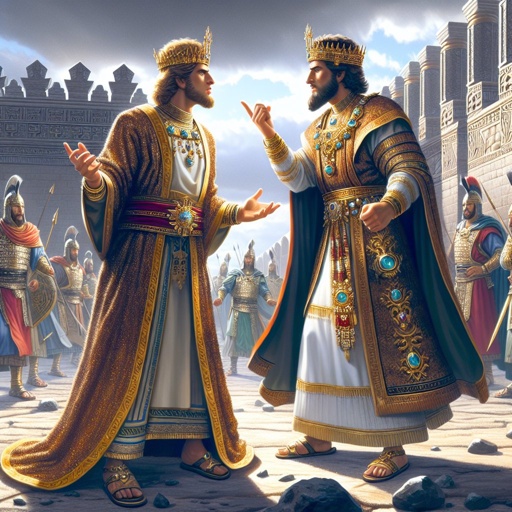
2 Kings 14:15 - "¶ Now the rest of the acts of Jehoash which he did, and his might, and how he fought with Amaziah king of Judah, are they not written in the book of the chronicles of the kings of Israel?"

2 Kings 15:22 - "And Menahem slept with his fathers; and Pekahiah his son reigned in his stead."

2 Chronicles 35:15 - "And the singers the sons of Asaph were in their place, according to the commandment of David, and Asaph, and Heman, and Jeduthun the king's seer; and the porters waited at every gate; they might not depart from their service; for their brethren the Levites prepared for them."

"And his deeds, first and last, behold, they are written in the book of the kings of Israel and Judah." - 2 Chronicles 35:27

2 Kings 15:1 - "In the twenty and seventh year of Jeroboam king of Israel began Azariah son of Amaziah king of Judah to reign."