What does 2 Kings 15:4 mean?
“Save that the high places were not removed: the people sacrificed and burnt incense still on the high places.” — 2 Kings 15:4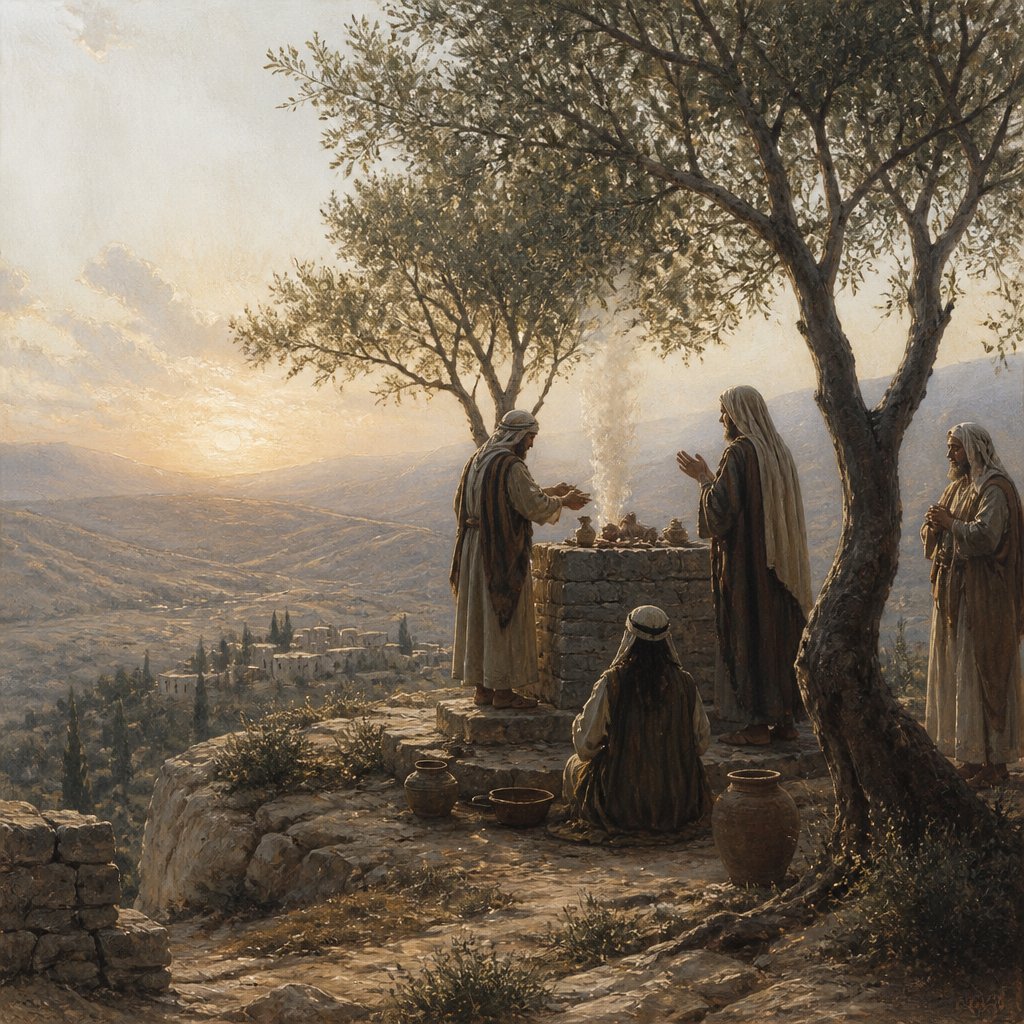
2 Kings 15:4 (KJV) states, “Save that the high places were not removed: the people sacrificed and burnt incense still on the high places.”
This verse is part of the historical account of the kings of Judah and Israel in the Old Testament. It specifically refers to King Azariah, also known as Uzziah, who reigned in Judah for 52 years. The verse highlights a recurring theme in the history of the Israelites: the struggle to fully obey God's commandments, particularly in regards to the worship of Him.
The verse begins with the assertion that King Azariah did what was right in the sight of the Lord, in accordance with all that his father Amaziah had done. This implies that Azariah sought to follow the ways of the Lord and lead the people of Judah in righteousness. However, the verse then qualifies this statement by noting that although Azariah was obedient in many aspects, he did not remove the high places where idolatrous worship often took place.
The high places were locations where pagan rituals and sacrifices were offered to false gods, in direct violation of the First Commandment. Despite Azariah's overall commitment to the Lord, he failed to fully eradicate these places of worship, which allowed for the continuation of idolatrous practices among the people.
The overarching theme of this verse is the tension between obedience and compromise in the worship of God. Throughout the Old Testament, the issue of idolatry consistently plagued the people of Israel and Judah. God's desire for His people to worship Him alone is emphasized in numerous passages, and the presence of idolatry was a constant obstacle to their relationship with Him.
The failure to remove the high places symbolizes a broader problem within the spiritual and moral fabric of Judah. It signifies a lack of wholehearted devotion to God and a tendency to accommodate elements of the surrounding pagan culture. This compromise ultimately leads to the erosion of faith and the dilution of true worship.
In a broader context, this verse serves as a cautionary tale for believers today. It highlights the danger of allowing compromise to infiltrate our worship and spiritual lives, and the importance of wholehearted obedience to God. It challenges us to examine our own hearts and consider whether there are areas in our lives where we, like Azariah, have allowed "high places" to remain – places of compromise and idolatry that hinder our relationship with God.
The verse also prompts us to reflect on the consistency of our obedience to God. Azariah's partial obedience ultimately led to a weakening of his reign and the spiritual decline of the people. Similarly, when we are selective in our obedience and fail to fully align our lives with God's commands, we risk jeopardizing our spiritual well-being and that of those around us.
Ultimately, 2 Kings 15:4 serves as a reminder of the importance of wholehearted devotion and obedience to God. It challenges us to consider the "high places" in our own lives and to seek to remove anything that hinders our worship and faithfulness to the Lord. Through this verse, we are called to pursue genuine and unwavering obedience, honoring God with all aspects of our lives.
Get our apps


Artwork for 2 Kings 15:4

2 Kings 15:4 - "Save that the high places were not removed: the people sacrificed and burnt incense still on the high places."
"Save that the high places were not removed: the people sacrificed and burnt incense still on the high places." - 2 Kings 15:4

2 Kings 4:15 - "And he said, Call her. And when he had called her, she stood in the door."

2 Kings 15:15 - "And the rest of the acts of Shallum, and his conspiracy which he made, behold, they are written in the book of the chronicles of the kings of Israel."

2 Kings 3:15

2 Kings 3:15

2 Kings 3:15

2 Kings 15:11 - "And the rest of the acts of Zachariah, behold, they are written in the book of the chronicles of the kings of Israel."

2 Kings 4:4-5

1 Kings 4:15 - "Ahimaaz was in Naphtali; he also took Basmath the daughter of Solomon to wife:"

2 Kings 15:6 - "And the rest of the acts of Azariah, and all that he did, are they not written in the book of the chronicles of the kings of Judah?"

2 Kings 15:21 - "¶ And the rest of the acts of Menahem, and all that he did, are they not written in the book of the chronicles of the kings of Israel?"

"And he said, Call her. And when he had called her, she stood in the door." - 2 Kings 4:15

2 Kings 15:31 - "And the rest of the acts of Pekah, and all that he did, behold, they are written in the book of the chronicles of the kings of Israel."

2 Kings 15:36 - "¶ Now the rest of the acts of Jotham, and all that he did, are they not written in the book of the chronicles of the kings of Judah?"

2 Kings 15:26 - "And the rest of the acts of Pekahiah, and all that he did, behold, they are written in the book of the chronicles of the kings of Israel."

2 Kings 15:29 show the army and attack

1 Kings 15:4 - "Nevertheless for David's sake did the LORD his God give him a lamp in Jerusalem, to set up his son after him, and to establish Jerusalem:"

2 Kings 18:15 - "And Hezekiah gave him all the silver that was found in the house of the LORD, and in the treasures of the king's house."

2 Kings 14:15 - "¶ Now the rest of the acts of Jehoash which he did, and his might, and how he fought with Amaziah king of Judah, are they not written in the book of the chronicles of the kings of Israel?"

2 Chronicles 4:15 - "One sea, and twelve oxen under it."

2 Kings 10:4 - "But they were exceedingly afraid, and said, Behold, two kings stood not before him: how then shall we stand?"

2 Kings 15:22 - "And Menahem slept with his fathers; and Pekahiah his son reigned in his stead."

2 Kings 15:1 - "In the twenty and seventh year of Jeroboam king of Israel began Azariah son of Amaziah king of Judah to reign."

"And the rest of the acts of Shallum, and his conspiracy which he made, behold, they are written in the book of the chronicles of the kings of Israel." - 2 Kings 15:15

1 Kings 15:2 - "Three years reigned he in Jerusalem. And his mother's name was Maachah, the daughter of Abishalom."

2 Kings 12:15 - "Moreover they reckoned not with the men, into whose hand they delivered the money to be bestowed on workmen: for they dealt faithfully."

2 Kings 15:37 - "In those days the LORD began to send against Judah Rezin the king of Syria, and Pekah the son of Remaliah."

2 Kings 15:32 - "¶ In the second year of Pekah the son of Remaliah king of Israel began Jotham the son of Uzziah king of Judah to reign."

"And the rest of the acts of Zachariah, behold, they are written in the book of the chronicles of the kings of Israel." - 2 Kings 15:11