What does 2 Kings 18:2 mean?
"Twenty and five years old was he when he began to reign; and he reigned twenty and nine years in Jerusalem. His mother's name also was Abi, the daughter of Zachariah." - 2 Kings 18:2
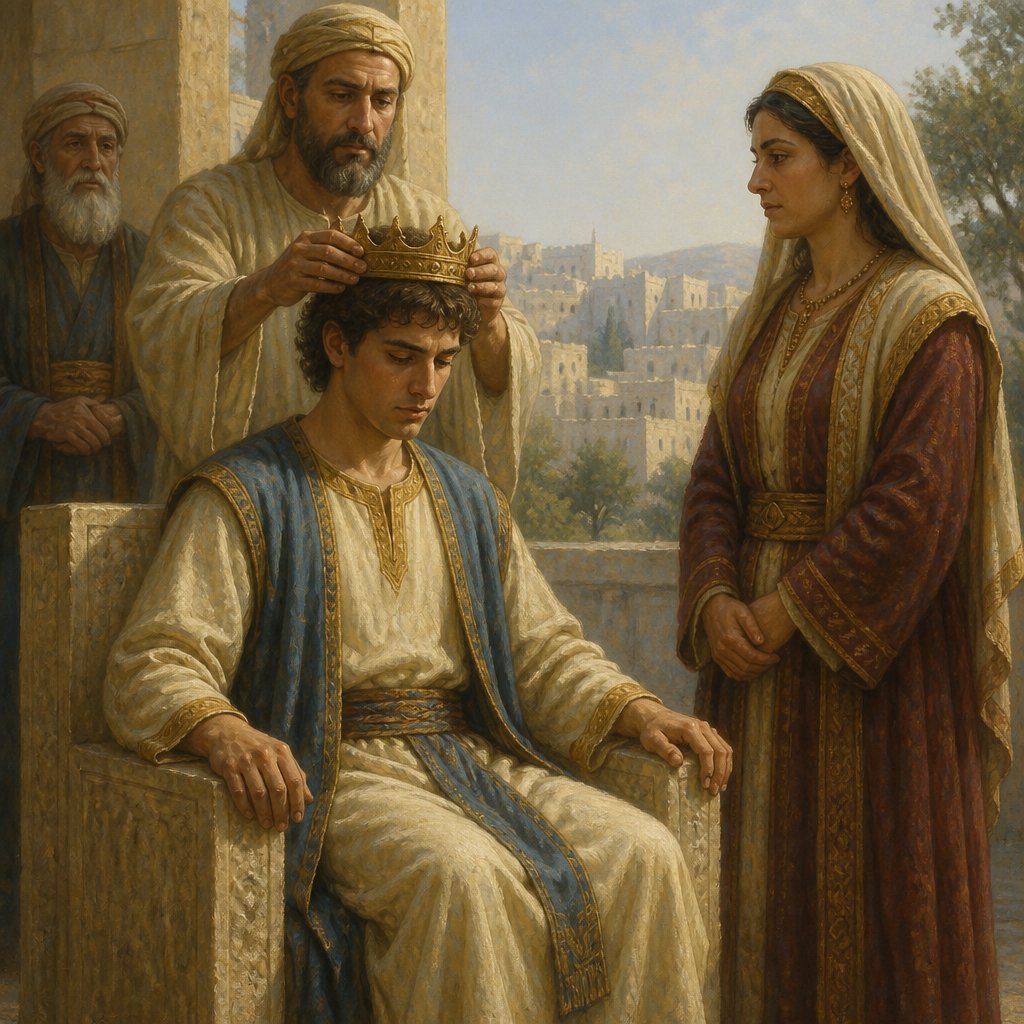
2 Kings 18:2 (KJV) - "Twenty and five years old was he when he began to reign; and he reigned twenty and nine years in Jerusalem. His mother's name also was Abi, the daughter of Zachariah."
This verse is part of the historical account of King Hezekiah's reign in Jerusalem, the capital of the Kingdom of Judah. It provides us with important details about his accession to the throne, his reign, and his mother's identity. In this commentary, we will explore the historical and biblical context of this verse, its significance in the narrative of the Old Testament, and the themes and symbolism it carries.
Historical and Biblical Context:
The book of 2 Kings is part of the historical narrative of the Hebrew Bible, chronicling the history of the kingdoms of Israel and Judah. The verse in question falls within a larger section focusing on the reign of King Hezekiah. Hezekiah was the son of King Ahaz, who was known for his wickedness and idolatry. Despite being born into a lineage of sinful kings, Hezekiah is distinguished as a righteous and faithful king in the eyes of the Lord.
The verse emphasizes that Hezekiah was only twenty-five years old when he ascended to the throne, highlighting his youth and the challenges he faced as a young ruler. It also records the length of his reign, which lasted for twenty-nine years. Furthermore, it identifies his mother as Abi, the daughter of Zachariah, providing important genealogical information.
Significance and Themes:
The reign of King Hezekiah is a pivotal period in the history of Judah. He is remembered for his commitment to removing idolatry and restoring the worship of Yahweh in the kingdom. Despite the widespread apostasy that characterized the reign of his father, Hezekiah's dedication to God had a profound impact on the spiritual renewal of the nation. His story serves as a powerful example of individual and national repentance, emphasizing the importance of faithfulness to God and His commandments.
The verse also highlights the significance of Hezekiah's youth in his ascent to power. It demonstrates that age is not a barrier to effective leadership, especially when one is guided by God's wisdom and righteousness. Hezekiah's youthfulness, combined with his unwavering devotion to the Lord, challenges the notion that wisdom and leadership are exclusively associated with age and experience.
Furthermore, the mention of Hezekiah's mother, Abi, serves as a reminder of the influential role of women in biblical history. While often overshadowed by the prominence of male figures, the women in the Bible play crucial roles in shaping the destinies of their families and nations. Abi's identity also underscores the importance of lineage and heritage in biblical narratives, as the ancestry of key figures often carries spiritual and historical significance.
Symbolism:
The age at which Hezekiah began to reign symbolizes the potential for youthful leadership and the capacity for spiritual renewal, even in the face of prevailing ungodliness. It serves as a reminder that God can use individuals of any age to bring about His purposes and impact the lives of others.
The length of Hezekiah's reign, twenty-nine years, holds symbolic significance as well. In biblical numerology, the number twenty-nine is associated with departure from spiritual bondage and the beginning of spiritual maturity. It represents the completion of a cycle and the emergence of a new phase in one's spiritual journey. Hezekiah's reign exemplifies this idea, as he led Judah away from idolatry and towards a renewed covenant with God.
In conclusion, 2 Kings 18:2 provides valuable insights into the reign of King Hezekiah and its broader significance in biblical history. It emphasizes the themes of spiritual renewal, youthful leadership, and the influential role of women. Furthermore, it carries symbolic meaning that underscores the spiritual and historical significance of Hezekiah's reign. As readers delve into the rich tapestry of biblical narratives, they are reminded of the timeless lessons and truths that continue to resonate through the ages.
Have questions about 2 Kings 18:2?
Dive deeper into this scripture with Bible Chat — an AI-powered tool for exploring God's Word through conversation. Ask questions, get context, and grow in your understanding of the Bible.
Get Our Apps


2 Kings 18:2 Artwork

2 Kings 18:2 - "Twenty and five years old was he when he began to reign; and he reigned twenty and nine years in Jerusalem. His mother's name also was Abi, the daughter of Zachariah."
"Twenty and five years old was he when he began to reign; and he reigned twenty and nine years in Jerusalem. His mother's name also was Abi, the daughter of Zachariah." - 2 Kings 18:2

2 Kings 14:18 - "And the rest of the acts of Amaziah, are they not written in the book of the chronicles of the kings of Judah?"

2 Kings 1:18 - "Now the rest of the acts of Ahaziah which he did, are they not written in the book of the chronicles of the kings of Israel?"

1 Kings 2:18 - "And Bath-sheba said, Well; I will speak for thee unto the king."

2 Kings 2:18 - "And when they came again to him, (for he tarried at Jericho,) he said unto them, Did I not say unto you, Go not?"

1 Kings 18:2 - "And Elijah went to shew himself unto Ahab. And there was a sore famine in Samaria."

2 Kings 18:15 - "And Hezekiah gave him all the silver that was found in the house of the LORD, and in the treasures of the king's house."

2 Kings 18:36 - "But the people held their peace, and answered him not a word: for the king's commandment was, saying, Answer him not."

2 Kings 8:18 - "And he walked in the way of the kings of Israel, as did the house of Ahab: for the daughter of Ahab was his wife: and he did evil in the sight of the LORD."

2 Kings 3:18 - "And this is but a light thing in the sight of the LORD: he will deliver the Moabites also into your hand."

2 Kings 18:18 - "And when they had called to the king, there came out to them Eliakim the son of Hilkiah, which was over the household, and Shebna the scribe, and Joah the son of Asaph the recorder."

2 Kings 18:33 - "Hath any of the gods of the nations delivered at all his land out of the hand of the king of Assyria?"

2 Kings 4:18 - "¶ And when the child was grown, it fell on a day, that he went out to his father to the reapers."

2 Kings 16:18 - "And the covert for the sabbath that they had built in the house, and the king's entry without, turned he from the house of the LORD for the king of Assyria."

2 Kings 18:3 - "And he did that which was right in the sight of the LORD, according to all that David his father did."

2 Kings 25:18 - "¶ And the captain of the guard took Seraiah the chief priest, and Zephaniah the second priest, and the three keepers of the door:"

"And the rest of the acts of Amaziah, are they not written in the book of the chronicles of the kings of Judah?" - 2 Kings 14:18

2 Kings 18:5 - "He trusted in the LORD God of Israel; so that after him was none like him among all the kings of Judah, nor any that were before him."

2 Kings 18:8 - "He smote the Philistines, even unto Gaza, and the borders thereof, from the tower of the watchmen to the fenced city."

2 Kings 18:28 - "Then Rabshakeh stood and cried with a loud voice in the Jews' language, and spake, saying, Hear the word of the great king, the king of Assyria:"

2 Kings 18:10 - "And at the end of three years they took it: even in the sixth year of Hezekiah, that is the ninth year of Hoshea king of Israel, Samaria was taken."

2 Kings 18:7 - "And the LORD was with him; and he prospered whithersoever he went forth: and he rebelled against the king of Assyria, and served him not."

2 Kings 18:29 - "Thus saith the king, Let not Hezekiah deceive you: for he shall not be able to deliver you out of his hand:"

2 Kings 18:6 - "For he clave to the LORD, and departed not from following him, but kept his commandments, which the LORD commanded Moses."

2 Kings 18:11 - "And the king of Assyria did carry away Israel unto Assyria, and put them in Halah and in Habor by the river of Gozan, and in the cities of the Medes:"

2 Kings 18:34 - "Where are the gods of Hamath, and of Arpad? where are the gods of Sepharvaim, Hena, and Ivah? have they delivered Samaria out of mine hand?"

2 Kings 17:18 - "Therefore the LORD was very angry with Israel, and removed them out of his sight: there was none left but the tribe of Judah only."

2 Kings 19:18 - "And have cast their gods into the fire: for they were no gods, but the work of men's hands, wood and stone: therefore they have destroyed them."

2 Kings 18:1 - "Now it came to pass in the third year of Hoshea son of Elah king of Israel, that Hezekiah the son of Ahaz king of Judah began to reign."