What does 2 Kings 19:12 mean?
“Have the gods of the nations delivered them which my fathers have destroyed; as Gozan, and Haran, and Rezeph, and the children of Eden which were in Thelasar?” — 2 Kings 19:12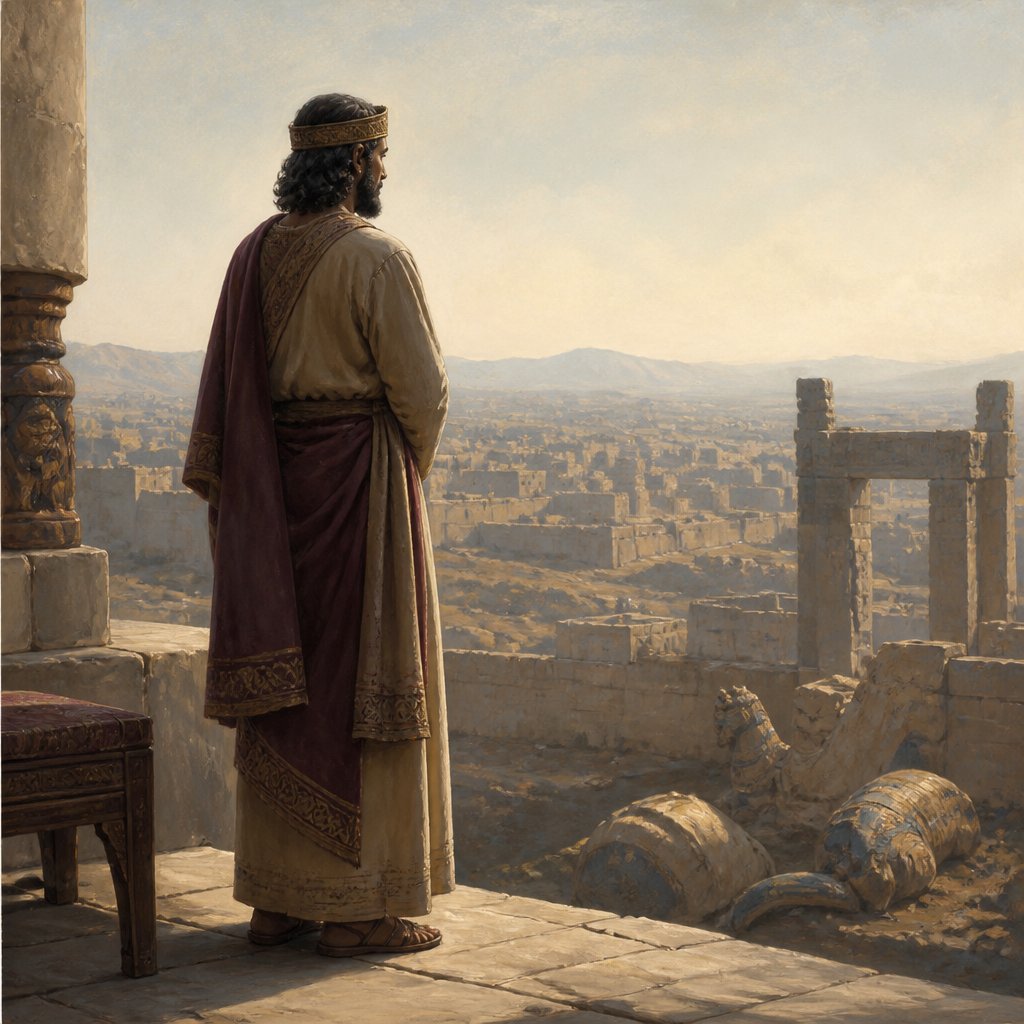
The verse 2 Kings 19:12 in the King James Version of the Bible reads: "Have the gods of the nations delivered them which my fathers have destroyed; as Gozan, and Haran, and Rezeph, and the children of Eden which were in Telassar?"
This verse is part of a larger passage in which the king of Assyria, Sennacherib, is threatening Jerusalem and mocking the people of Judah for placing their trust in God. Sennacherib boasts of the many nations and gods he has conquered and questions the ability of the God of Judah to save them from his impending attack.
The context of this verse is important for understanding its meaning and significance. Sennacherib's threats against Jerusalem are not merely political or militaristic; they are also religious. By questioning the power of the God of Judah, Sennacherib is attempting to undermine the faith and confidence of the people of Judah in their own God. He is essentially challenging the authority and sovereignty of the God of Israel.
The verse also references the gods of the nations that Sennacherib has conquered, including Gozan, Haran, Rezeph, and the children of Eden in Telassar. These were all cities or regions that Sennacherib had conquered and whose gods he believed were unable to protect them from his military might.
In the larger context of the passage, this verse serves to highlight Sennacherib's arrogance and pride, as well as his disregard for the God of Judah. It also sets the stage for the miraculous intervention of God on behalf of Jerusalem, as the subsequent verses reveal.
One of the key themes in this passage is the sovereignty and power of God. Sennacherib's mocking of the God of Judah serves to highlight the stark contrast between the finite and powerless gods of the nations he has conquered and the infinite and omnipotent God of Judah. The verse underscores the futility of placing trust in any gods or powers other than the one true God.
Another important theme in this passage is the faithfulness and protection of God towards His people. Despite Sennacherib's threats and boasting, the God of Judah remains steadfast in His promise to protect and deliver His people. This theme of divine protection and deliverance is a recurring motif throughout the Bible, demonstrating God's unwavering commitment to His people.
The symbolism in this verse lies in the contrast between the false gods of the nations and the one true God of Judah. Sennacherib's conquests and boasting are a symbol of human pride and arrogance, while the God of Judah represents humility, faithfulness, and sovereign authority. The reference to the conquered cities and their gods serves as a reminder of the ultimate futility of placing trust in anything other than the living God.
In conclusion, 2 Kings 19:12 in the King James Version of the Bible is a powerful and evocative verse that highlights the themes of divine sovereignty, faithfulness, and protection. It provides a stark contrast between the false gods of the nations and the one true God of Judah, and serves as a testament to the unwavering commitment of God towards His people. This verse is a powerful reminder of the futility of placing trust in anything other than the living God and the ultimate triumph of His sovereignty.
Get our apps


Artwork for 2 Kings 19:12

2 Kings 19:12 - "Have the gods of the nations delivered them which my fathers have destroyed; as Gozan, and Haran, and Rezeph, and the children of Eden which were in Thelasar?"
"Have the gods of the nations delivered them which my fathers have destroyed; as Gozan, and Haran, and Rezeph, and the children of Eden which were in Thelasar?" - 2 Kings 19:12

2 Kings 12:19 - "¶ And the rest of the acts of Joash, and all that he did, are they not written in the book of the chronicles of the kings of Judah?"

"¶ And the rest of the acts of Joash, and all that he did, are they not written in the book of the chronicles of the kings of Judah?" - 2 Kings 12:19

2 Kings 19:2

2 Kings 19:2

2 Kings 19:2

1 Kings 12:19 - "So Israel rebelled against the house of David unto this day."

2 Kings 19:17 - "Of a truth, LORD, the kings of Assyria have destroyed the nations and their lands,"

1 Kings 19:12 - "And after the earthquake a fire; but the LORD was not in the fire: and after the fire a still small voice."

2 Kings 3:16-19

2 Kings 16:19 - "¶ Now the rest of the acts of Ahaz which he did, are they not written in the book of the chronicles of the kings of Judah?"

2 Kings 19:5 - "So the servants of king Hezekiah came to Isaiah."

2 Kings 19:36 - "So Sennacherib king of Assyria departed, and went and returned, and dwelt at Nineveh."

2 Kings 19:13 - "Where is the king of Hamath, and the king of Arpad, and the king of the city of Sepharvaim, of Hena, and Ivah?"

1 Kings 19:11-12 – "The Lord said, 'Go out and stand on the mountain in the presence of the Lord, for the Lord is about to pass by.'"

1 Kings 19:11-12 – "The Lord said, 'Go out and stand on the mountain in the presence of the Lord, for the Lord is about to pass by.'"

2 Kings 12:14 - "But they gave that to the workmen, and repaired therewith the house of the LORD."

2 Kings 19:11 - "Behold, thou hast heard what the kings of Assyria have done to all lands, by destroying them utterly: and shalt thou be delivered?"
!["And after the earthquake a fire; [but] the LORD [was] not in the fire: and after the fire a still small voice." - 1 Kings 19:12](https://media.bible.art/472a453b-456d-4823-9472-470880d0f467-thumbnail.jpg)
"And after the earthquake a fire; [but] the LORD [was] not in the fire: and after the fire a still small voice." - 1 Kings 19:12

2 Kings 25:12 - "But the captain of the guard left of the poor of the land to be vinedressers and husbandmen."

2 Kings 19:2 - "And he sent Eliakim, which was over the household, and Shebna the scribe, and the elders of the priests, covered with sackcloth, to Isaiah the prophet the son of Amoz."

2 Kings 19:34 - "For I will defend this city, to save it, for mine own sake, and for my servant David's sake."

"Of a truth, LORD, the kings of Assyria have destroyed the nations and their lands," - 2 Kings 19:17

"So Israel rebelled against the house of David unto this day." - 1 Kings 12:19

2 Kings 12:16 - "The trespass money and sin money was not brought into the house of the LORD: it was the priests'."

2 Kings 12:12 - "And to masons, and hewers of stone, and to buy timber and hewed stone to repair the breaches of the house of the LORD, and for all that was laid out for the house to repair it."

2 Kings 24:19 - "And he did that which was evil in the sight of the LORD, according to all that Jehoiakim had done."

2 Kings 17:19 - "Also Judah kept not the commandments of the LORD their God, but walked in the statutes of Israel which they made."

2 Kings 12:2 - "And Jehoash did that which was right in the sight of the LORD all his days wherein Jehoiada the priest instructed him."