What does 2 Kings 19:30 mean?
“And the remnant that is escaped of the house of Judah shall yet again take root downward, and bear fruit upward.” — 2 Kings 19:30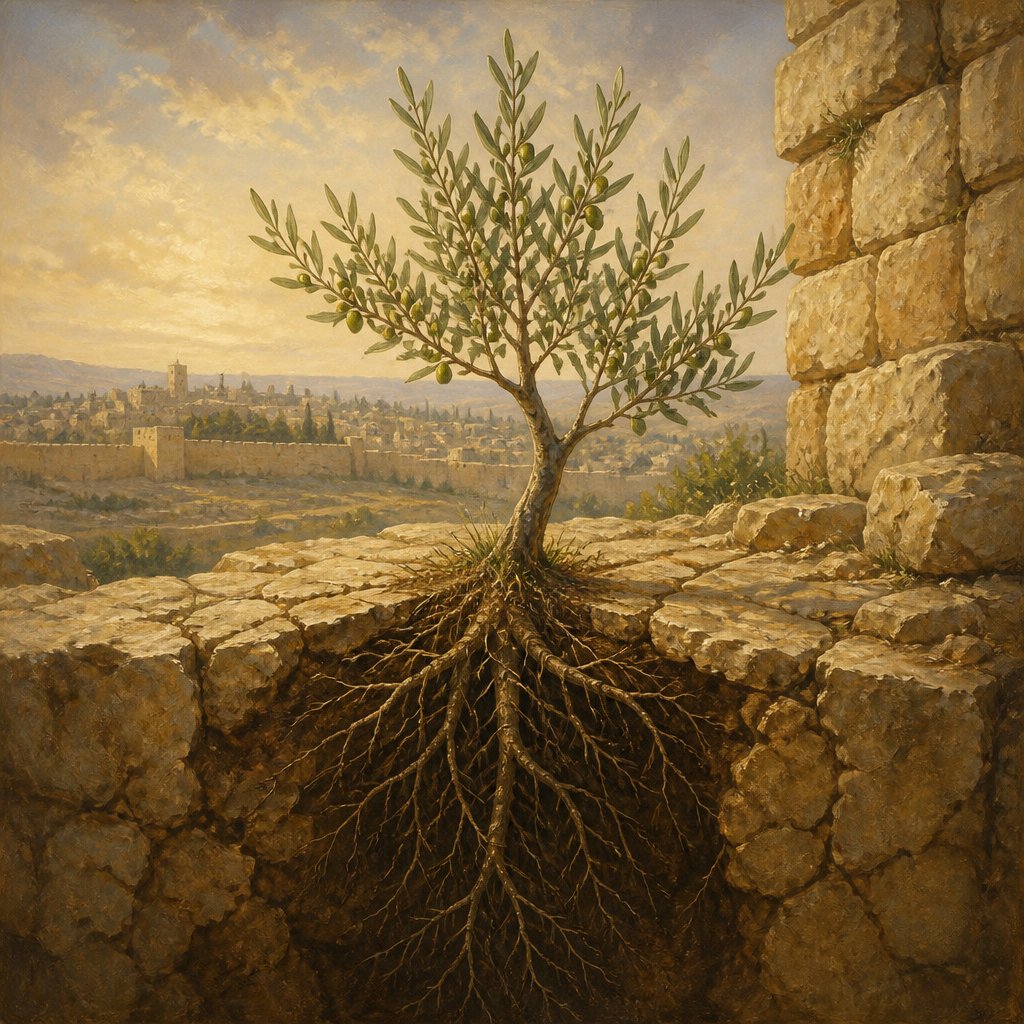
"2 Kings 19:30 - And the remnant that is escaped of the house of Judah shall yet again take root downward, and bear fruit upward."
This verse from the book of 2 Kings is part of the Old Testament, and it comes at a pivotal moment in the history of the nation of Judah. At this point in the text, the Assyrian king Sennacherib has invaded the land of Judah and laid siege to the city of Jerusalem. King Hezekiah, the ruler of Judah at the time, has appealed to the prophet Isaiah for guidance and reassurance in the face of this imminent threat. The verse in question is part of Isaiah's response to Hezekiah, offering a message of hope and promise in the midst of a dire situation.
The verse begins with the phrase "And the remnant that is escaped of the house of Judah," referring to the small number of survivors who have managed to escape the devastation and destruction wrought by the Assyrian invasion. This "remnant" represents the enduring spirit and resilience of the people of Judah, even in the face of overwhelming adversity. Despite the overwhelming odds stacked against them, this remnant is not completely destroyed, but rather endures and perseveres in the face of unimaginable hardship.
The verse goes on to declare that this remnant "shall yet again take root downward, and bear fruit upward." This vivid imagery of taking root and bearing fruit serves as a powerful metaphor for the process of renewal and growth. Despite the initial destruction and devastation, the survivors of Judah will find the strength to take root once again, to establish themselves firmly in the land, and to flourish and bear fruit in abundance. This imagery is deeply rooted in the agricultural traditions of the ancient Near East, where the ability of a plant to take root and bear fruit was seen as a symbol of life, stability, and prosperity.
In a broader theological sense, this verse also holds deep significance for the people of Judah as a reaffirmation of their covenant with God. The promise of taking root and bearing fruit can be seen as a reassurance of God's faithfulness and ongoing provision for His people, even in the face of seemingly insurmountable challenges. It speaks to the enduring nature of God's promises and His ability to bring about restoration and new life, even in the midst of destruction and despair.
In terms of context, it's important to understand the historical backdrop against which this verse is set. The Assyrian invasion of Judah was a traumatic and pivotal event in the history of the ancient Near East, and it had far-reaching consequences for the people of Judah. The siege of Jerusalem was a moment of profound crisis, as the nation faced the very real possibility of annihilation at the hands of a formidable enemy. In this context, the message of hope and renewal offered by Isaiah would have been a source of tremendous comfort and encouragement for the beleaguered inhabitants of Judah.
The symbolism of this verse extends beyond its historical and theological dimensions to resonate with universal themes of resilience, renewal, and the enduring power of hope. The idea of taking root and bearing fruit speaks to the human capacity for strength and growth in the face of adversity, and it offers a message of hope and encouragement to all who find themselves in the midst of challenging circumstances.
In conclusion, 2 Kings 19:30 is a verse that resonates with deep theological, historical, and symbolic significance. It stands as a testament to the enduring spirit of the people of Judah, the faithfulness of God to His covenant promises, and the universal human capacity for renewal and growth in the face of adversity. This verse continues to offer a message of hope and inspiration to all who encounter it, reminding us of the enduring power of faith and the promise of new life, even in the darkest of times.
Get our apps


Artwork for 2 Kings 19:30

2 Kings 19:30 - "And the remnant that is escaped of the house of Judah shall yet again take root downward, and bear fruit upward."
"And the remnant that is escaped of the house of Judah shall yet again take root downward, and bear fruit upward." - 2 Kings 19:30

Philippians 2:19-30

2 Kings 19:2

2 Kings 19:2

2 Kings 19:2

2 Kings 19:17 - "Of a truth, LORD, the kings of Assyria have destroyed the nations and their lands,"

2 Kings 12:19 - "¶ And the rest of the acts of Joash, and all that he did, are they not written in the book of the chronicles of the kings of Judah?"

2 Kings 3:16-19

2 Kings 16:19 - "¶ Now the rest of the acts of Ahaz which he did, are they not written in the book of the chronicles of the kings of Judah?"

2 Kings 19:5 - "So the servants of king Hezekiah came to Isaiah."

2 Kings 17:30 - "And the men of Babylon made Succoth-benoth, and the men of Cuth made Nergal, and the men of Hamath made Ashima,"

2 Kings 25:30 - "And his allowance was a continual allowance given him of the king, a daily rate for every day, all the days of his life."

2 Kings 19:36 - "So Sennacherib king of Assyria departed, and went and returned, and dwelt at Nineveh."

2 Kings 19:13 - "Where is the king of Hamath, and the king of Arpad, and the king of the city of Sepharvaim, of Hena, and Ivah?"

2 Chronicles 30:19 - "That prepareth his heart to seek God, the LORD God of his fathers, though he be not cleansed according to the purification of the sanctuary."

2 Kings 4:30 - "And the mother of the child said, As the LORD liveth, and as thy soul liveth, I will not leave thee. And he arose, and followed her."

2 Kings 19:11 - "Behold, thou hast heard what the kings of Assyria have done to all lands, by destroying them utterly: and shalt thou be delivered?"

2 Kings 18:30 - "Neither let Hezekiah make you trust in the LORD, saying, The LORD will surely deliver us, and this city shall not be delivered into the hand of the king of Assyria."

2 Kings 9:30 - "¶ And when Jehu was come to Jezreel, Jezebel heard of it; and she painted her face, and tired her head, and looked out at a window."

2 Kings 19:2 - "And he sent Eliakim, which was over the household, and Shebna the scribe, and the elders of the priests, covered with sackcloth, to Isaiah the prophet the son of Amoz."

2 Samuel 19:30 - "And Mephibosheth said unto the king, Yea, let him take all, forasmuch as my lord the king is come again in peace unto his own house."

2 Kings 19:34 - "For I will defend this city, to save it, for mine own sake, and for my servant David's sake."

"Of a truth, LORD, the kings of Assyria have destroyed the nations and their lands," - 2 Kings 19:17

2 Kings 24:19 - "And he did that which was evil in the sight of the LORD, according to all that Jehoiakim had done."

2 Kings 17:19 - "Also Judah kept not the commandments of the LORD their God, but walked in the statutes of Israel which they made."

Genesis 19-30

Deuteronomy 30:19:

2 Kings 19:33 - "By the way that he came, by the same shall he return, and shall not come into this city, saith the LORD."

"So the servants of king Hezekiah came to Isaiah." - 2 Kings 19:5