What does 2 Kings 25:23 mean?
"And when all the captains of the armies, they and their men, heard that the king of Babylon had made Gedaliah governor, there came to Gedaliah to Mizpah, even Ishmael the son of Nethaniah, and Johanan the son of Careah, and Seraiah the son of Tanhumeth the Netophathite, and Jaazaniah the son of a Maachathite, they and their men." - 2 Kings 25:23
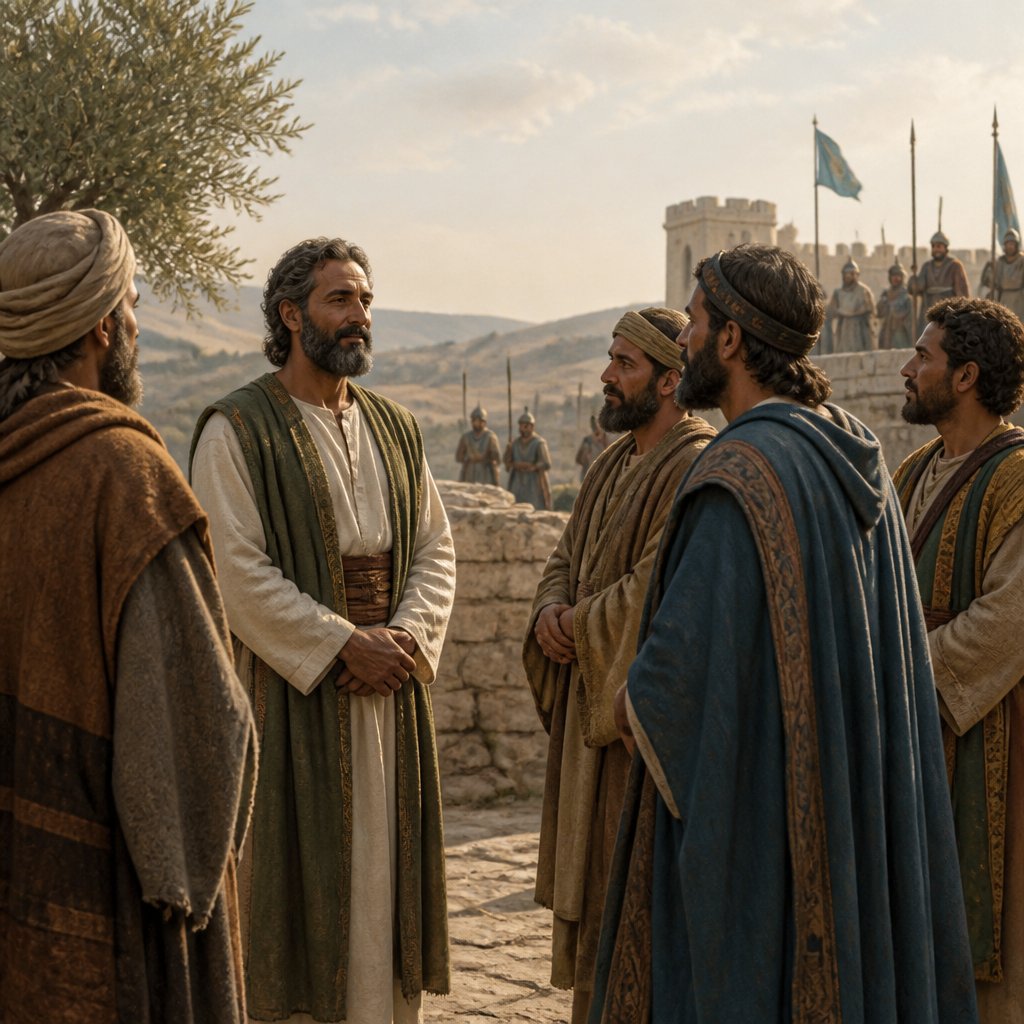
2 Kings 25:23 (KJV)
And when all the captains of the armies, they and their men, heard that the king of Babylon had made Gedaliah governor, there came to Gedaliah to Mizpah, even Ishmael the son of Nethaniah, and Johanan the son of Careah, and Seraiah the son of Tanhumeth the Netophathite, and Jaazaniah the son of a Maachathite, they and their men.
This verse comes at the end of the book of 2 Kings, which chronicles the fall of Jerusalem and the subsequent exile of the Israelites to Babylon. It is a verse that hints at the beginning of a new era for the people of Israel, but one that is marked by intrigue, political tension, and a struggle for power.
The context of this verse is crucial to understanding its significance. The city of Jerusalem had been besieged by the Babylonian king, Nebuchadnezzar, and eventually fell to the Babylonian forces. The Israelite king, Zedekiah, was captured, his sons were killed before his eyes, and he was then blinded and taken captive to Babylon. The temple and the city of Jerusalem were destroyed, and the majority of the Israelite population was exiled to Babylon.
In the aftermath of this devastation, Nebuchadnezzar appointed Gedaliah as governor of the remaining Israelites in the land of Judah. This was a strategic move on the part of the Babylonians to maintain control over the region. The verse introduces us to the various military leaders and their followers who came to Gedaliah to pledge their allegiance to him as their new leader.
The themes and symbolism in this verse are rich and multifaceted. One theme that stands out is the theme of power and leadership. The power vacuum left by the fall of Jerusalem and the exile of the Israelite king and nobility created an opportunity for other leaders to rise to prominence. The verse introduces us to Ishmael, Johanan, Seraiah, and Jaazaniah, who represent different factions within the Israelite community. Their coming to Gedaliah to pledge their allegiance foreshadows the political tensions and power struggles that will unfold in the chapters to come.
Another theme is the theme of exile and the longing for stability and peace. The Israelites had suffered a great loss with the destruction of their city and the exile of their people. The appointment of Gedaliah as governor offered a glimmer of hope for some semblance of normalcy and stability. The coming together of these military leaders and their followers symbolizes a desire for unity and a return to governance in the wake of chaos and destruction.
Furthermore, the verse also symbolizes the complexities of human nature and the intricacies of political alliances. Ishmael, Johanan, Seraiah, and Jaazaniah represent different factions within the Israelite community, each with their own agendas and ambitions. Their coming to Gedaliah, while on the surface may seem like a show of loyalty, also hints at the undercurrents of political maneuvering and potential conflict.
In conclusion, 2 Kings 25:23 captures a pivotal moment in the history of the Israelites, marking the beginning of a new chapter in their journey. It sets the stage for the political intrigues and power struggles that will play out in the aftermath of the fall of Jerusalem. The verse is rich in its themes of power, exile, unity, and the complexities of human nature, and it serves as a poignant reminder of the enduring relevance of these themes in the human experience.
Have questions about 2 Kings 25:23?
Dive deeper into this scripture with Bible Chat — an AI-powered tool for exploring God's Word through conversation. Ask questions, get context, and grow in your understanding of the Bible.
Get Our Apps


2 Kings 25:23 Artwork

2 Kings 25:23 - "And when all the captains of the armies, they and their men, heard that the king of Babylon had made Gedaliah governor, there came to Gedaliah to Mizpah, even Ishmael the son of Nethaniah, and Johanan the son of Careah, and Seraiah the son of Tanhumeth the Netophathite, and Jaazaniah the son of a Maachathite, they and their men."
"And when all the captains of the armies, they and their men, heard that the king of Babylon had made Gedaliah governor, there came to Gedaliah to Mizpah, even Ishmael the son of Nethaniah, and Johanan the son of Careah, and Seraiah the son of Tanhumeth the Netophathite, and Jaazaniah the son of a Maachathite, they and their men." - 2 Kings 25:23

2 Kings 23:25 - "And like unto him was there no king before him, that turned to the LORD with all his heart, and with all his soul, and with all his might, according to all the law of Moses; neither after him arose there any like him."

2 Kings 25:2 - "And the city was besieged unto the eleventh year of king Zedekiah."

2 Kings 23:23 - "But in the eighteenth year of king Josiah, wherein this passover was holden to the LORD in Jerusalem."

2 Samuel 23:25 - "Shammah the Harodite, Elika the Harodite,"

2 Kings 25:1 show King Nebuchadnezzar in war zone

2 Kings 21:25 - "Now the rest of the acts of Amon which he did, are they not written in the book of the chronicles of the kings of Judah?"

2 Kings 8:23 - "And the rest of the acts of Joram, and all that he did, are they not written in the book of the chronicles of the kings of Judah?"

2 Kings 25:28 - "And he spake kindly to him, and set his throne above the throne of the kings that were with him in Babylon;"
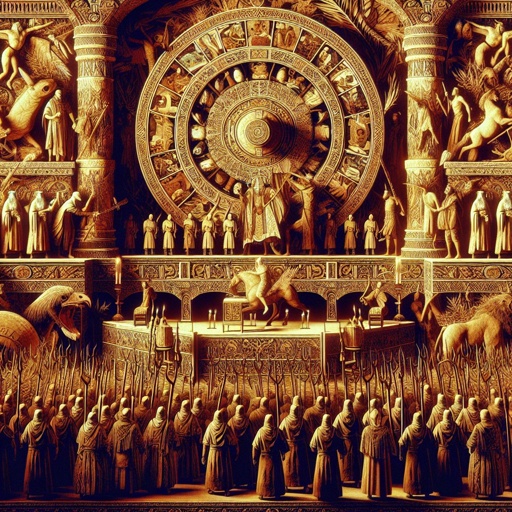
2 Kings 23:22 - "Surely there was not holden such a passover from the days of the judges that judged Israel, nor in all the days of the kings of Israel, nor of the kings of Judah;"

2 Kings 2:25 - "And he went from thence to mount Carmel, and from thence he returned to Samaria."

2 Kings 25:1 show King Nebuchadnezzar and the army and the Temple

2 Kings 23:28 - "Now the rest of the acts of Josiah, and all that he did, are they not written in the book of the chronicles of the kings of Judah?"

2 Kings 25:12 - "But the captain of the guard left of the poor of the land to be vinedressers and husbandmen."

2 Kings 3:23 - "And they said, This is blood: the kings are surely slain, and they have smitten one another: now therefore, Moab, to the spoil."

Proverbs 25:2 - "It is the glory of God to conceal a thing: but the honour of kings is to search out a matter."

2 Kings 25:20 - "And Nebuzar-adan captain of the guard took these, and brought them to the king of Babylon to Riblah:"

"Shammah the Harodite, Elika the Harodite," - 2 Samuel 23:25

2 Kings 23:1 - "And the king sent, and they gathered unto him all the elders of Judah and of Jerusalem."

Jehoiachin is released from Babylonian jail 2 kings 25: 27
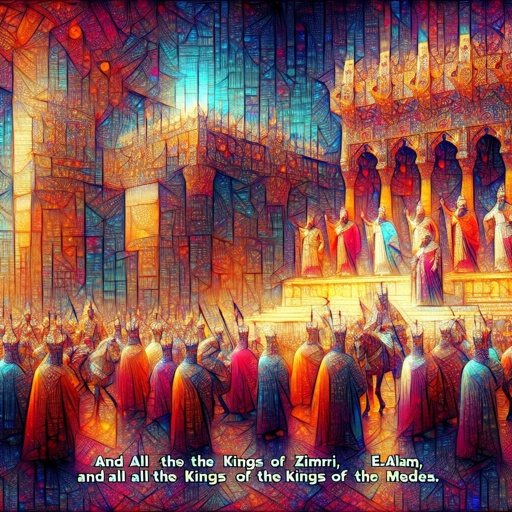
Jeremiah 25:25 - "And all the kings of Zimri, and all the kings of Elam, and all the kings of the Medes,"

2 Kings 21:23 - "¶ And the servants of Amon conspired against him, and slew the king in his own house."

"And the city was besieged unto the eleventh year of king Zedekiah." - 2 Kings 25:2

2 Kings 25:3 - "And on the ninth day of the fourth month the famine prevailed in the city, and there was no bread for the people of the land."

2 Kings 25:6 - "So they took the king, and brought him up to the king of Babylon to Riblah; and they gave judgment upon him."

2 Kings 25:14 - "And the pots, and the shovels, and the snuffers, and the spoons, and all the vessels of brass wherewith they ministered, took they away."

1 Kings 2:25 - "And king Solomon sent by the hand of Benaiah the son of Jehoiada; and he fell upon him that he died."

2 Kings 9:23 - "And Joram turned his hands, and fled, and said to Ahaziah, There is treachery, O Ahaziah."

2 Kings 25:10 - "And all the army of the Chaldees, that were with the captain of the guard, brake down the walls of Jerusalem round about."