What does 2 Kings 25:13 mean?
“And the pillars of brass that were in the house of the LORD, and the bases, and the brasen sea that was in the house of the LORD, did the Chaldees break in pieces, and carried the brass of them to Babylon.” — 2 Kings 25:13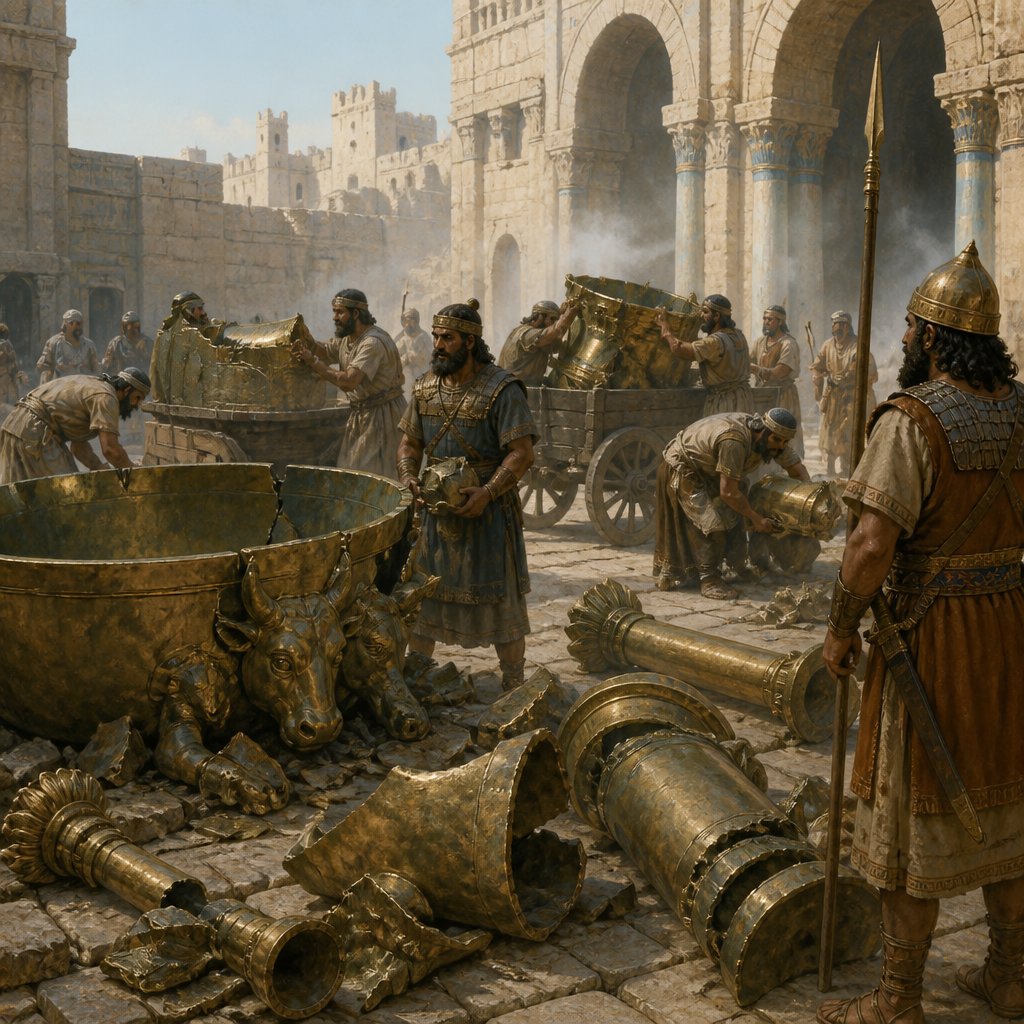
The verse 2 Kings 25:13 from the King James Version of the Bible reads: "And the pillars of brass that were in the house of the Lord, and the bases, and the brasen sea that was in the house of the Lord, did the Chaldees break in pieces, and carried the brass of them to Babylon."
This verse is a part of the historical account of the destruction of Jerusalem by the Babylonians and the exile of the people of Israel. It is a somber and poignant reminder of the consequences of disobedience and the judgment of God upon his people. In order to truly understand the full significance of this verse, it is necessary to delve into the historical context in which it was written, as well as to consider its broader implications in terms of themes and symbolism.
The book of 2 Kings is a historical narrative that covers the reigns of various kings of Israel and Judah, and it culminates in the fall of Jerusalem to the Babylonians in 586 BC. The verse in question occurs in the context of the description of the destruction of the temple and the plundering of its treasures by the Chaldeans, who were the people of Babylonia. The temple was the central place of worship for the people of Israel, and it held great significance in their religious and national identity. The fact that the Chaldeans broke the pillars of brass, the bases, and the brasen sea in pieces and carried their brass to Babylon demonstrates the extent of the devastation and desecration of the sacred space.
The destruction of the temple and the exile of the people of Israel to Babylon were pivotal events in the history of the nation. They were a direct result of the people's persistent disobedience and idolatry, and they marked a profound turning point in the relationship between God and his chosen people. The consequences of their sin were catastrophic, as they were not only deprived of their homeland and taken into captivity, but they also suffered the loss of their religious and cultural heritage.
The themes that emerge from this verse are reflective of the broader theological message of the Bible. It speaks to the universal human experience of sin and its consequences, as well as the unchanging nature of God's justice and mercy. The destruction of the temple serves as a sobering reminder of the repercussions of forsaking God and turning to idols. It underscores the importance of remaining faithful to God and the dire repercussions of straying from his commandments.
The symbolism present in this verse is profound and multifaceted. The temple itself is a symbol of God's dwelling among his people, and the pillars of brass, the bases, and the brasen sea are representative of the sacred and integral components of the worship of God. The fact that they were broken in pieces and carried off to Babylon signifies the desecration of the sacred and the displacement of the people from their spiritual center. Moreover, the act of plundering the temple and taking its treasures to Babylon represents the triumph of paganism over the worship of the true God.
In conclusion, the verse 2 Kings 25:13 is a powerful and poignant statement about the consequences of disobedience and the judgment of God. It serves as a sobering reminder of the devastating effects of sin and the importance of remaining faithful to God. The destruction of the temple and the plundering of its treasures symbolize the displacement of the people from their spiritual center and the triumph of pagan forces over the worship of the true God. It is a solemn and cautionary tale that resonates with timeless truths about the nature of God and the human experience.
Get our apps


Artwork for 2 Kings 25:13

2 Kings 25:13 - "And the pillars of brass that were in the house of the LORD, and the bases, and the brasen sea that was in the house of the LORD, did the Chaldees break in pieces, and carried the brass of them to Babylon."
"And the pillars of brass that were in the house of the LORD, and the bases, and the brasen sea that was in the house of the LORD, did the Chaldees break in pieces, and carried the brass of them to Babylon." - 2 Kings 25:13

2 Kings 25:2 - "And the city was besieged unto the eleventh year of king Zedekiah."

2 Kings 25:1 show King Nebuchadnezzar in war zone

2 Kings 13:13 - "And Joash slept with his fathers; and Jeroboam sat upon his throne: and Joash was buried in Samaria with the kings of Israel."

2 Kings 21:25 - "Now the rest of the acts of Amon which he did, are they not written in the book of the chronicles of the kings of Judah?"

2 Kings 13:25 - "And Jehoash the son of Jehoahaz took again out of the hand of Ben-hadad the son of Hazael the cities, which he had taken out of the hand of Jehoahaz his father by war. Three times did Joash beat him, and recovered the cities of Israel."

2 Kings 25:28 - "And he spake kindly to him, and set his throne above the throne of the kings that were with him in Babylon;"

2 Kings 2:25 - "And he went from thence to mount Carmel, and from thence he returned to Samaria."

2 Kings 25:1 show King Nebuchadnezzar and the army and the Temple

2 Kings 25:12 - "But the captain of the guard left of the poor of the land to be vinedressers and husbandmen."

Proverbs 25:2 - "It is the glory of God to conceal a thing: but the honour of kings is to search out a matter."

2 Kings 25:20 - "And Nebuzar-adan captain of the guard took these, and brought them to the king of Babylon to Riblah:"

Jehoiachin is released from Babylonian jail 2 kings 25: 27

1 Kings 13:25 - "And, behold, men passed by, and saw the carcase cast in the way, and the lion standing by the carcase: and they came and told it in the city where the old prophet dwelt."
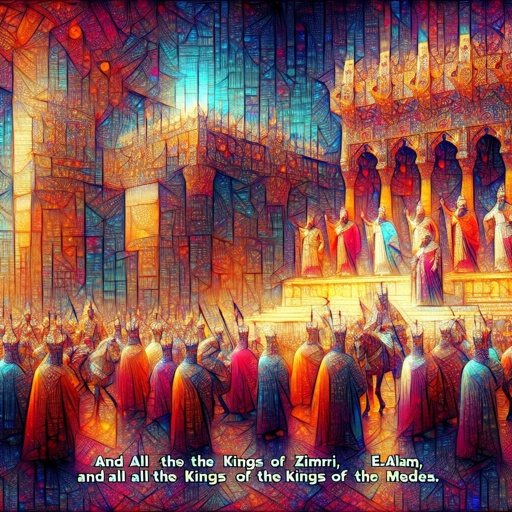
Jeremiah 25:25 - "And all the kings of Zimri, and all the kings of Elam, and all the kings of the Medes,"

"And the city was besieged unto the eleventh year of king Zedekiah." - 2 Kings 25:2

2 Kings 25:3 - "And on the ninth day of the fourth month the famine prevailed in the city, and there was no bread for the people of the land."

2 Kings 25:6 - "So they took the king, and brought him up to the king of Babylon to Riblah; and they gave judgment upon him."

2 Kings 25:14 - "And the pots, and the shovels, and the snuffers, and the spoons, and all the vessels of brass wherewith they ministered, took they away."

1 Kings 2:25 - "And king Solomon sent by the hand of Benaiah the son of Jehoiada; and he fell upon him that he died."

2 Kings 13:22 - "¶ But Hazael king of Syria oppressed Israel all the days of Jehoahaz."

2 Kings 25:10 - "And all the army of the Chaldees, that were with the captain of the guard, brake down the walls of Jerusalem round about."

2 Kings 25:18 - "¶ And the captain of the guard took Seraiah the chief priest, and Zephaniah the second priest, and the three keepers of the door:"

2 Kings 25:15 - "And the firepans, and the bowls, and such things as were of gold, in gold, and of silver, in silver, the captain of the guard took away."

2 Chronicles 25:26 - "Now the rest of the acts of Amaziah, first and last, behold, are they not written in the book of the kings of Judah and Israel?"

2 Kings 13:8 - "¶ Now the rest of the acts of Jehoahaz, and all that he did, and his might, are they not written in the book of the chronicles of the kings of Israel?"

2 Kings 8:25 - "¶ In the twelfth year of Joram the son of Ahab king of Israel did Ahaziah the son of Jehoram king of Judah begin to reign."

2 Kings 25:26 - "And all the people, both small and great, and the captains of the armies, arose, and came to Egypt: for they were afraid of the Chaldees."

2 Kings 25:30 - "And his allowance was a continual allowance given him of the king, a daily rate for every day, all the days of his life."